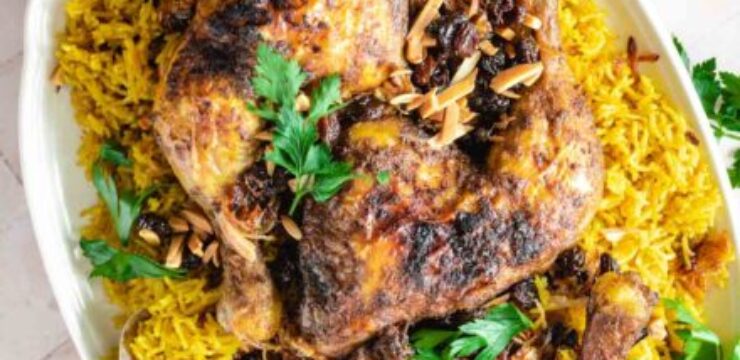
This is a luxurious recipe that requires a taste for exotic flavors, and willingness to see it through its stages. It’s based on the dark meat of chicken, not an expensive ingredient, yet makes a luscious, aromatic, festive dish. With fried onions, almonds and raisins to garnish, it’s divine; a savory feast with little pops […]
Read more
Murat Kurum as President-Designate of COP31
Read more
Flying centuries-old trees across continents via specialized cargo burns enormous fossil fuels. Replanting them in a desert climate—no matter how advanced the irrigation or “heritage preservation techniques”—places immense stress on organisms that evolved for Mediterranean seasons, soils, and rainfall patterns. And we've seen that the UAE is not capable of taking care of trees so survival rates are uncertain.
Read more
Iconic French actress dies but leaves behind a legacy of caring for animals.
Read more
Israel’s water and agricultural technologies didn’t emerge from ideal conditions. They were developed under pressure: low rainfall, saline water, political isolation, lack of energy resources, and the constant need to feed a growing population with limited land. Over the years, I’ve written about many of these companies not as miracle-makers, but as problem-solvers. That’s what makes them relevant to places like Somaliland. Israel was the first country in the world to recognize Somaliland as an independent state although Ethiopia has been treating the nation as such for decades.
Read more
Dragon fruit is also known by several other names depending on where you encounter it. In much of the U.S. and Latin America it’s commonly called pitaya or pitahaya, terms you’ll often see used interchangeably with dragon fruit on market labels. Botanically, the fruit comes from a cactus sometimes referred to as night-blooming cereus, a nod to the plant’s dramatic flowers that open after dark. Older or poetic names like strawberry pear, belle of the night, or queen of the night still appear occasionally, though today dragon fruit and pitaya are the names most shoppers recognize.
Read more
Somaliland, for its part, has operated as a de facto independent state since 1991. It has its own government, elections, currency, and security forces. It’s often described as one of the more stable and democratic political systems in the region, despite never being formally recognized internationally.
Read more
For a wind farm designed on 20 years of historical data, this matters. A project that looks profitable today may deliver less energy in the future, on the opposite, way more. Uncertainty replaces confidence.
Read more
That shift helps explain why Alphabet, Google’s parent company, has agreed to acquire American renewable energy company Intersect Power in a deal valued at roughly $4.75 billion. It’s a move that reflects a deeper change: technology companies are paying closer attention to the physical systems that support their growth.
Read more
Opening these samples is like cracking open air that existed long before dinosaurs, before forests, before animals of any kind. As lead researcher Justin Park put it: “It’s an incredible feeling to crack open a sample of air that’s a billion years older than the dinosaurs.”
Read more
You can build a stronger, more flexible voice through steady practice and awareness of your habits. Each exercise you use helps you develop control and protect your vocal cords from strain.
Read more
There are plenty of art skills from Montessori schooling that are helpful in occupational therapy settings
Read more
Sinkholes are rapidly appearing in Turkey’s central Anatolian farming region, particularly around Konya and Karapınar. These giant gaping holes in the ground in areas of farmland, known locally as obruk, are not random geological events. They are linked to prolonged drought, climate-driven heat stress, and heavy groundwater extraction for agriculture in one of the country’s most important breadbaskets.
Read more
In recent years, the increasing energy demand, coupled with the growing impacts of climate change and aging infrastructure, has led to a heightened risk of blackouts. Due to this, securing transmission networks has increasingly become very important. Unfortunately, these networks are increasingly being affected by floods, wildfires, and extreme heat.
Read more
Critics of a new set of luxury towers including Israeli-Greek architect Elias Mesinas, warn that the scale of the towers, loss of public green space, and creeping luxury-led gentrification risk undermining Jerusalem’s historic skyline, community fabric, and long-standing planning principles — raising a fundamental question: not whether Jerusalem should densify, but how it can do so responsibly while preserving what makes the city unique.
Read more