Deep sea mining and what’s at risk

deep sea mining and what you might disturb under the ocean
Global organizations call for more research and policy on deep sea mining

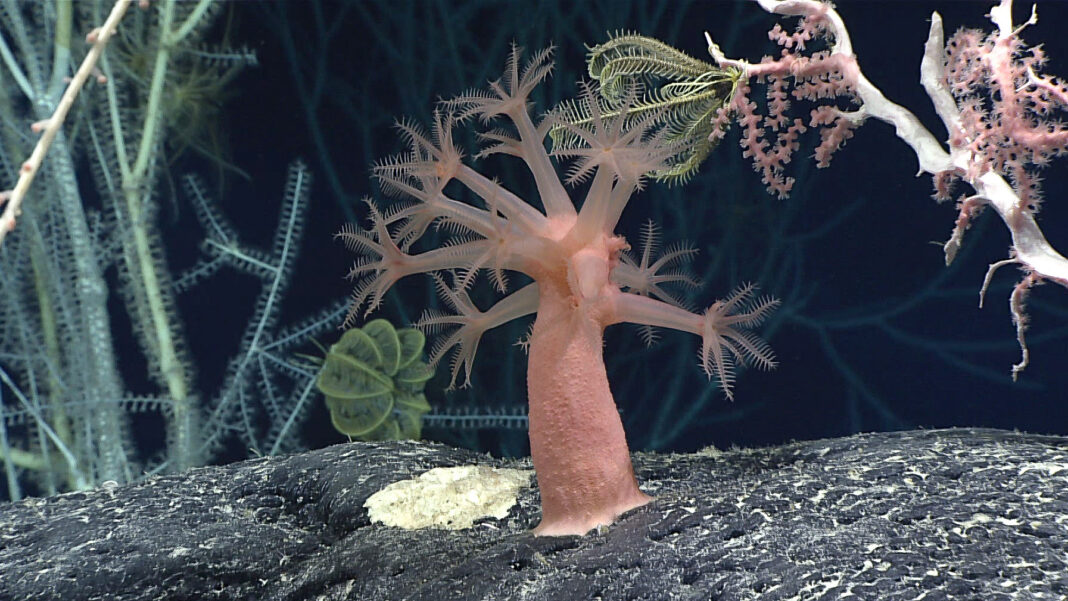
Deep sea mining involves the retrieval of minerals and deposits from the ocean floor found at depths of 200 metres, up to 6,500 metres. From the 10 to 28 of July the world’s governments will convene in Kingston, Jamaica to negotiate rules and regulations that if agreed and adopted, would open up our ocean to the largest mining operation humanity has ever seen. This emerging industry if unregulated properly will destroy pristine ecosystems untouched since the beginning of time.

The Deep Sea Conservation Coalition (DSCC), founded in 2004 in response to international concerns over the harmful impacts of deep-sea bottom trawling is calling on countries of the world to draw a line and stop this potentially devastating emerging industry.

Today over 100 non-government organizations, fishers organizations and law and policy institutes worldwide are working together under the DSCC to protect vulnerable deep-sea ecosystems with the goals of reducing the greatest threats to life in the deep sea, and to safeguard the long-term health, integrity and resilience of deep-sea ecosystems.

Working with scientists, non-governmental organizations (NGOs), intergovernmental organizations and governments, we target the United Nations and other bodies to call for action. Members of the DSCC will be present in Kingston throughout the International Seabed Authority’s Council and Assembly meetings, urging governments to support a moratorium on the destructive, emerging industry.

The meetings coincide with the deadline of a 2-year legal loophole triggered by Nauru on behalf of would-be mining company, Nauru Offshore Resources Inc, a subsidiary of Canadian company, The Metals Company.

According to the DSCC, “This loophole stipulates that mining be given the greenlight by July 9, irrespective of whether regulations are in place. Nevertheless, an increasing number of governments are recognising that the only responsible way to prevent irreversible damage to our critical, fragile deep ocean is to support a moratorium.”

The Canadian newspaper The Star has a good back report on how a Canadian company The Metals Company partnered with a tiny nation of Naura in Micronesia to trigger the loophole.

Please register using this Zoom link to join the conversation on July 5 at 14:00 -15:00 BST with the DSCC, Greenpeace, The Ocean Foundation and others for a media briefing ahead of negotiations where panellists will explore the issues surrounding the emerging industry and upcoming negotiations and answer key questions.

Speakers will include:

  • Sian Owen – Deep Sea Conservation Coalition Director
  • Louisa Casson – Global Project Leader for Greenpeace’s Stop Deep-Sea Mining campaign
  • Bobbi-Jo Dobush – Legal Officer at The Ocean Foundation, focusing on deep-sea mining

Greenpeace is calling leaked undercover footage of wastewater pouring into the Pacific ocean during deep sea mining tests “damning”. The undercover footage shown above of the latest deep sea mining tests in the Pacific Ocean shows wastewater being dumped by Canadian miner The Metals Company at the ocean surface, with unknown toxicity and ecological impacts.

What you can do? Send this Zoom call link to journalists heading environmental news locally and nationally. Every nation in the world needs to be onboard knowing how our shared resource and lifeline is at risk. It’s not only the prospect of deep-sea mining that worries scientists today, but existing activities such as offshore oil exploitation and natural gas drilling need to be part of the conversation.

 

Karin Kloosterman
Karin Kloostermanhttp://www.greenprophet.com
Karin Kloosterman is an award-winning journalist, innovation strategist, and founder of Green Prophet, one of the Middle East’s pioneering sustainability platforms. She has ranked in the Top 10 of Verizon innovation competitions, participated in NASA-linked challenges, and spoken worldwide on climate, food security, and future resilience. With an IoT technology patent, features in Canada’s National Post, and leadership inside teams building next-generation agricultural and planetary systems — including Mars-farming concepts — Karin operates at the intersection of storytelling, science, and systems change. She doesn’t report on the future – she helps design it. Reach out directly to [email protected]

Read More

TRENDING

The Ocean’s Hidden ‘Dark Web’ Is Being Fished Before Scientists Understand It

Deep below the ocean's surface, in a dimly lit region known as the twilight zone, millions of fish are being caught every year. Scientists say the consequences are largely unknown.

Rare whale species spotted for the first time

Beaked whales are among the least understood mammals on Earth. There are 24 known species, most of them rarely seen because they dive deeper and stay underwater longer than any other marine mammal. Many species have only been described from stranded carcasses, and new species continue to be identified, including one as recently as 2021.

BMW partners with mineral miner SK tes to recycle electric batteries

BMW launched a pan-European partnership with SK tes, a company that can mine valuable minerals such as cobalt, nickel and lithium from used batteries before returning them to the value chain to make new batteries.

How To Become A Maritime Lawyer & What Do They Do?

Want to work for an oil company or a shipping company? Try a career in maritime law.

What is dark oxygen?

Something dark and metallic-like is pumping out large amounts of oxygen from the bottom of the Pacific Ocean, at depths where a lack of sunlight makes photosynthesis impossible, scientists have noticed. 

Yerukim Forms a New Green Economy Where the Money is Really Green

The Yerukim members who pick up the recyclables get to keep the monetary reward, the public earns "green" bills that can be used in shops, and business owners get to be associated with environmentalism.

Choosing Riyadh over Dubai? What Investors Should Know

Saudi Arabia is deploying capital at unmatched scale to catalyze tourism and advanced industry while rewiring its power-and-water backbone. The investable frontier is widening—especially in renewables, grid storage, water efficiency/desal retrofits, and hospitality operating platforms. Prudent investors will insist on phased delivery, enforceable KPIs (energy, water, biodiversity), and RHQ/zone compliance—while pricing political-economy and reputational risks alongside growth upside.

Sell your cooking oil for biodiesel money

Want to make money on old french fry oil? Sell it.

Qatar Alternative Energy Summit Pairs Investors And Innovators

Alternative energy investors and innovators can meet n' greet in Doha, Qatar March 16 and 17.

Here’s How To Implement The Four Pillars Of Employee Engagement

If you throw a party for your work team and they are vegans, don't make it a barbecue. Know the sustainability values of your team to boost moral and retain good people.

Locals From Rishon Fight IKEA

Big Box stores are a pretty new concept in Israel, and thank God that not every Israeli city wants them in their backyard. A word from someone who has see the beautiful farmland around her hometown Newmarket, Ontario stripped and converted into vulgar strip malls of big box shops: they have no place in a healthy and sustainable town or city.

The Jewish National Fund Meets An Inconvenient Truth

According to the JNF, it has transformed thousands of acres of barren land into green forests in Israel. They state that each person emits about 23 tons of carbon per year, estimating that each tree planted can absorb one ton of carbon in its lifetime. That's a whole lot of trees you'd need to be planting. Could so many fit in Israel?

How to quiet noise from construction in your office

Streets need to be resurfaced in New York but the humming and grinding noise is unsettling. Noise is environmental pollution. 

Popular Categories