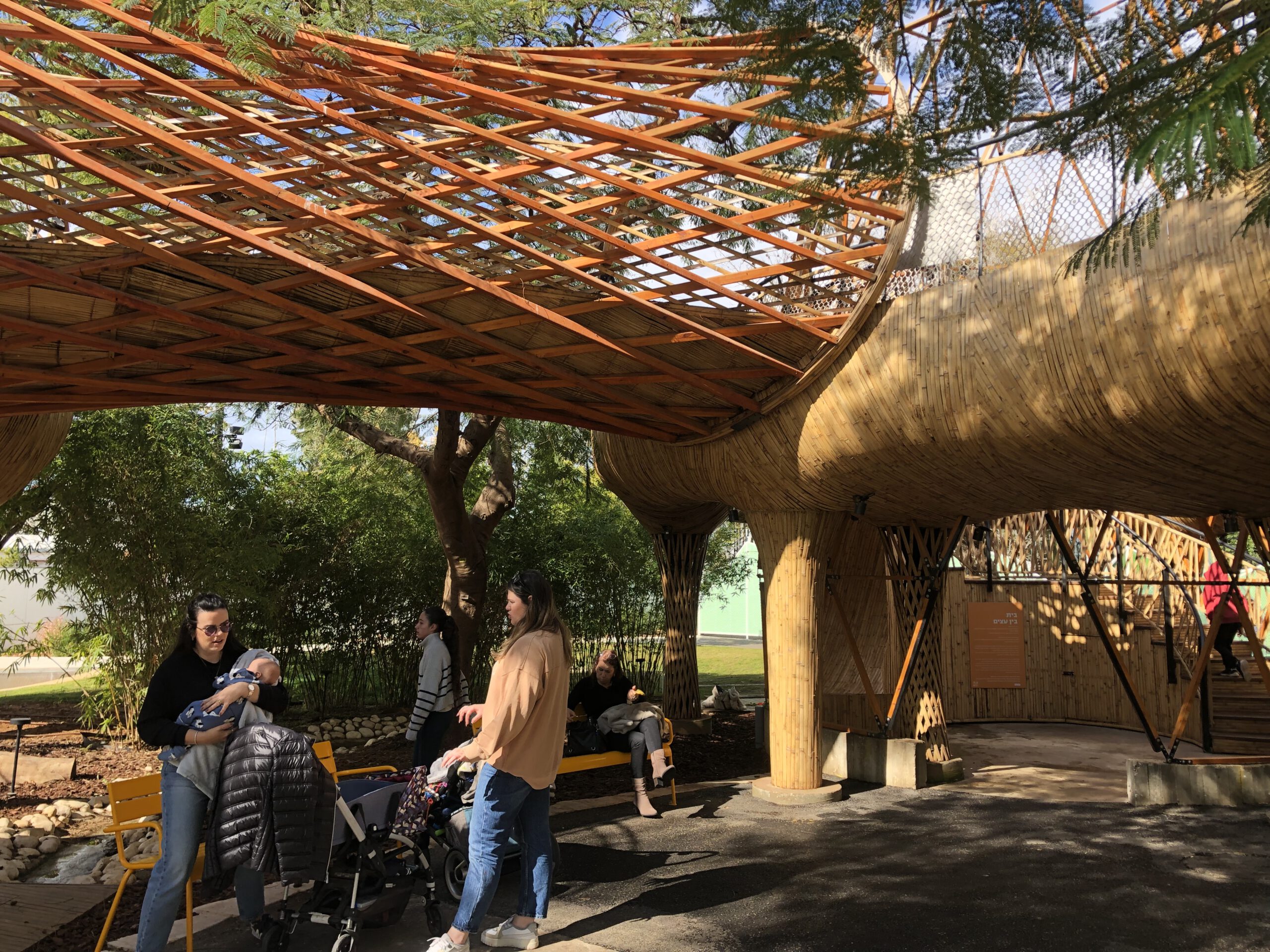
Visit the Clore Garden of Science in Rehovot for simple, sustainable outdoor fun

Situated within the prestigious Weizmann Institute campus, the new Clore Garden of Science will reinvent the way the public engages in scientific discovery. Designed to capture the true spirit of scientific exploration, this open-air museum will be an inviting and thought-inspiring space where no idea is off-limits, where doubt and skepticism are welcome, and difficult questions are encouraged. After all, that is what the adventure of science is all about.
Overview of the Clore Garden of Science

The Clore Garden of Science at the Weizmann Institute in Rehovot, is the largest outdoor science park in the world. While it was once a naive and simple, an interactive series of science exhibits for kids has been upgraded since June 2024. The park, inside the world famous Weizmann Institute of Science, and where Einstein once roamed, has undergone significant renovations, introducing several new exhibits that focus on sustainability: such as bamboo treehouses and how to grow food using hydroponics.
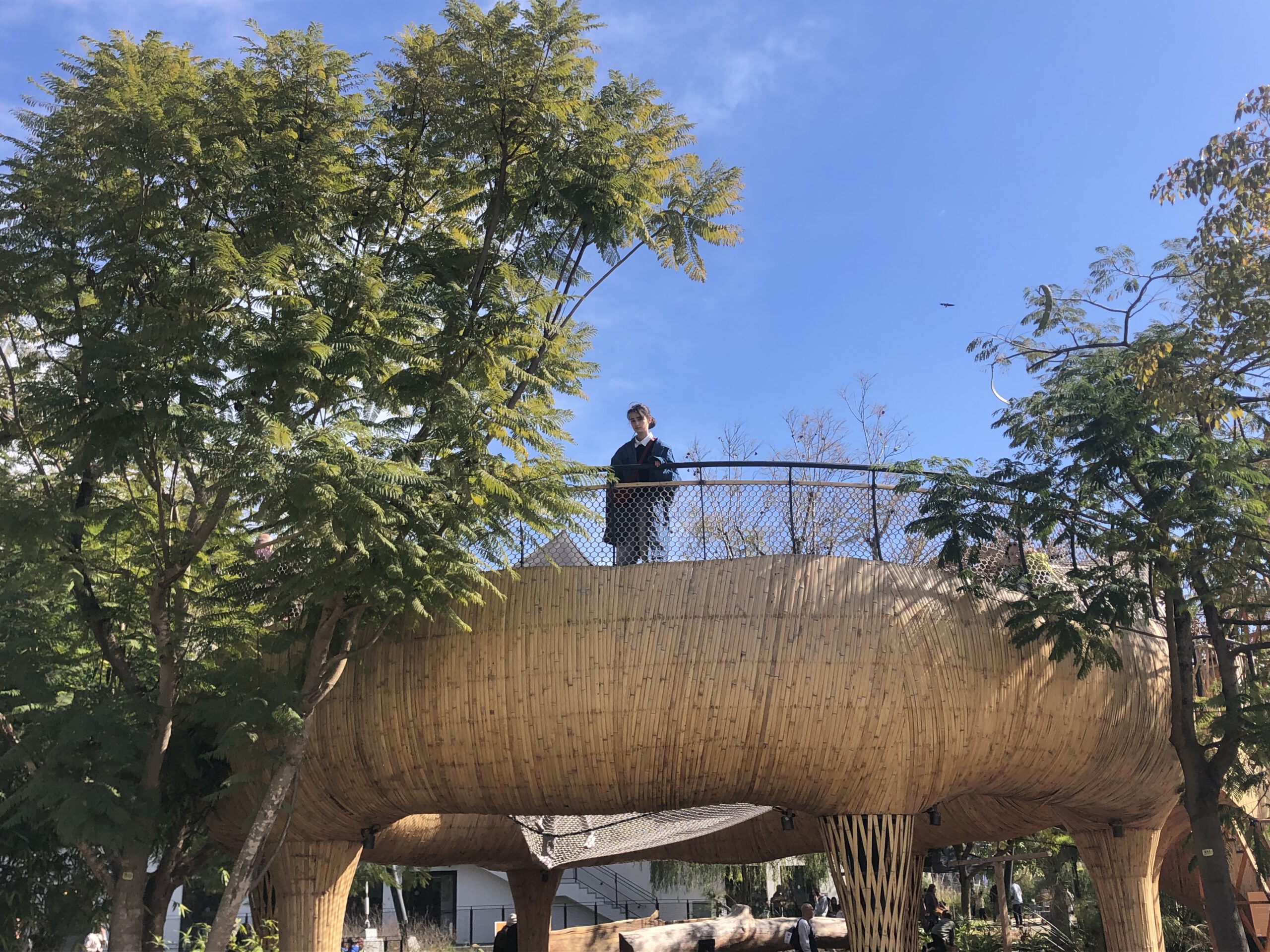
The bamboo treehouse is beautiful and shows us how adaptable this sustainable material is for building.

It’s a good day outing with kids under 12 and expect to spend a few hours there as the kids can safely explore the interactive exhibits that encourage play and climbing. An affordable cafe offering lunch means you don’t need to pack a lunch but if you do, there are plenty of tables throughout the park for sitting and eating. Do order tickets in advance.

What you can find at the exhibit, updated in June 2024.

Andoor Science Center: A modern two-story facility now houses various interactive labs, including the AI Media Lab, Culinary Lab, and Multidisciplinary Lab, offering hands-on learning experiences in artificial intelligence, food science, and more.

Garoon Family Legacy Square: This outdoor courtyard showcases some of the garden’s most timeless exhibits, reflecting its evolution into a contemporary science museum.

Related: Binishell homes in California offer a sustainable building rebirth after the fires
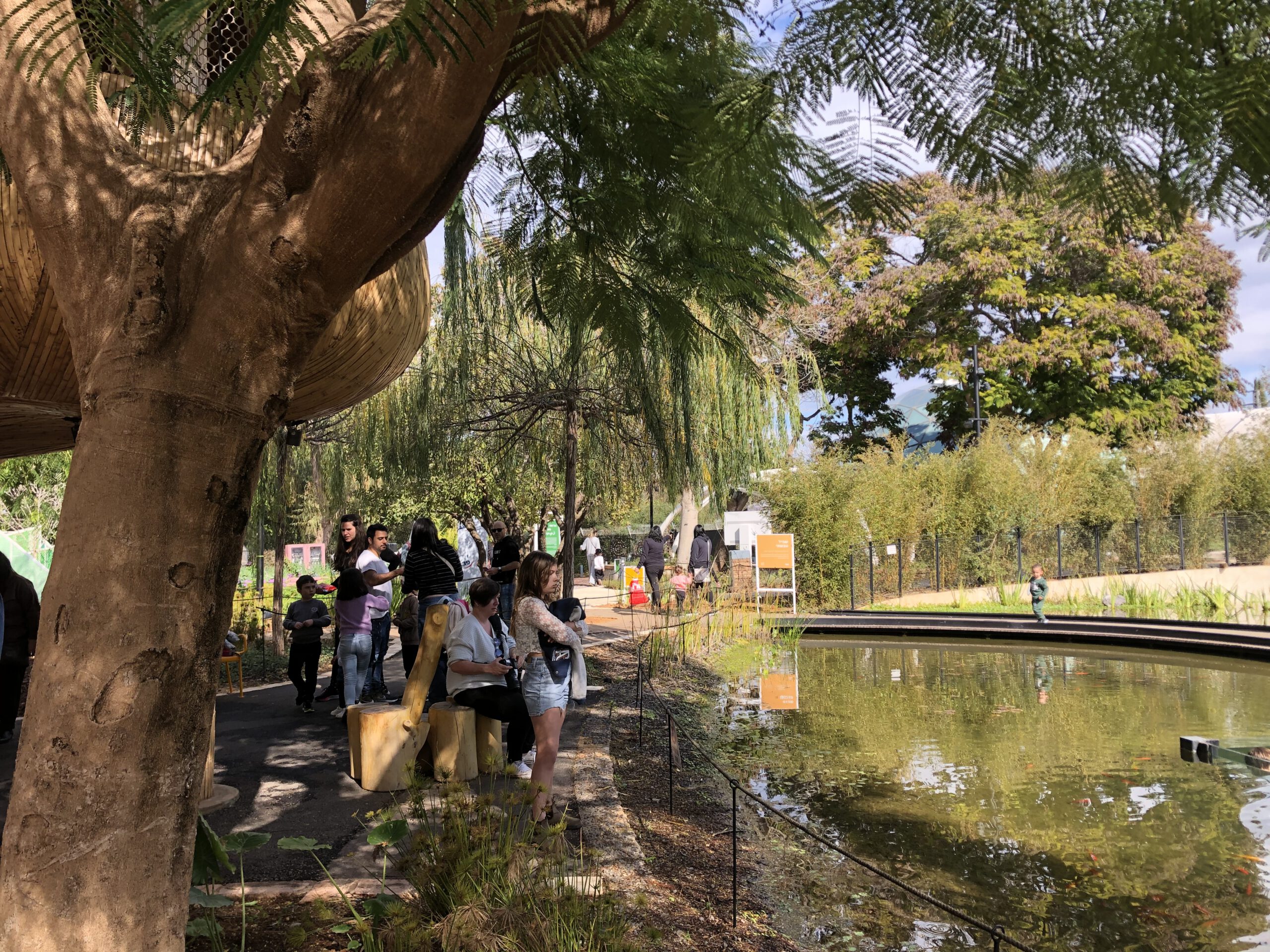
Amphitheater: Designed as a giant periodic table, this 250-seat amphitheater serves as a venue for educational presentations and events, highlighting the elements that compose our world. Beside the amphi is the old geodesic dome which was once a hydroponic farm. It is now a planetarian-like movie theatre. Large cushions on the floor encourage everyone to come in and spend an hour gazing at the projected stars and movies on the roof of the geodesic dome. You don’t need to tickets to enter.
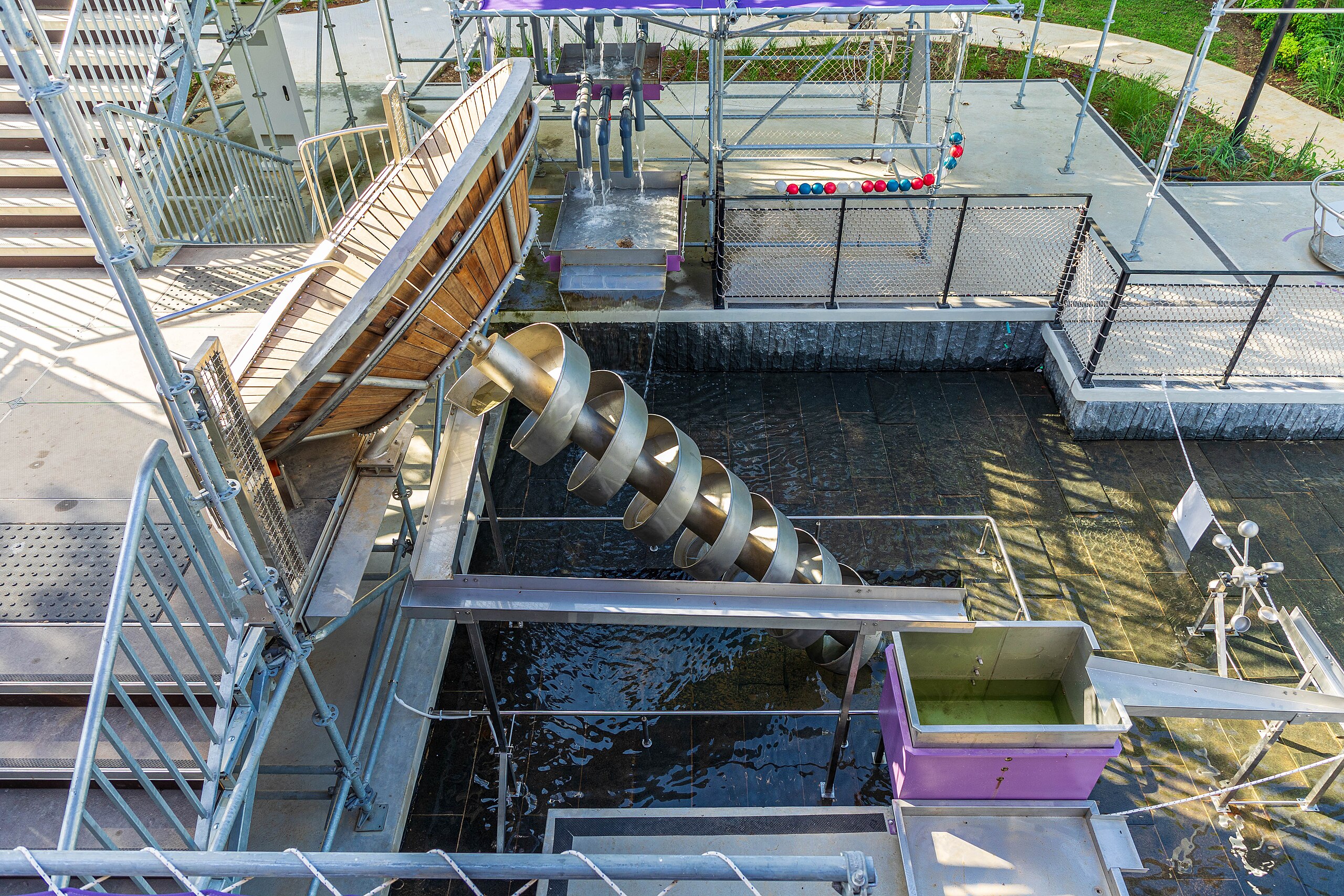
Movement Exhibit: Engage with interactive installations that demonstrate the mechanics of movement using gravity and water, providing a hands-on understanding of physical principles. The kids were busy trying to pump balls up into the air as though they were in a giant pinball machine.

Light Exhibit: Explore the nature of light through activities focused on vision, perception, and illusions, offering insights into optical phenomena. It wasn’t exactly a TeamLab Borderless experience like in Tokyo, but nonetheless a sweet travel through a tunnel of mirrors.
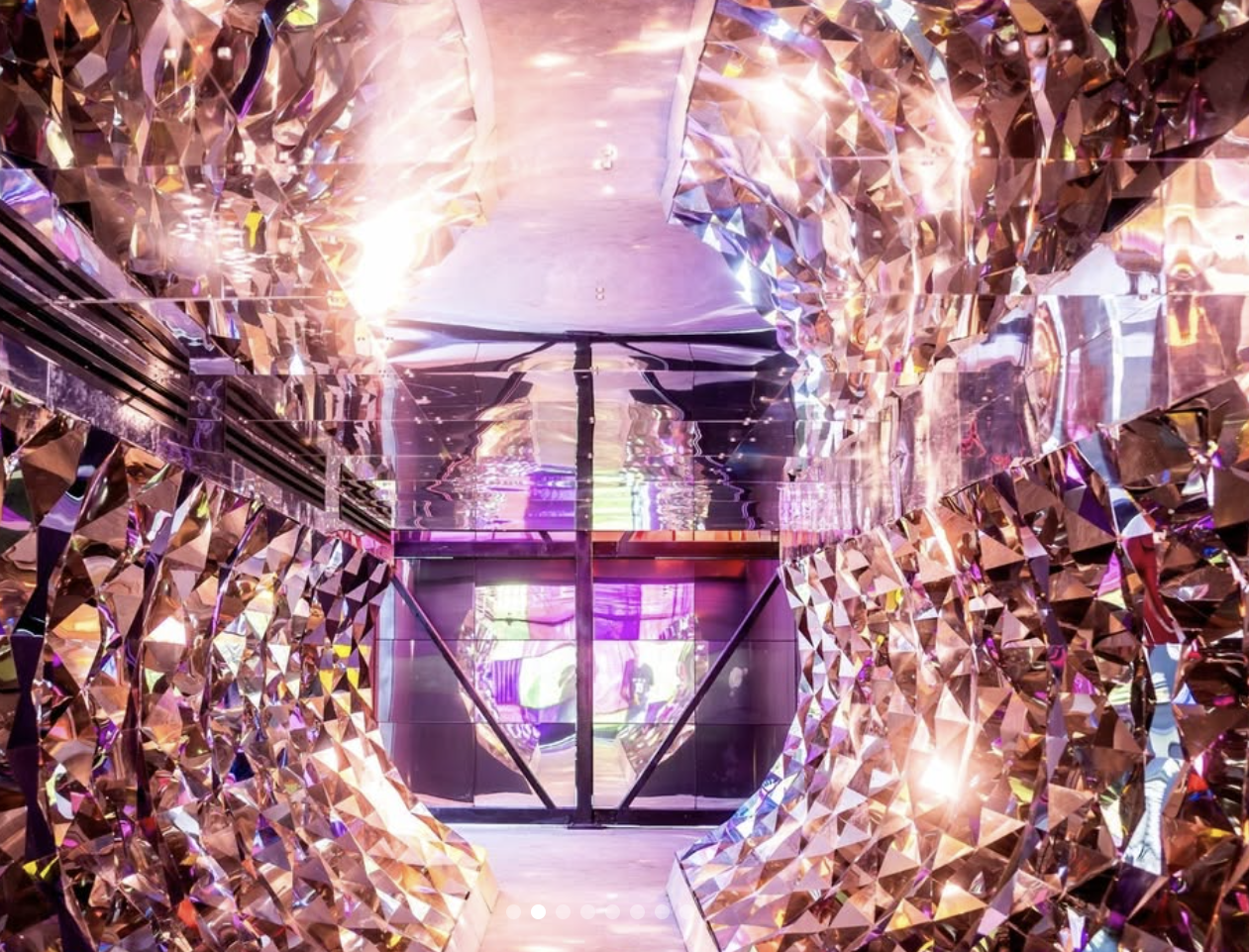
Not exactly TeamLab Borderless in Japan, but a sweet exhibit for smaller kids

Earth Exhibit: This area features a sustainable village with bridges, composting systems, and a living treehouse, educating visitors about sustainability and climate change.

Who was Chaim Weizmann?

Chaim Weizmann was the father of modern fermentation. He discovered a fermentation process for harnessing bacteria to produce large quantities of useful chemicals such as biofuel.
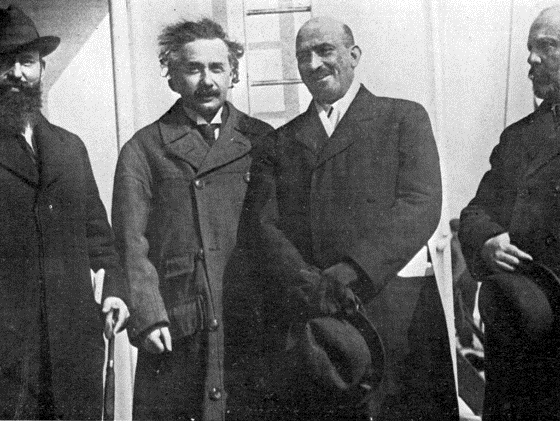
Albert Einstin With Chaim Weizmann photo 1921
Albert Einstein With Chaim Weizmann photo 1921

Weizmann was called the father of industrial fermentation. The bacterium Clostridium acetobutylicum was named the Weizmann organism, giving him a taste of fame long before his Israeli political career. His process of Acetone Butanol Ethanol (ABE) fermentation helped produce explosives for World War I and a team of chemical engineers at UC Berkley worked on perfecting his process for the efficient production of biofuels.

Weizmann’s ABE process was initially used to produce acetone which was used in the World War I explosive cordite. Like Alfred Nobel and Albert Einstein, he might have wondered about the moral implications of inventing something which would be used as a tool of war.

::Clore Garden of Science

Website is in Hebrew

Phone: 08-9378300

Read More

TRENDING

24 7 renewable energy: how solar, wind, batteries and AI SaaS replace fossil fuels

A new report from the International Renewable Energy Agency based in Abu Dhabi makes something clear that many in the industry already suspected. When solar and wind are paired with battery storage, they can deliver reliable, round the clock electricity at costs that compete with, and often beat, fossil fuels.

Japan wants to build a solar panel ring around the moon

Unlike solar power on Earth, which is limited by night cycles, weather, and seasons, the Moon offers something close to uninterrupted exposure to the Sun. By placing solar infrastructure in orbit or along the lunar surface, engineers could generate continuous clean energy at a scale that may exceed global electricity demand,  the Japanese scientists say.

Batteries from salt? New grid projects suggest the idea is becoming real

Peak Energy makes storage batteries from salt making us one step closer to cleaner, endless energy from the wind and the sun

Turning Your Energy Consultancy into an LLC: 4 Legal Steps for Founders in Texas

If you are starting a renewable energy business in Texas, learn how to start an LLC by the books.

Astro uses AI to help procure land for renewable energy

For oil-rich, environmentally vigilant Gulf states, Astro isn’t just another startup story. It is a blueprint for accelerating an energy transition that is now existential, not optional.

How to quiet noise from construction in your office

Streets need to be resurfaced in New York but the humming and grinding noise is unsettling. Noise is environmental pollution. 

EarthX and a blueprint for sustainable investing

Trammell S. Crow, a Dallas-based businessman and father of four, is focusing his efforts on impact investing, and media that focuses on saving the planet through EarthX.

Mining Afghanistan’s Mineral Discoveries Similar to Avatar

Now that American forces in Afghanistan are commemorating the longest period of any war that America has been involved in, including the 1965-73 Vietnam War, the recent discoveries of large and extremely valuable mineral and metal deposits may finally bring to light a reason to continue the presence of US fighting forces in this war torn and backward country.

From Pilot Plant to Global Stage: How Aduro Clean Technologies’ 2026 Expansion Signals a Turning Point for Chemical Recycling Investors Like Yazan Al Homsi

The company's Next Generation Process (NGP) Pilot Plant in London, Ontario, has officially moved into initial operating campaigns, generating the kind of structured, repeatable data that separates laboratory promise from commercial viability.

Nobul’s Regan McGee on Shareholder Value: “Complacency Is the Silent Killer” 

Why the governance framework designed to protect shareholders so...

Should You Invest in the Private Market?

startustartup Unlike public stock exchanges, which offer daily trading, strict...

How to build a 100-year-company

Kongō Gumi is a Japanese construction company, purportedly founded in 578 A.D., making it the world's oldest documented company. What can we learn about building sustainable businesses from them?

How AI Helps SaaS Companies Reduce Repetitive Customer Support Work

SaaS products are designed for large numbers of users with different levels of experience, and also in renewable energy.

Popular Categories