Afghan Taxis Get Ancient Persian A/C Hack—And It Works Better Than Yours

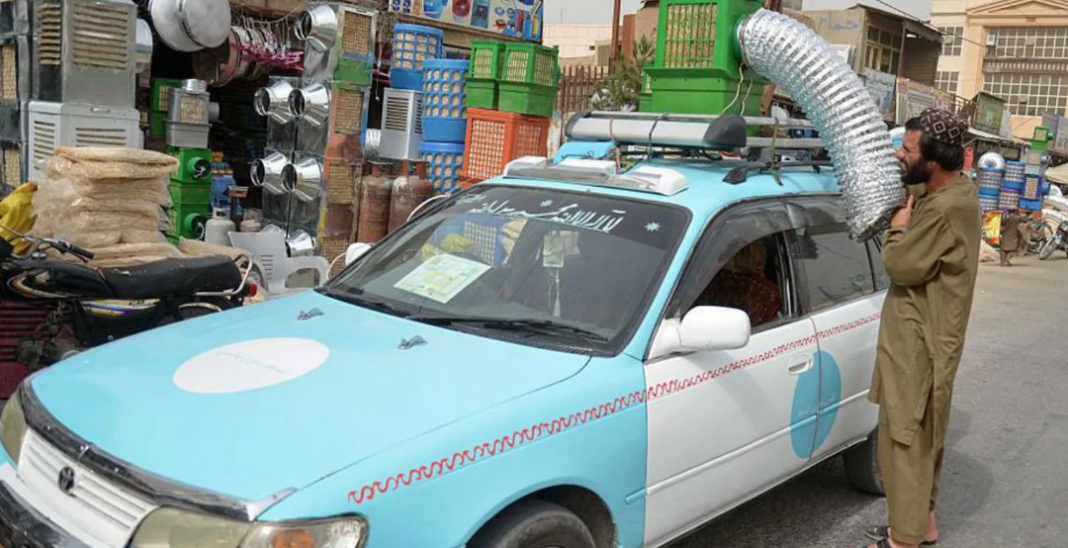
Afghan windcatchers on taxis
Afghan windcatchers on taxis, via the AFP

In the desert heat of Kandahar, Afghanistan, where the asphalt cooks and air conditioners wheeze in surrender, Afghan taxi drivers have taken a cue from Ancient Persia. Temperatures are now over 104 degrees and air con repairs are too expensive. Forget Tesla’s climate control or fancy freon-fueled chillers—these drivers are mounting DIY windcatchers on their car roofs and turning their beat-up Toyotas into eco-cooling machines. The cost? $43.

Call it badgir 2.0: A clever, water-cooled evaporative system rigged from plastic jugs, PVC pipe, swamp-cooler pads, and a 12V pump, all held together by hope and centuries-old wisdom.

Afghan car cooler, DIY car air conditioner, evaporative cooling system, windcatcher technology, Persian windcatcher, sustainable car cooling, off-grid AC, homemade car AC, eco-friendly air conditioner, Kandahar taxi innovation, low-tech air cooling, passive cooling system, DIY swamp cooler, solar car cooler, ancient Persian technology, car cooling without electricity, desert cooling hack, traditional air conditioning, Afghan taxi cooler, budget car air conditioning

These contraptions—locally called “badnivil”—aren’t just a funky roadside gimmick. They’re actually working better than factory-installed AC in dry climates, cooling the entire cab and earning high praise from passengers, who now prefer the “natural AC” over the old mechanical kind.

Afghan car cooler, DIY car air conditioner, evaporative cooling system, windcatcher technology, Persian windcatcher, sustainable car cooling, off-grid AC, homemade car AC, eco-friendly air conditioner, Kandahar taxi innovation, low-tech air cooling, passive cooling system, DIY swamp cooler, solar car cooler, ancient Persian technology, car cooling without electricity, desert cooling hack, traditional air conditioning, Afghan taxi cooler, budget car air conditioning

“With these coolers, you feel the breeze everywhere,” says one driver in a now-viral AFP video. “The AC just blows cold at the front. This is more like nature.”

Related: 5 ways to use air conditioner water

These rooftop air chillers are inspired by windcatchers—tall structures in Persian architecture designed to funnel and cool breezes into homes, often enhanced with water or ice for maximum effect. Combine that principle with a little MacGyver spirit, and you’ve got Kandahar’s answer to climate adaptation on four wheels.

Afghan car cooler, DIY car air conditioner, evaporative cooling system, windcatcher technology, Persian windcatcher, sustainable car cooling, off-grid AC, homemade car AC, eco-friendly air conditioner, Kandahar taxi innovation, low-tech air cooling, passive cooling system, DIY swamp cooler, solar car cooler, ancient Persian technology, car cooling without electricity, desert cooling hack, traditional air conditioning, Afghan taxi cooler, budget car air conditioning
Via the BBC

While the world waits for billion-dollar innovations to solve heat resilience, these Afghan tinkerers have already built theirs—for about $15. Afghan opium producers also rely on solar energy to grow poppies.

So… Want to Make Your Own McGyvered air con for your car?

You don’t need to be in Kandahar—or even be particularly handy—to build a mini version for your car. Here’s a stripped-down DIY guide to create your own Afghan-style windcatcher cooler. No tech degree or camel required.

Afghan car cooler, DIY car air conditioner, evaporative cooling system, windcatcher technology, Persian windcatcher, sustainable car cooling, off-grid AC, homemade car AC, eco-friendly air conditioner, Kandahar taxi innovation, low-tech air cooling, passive cooling system, DIY swamp cooler, solar car cooler, ancient Persian technology, car cooling without electricity, desert cooling hack, traditional air conditioning, Afghan taxi cooler, budget car air conditioning

?️ DIY: Afghan-Style Evaporative Car Cooler

What You’ll Need:
Item Notes

20L plastic water tank or jerry can (mounts on roof or trunk)
Swamp cooler pad / burlap / sponge (acts as the cooling surface)
Small 12V submersible pump (available online or at garden shops)
Flexible tubing or hose to circulate water
Ducting or vent hose to channel cooled air inside
Mesh screen keeps bugs out, air in
Basic tools, zip ties, sealant for rigging and mounting
Optional: solar panel to power the pump without draining your battery

How Jerry-rigged AC Works

The pump draws water from the tank and keeps the cooling pad wet.

As the car moves (or from natural breeze), air blows through the wet pad.

Water evaporates, heat disappears, and cool air is piped inside.

Because your AC runs on water and physics—not gasoline.

Build Instructions (simplified)

Mount a plastic box or crate on the car roof with airflow holes on both sides. Stuff it with wet cooling pads, burlap, or even old T-shirts—just keep them moist.

Run tubing from a small water tank (placed nearby) to a pump that trickles water onto the pad.

Connect a duct from the back of the box down into your cabin (through a window or vent).

Power your pump via your car battery or a tiny solar panel.

Enjoy the quiet hum of sustainability while everyone else melts in traffic.

Pro tip: If your city is humid, this won’t work as well—evaporative cooling is most effective in dry desert air. For urban use, pair it with a small fan for airflow boost.

The Afghan windcatcher car cooler isn’t just clever. It’s low-cost climate adaptation. With rising global temperatures and millions of cars still without functioning air con, it’s a design-for-the-rest-of-us moment. A punk rock move in a world of overdesigned heat tech. Plus, it’s deeply sustainable: no refrigerants, no increased fuel use, no carbon guilt. Just water, airflow, and a little DIY spirit.

My friends in the hot and dry Negev Desert own a Desert Cooler mounted on the roof to keep their home cool, and delightfully more humid in the hot, desert and dry sun. Why these have fallen out of fashion is anyone’s guess.

Karin Kloosterman
Karin Kloostermanhttp://www.greenprophet.com
Karin Kloosterman is an award-winning journalist, innovation strategist, and founder of Green Prophet, one of the Middle East’s pioneering sustainability platforms. She has ranked in the Top 10 of Verizon innovation competitions, participated in NASA-linked challenges, and spoken worldwide on climate, food security, and future resilience. With an IoT technology patent, features in Canada’s National Post, and leadership inside teams building next-generation agricultural and planetary systems — including Mars-farming concepts — Karin operates at the intersection of storytelling, science, and systems change. She doesn’t report on the future – she helps design it. Reach out directly to [email protected]

Read More

LEAVE A REPLY

Please enter your comment!
Please enter your name here

TRENDING

5 projects to help kickstart your company’s sustainability journey 

True progress happens when environmental ambition meets action. Decarbonizing efficiently is possible for any business in any sector, but actually getting started can sometimes feel daunting.   The trick? It’s to start small and build momentum. Here are five potential projects to help you get started.  

Make paper mache with flowers to create stunning vase

There’s something quietly beautiful about what Rebloom Studio is doing, and it starts with waste. At wholesale flower markets, mountains of unsold blooms are tossed out at the end of each cycle. Perfect flowers, just not sold in time. Most of them are burned or dumped. Rebloom takes that moment and turns it into something else.

10 Surprising AC Water Uses Cities Are Ignoring

All air conditioners release water. That's Physics. Cities like Los Angeles pour billions of water down the drain every year. And while home owners who are savvy to water reuse are finding ways to use AC water in the garden (here are 5 ways to use air con water at home), or in art studios (it's basically free distilled water), cities could save water in meaningful ways by using creative ideas. These are solutions you can send to urban planners and those running smart city accelerator programs. Pick one of them and you might win the grant! 

Hormuz 2026 Conflict Poses an Energy and Food Security Dilemma in a Warming World

As tensions rise in one of the world’s most critical maritime chokepoints, the ripple effects go far beyond oil—touching food systems, climate pressures, and regional stability

Plants can eat dust and grow – should we stop dusting them?

Dusty plants? Let them eat their hearts out.

How to quiet noise from construction in your office

Streets need to be resurfaced in New York but the humming and grinding noise is unsettling. Noise is environmental pollution. 

EarthX and a blueprint for sustainable investing

Trammell S. Crow, a Dallas-based businessman and father of four, is focusing his efforts on impact investing, and media that focuses on saving the planet through EarthX.

Mining Afghanistan’s Mineral Discoveries Similar to Avatar

Now that American forces in Afghanistan are commemorating the longest period of any war that America has been involved in, including the 1965-73 Vietnam War, the recent discoveries of large and extremely valuable mineral and metal deposits may finally bring to light a reason to continue the presence of US fighting forces in this war torn and backward country.

From Pilot Plant to Global Stage: How Aduro Clean Technologies’ 2026 Expansion Signals a Turning Point for Chemical Recycling Investors Like Yazan Al Homsi

The company's Next Generation Process (NGP) Pilot Plant in London, Ontario, has officially moved into initial operating campaigns, generating the kind of structured, repeatable data that separates laboratory promise from commercial viability.

Nobul’s Regan McGee on Shareholder Value: “Complacency Is the Silent Killer” 

Why the governance framework designed to protect shareholders so...

Should You Invest in the Private Market?

startustartup Unlike public stock exchanges, which offer daily trading, strict...

How to build a 100-year-company

Kongō Gumi is a Japanese construction company, purportedly founded in 578 A.D., making it the world's oldest documented company. What can we learn about building sustainable businesses from them?

How AI Helps SaaS Companies Reduce Repetitive Customer Support Work

SaaS products are designed for large numbers of users with different levels of experience, and also in renewable energy.

Popular Categories