84% of world’s reefs bleached in disastrous news for the sea

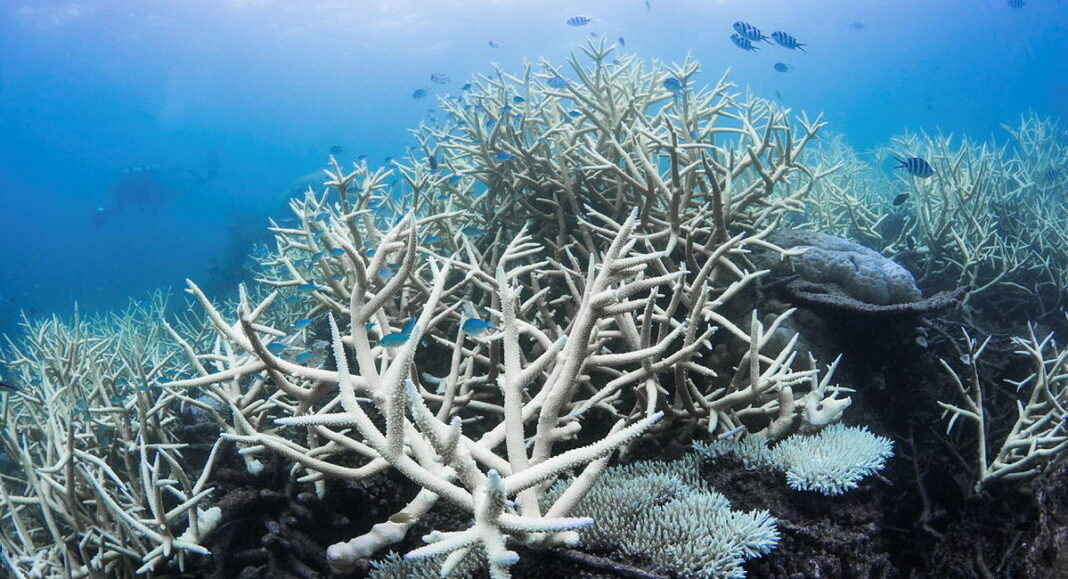
Great Barrier Reef Foundation Image of coral bleaching via the Great Barrier Reef Foundation[/caption]

The most pressing environmental story this week is the alarming escalation of the 2023–2025 global coral bleaching event, now recognized as the most extensive in recorded history. As of April 2025, approximately 84% of the world’s coral reefs have been affected, surpassing the previous record set during the 2014–2017 event.

This bleaching event, ongoing since February 2023, is primarily driven by elevated ocean temperatures linked to anthropogenic climate change. Regions such as the Barrier Reef, Florida, and the Chagos Archipelago have experienced severe impacts, with some areas reporting up to 95% coral mortality.

Coral reefs are vital ecosystems that support a vast array of marine life, protect coastlines from erosion, and provide livelihoods for millions through fishing and tourism. Coral reef home the food that fish eat. They protect fish and unique sea creatures.

The widespread bleaching and subsequent coral deaths threaten biodiversity, food security, and economic stability in many coastal communities. The International Coral Reef Initiative has officially declared this the fourth global bleaching event. Scientists and environmental organizations are urging immediate action to reduce greenhouse gas emissions and implement conservation strategies to protect remaining coral ecosystems.This event underscores the urgent need for global climate action to mitigate the impacts of climate change on critical ecosystems.

You can read the ICRI report here.

The world’s coral reefs are undergoing an unprecedented crisis. Since early 2023, the planet has been experiencing its fourth—and most severe—global coral bleaching event, with approximately 84% of reef areas affected across at least 82 countries. Coral bleaching occurs when corals, stressed by elevated water temperatures, expel the symbiotic algae (zooxanthellae) that provide them with color and essential nutrients. Without these algae, corals turn white and become more susceptible to disease and death. If stressful conditions persist, the likelihood of coral mortality increases significantly.

Related: feed the reef while wearing this sunscreen

Causes of the Current Crisis

The ongoing bleaching event is primarily driven by record-breaking ocean temperatures, a consequence of anthropogenic climate change and exacerbated by the El Niño climate pattern. In 2024, global sea surface temperatures reached an unprecedented average of 20.87°C (69.57°F), intensifying marine heatwaves and stressing coral ecosystems worldwide.

“We’ve eclipsed the previous record by 11.3% and surpassed the previous record in half the amount of time,” noted Derek Manzello, coordinator of NOAA’s Coral Reef Watch.

Global Impact

The bleaching event has affected reefs across the Pacific, Atlantic, and Indian Oceans, including regions previously considered thermal refuges, such as Raja Ampat in Indonesia and the Gulf of Eilat in Israel where intense research is ongoing at par with western standards. Significant coral losses have been recorded globally, with mortality rates ranging from 20% to over 90% in some areas.

In Honduras, for instance, a reef that maintained about 46% living coral in September 2023 declined to just 5% by February 2024—a drop described as unprecedented by marine researcher Melanie McField.

Coral reefs, covering less than 1% of the ocean floor, support approximately 25% of all marine species. Their decline threatens marine biodiversity, fisheries, tourism, and coastal protection. The economic value of coral reefs is estimated at $2.7 trillion annually, underscoring their significance to global economies.

Scientists emphasize that while local conservation efforts are vital, they are insufficient without addressing the root causes of climate change. “Without addressing the root causes of climate change, primarily fossil fuel emissions, restoration efforts may offer only temporary relief,” experts warn.

The current crisis serves as a stark reminder of the urgent need for global climate action to preserve these vital ecosystems for future generations.


Karin Kloosterman
Karin Kloostermanhttp://www.greenprophet.com
Karin Kloosterman is an award-winning journalist, innovation strategist, and founder of Green Prophet, one of the Middle East’s pioneering sustainability platforms. She has ranked in the Top 10 of Verizon innovation competitions, participated in NASA-linked challenges, and spoken worldwide on climate, food security, and future resilience. With an IoT technology patent, features in Canada’s National Post, and leadership inside teams building next-generation agricultural and planetary systems — including Mars-farming concepts — Karin operates at the intersection of storytelling, science, and systems change. She doesn’t report on the future – she helps design it. Reach out directly to [email protected]

Read More

TRENDING

Barnacle glue could fix coral reefs, inspire new advances in building and medicine

Aalto University researchers create a protein-based adhesive inspired by barnacles and mussels that works underwater and could aid coral reef restoration.

Weston Higginbotham found dead in a Kyoto forest: is climate anxiety part of the story?

In some ways, Weston has become a symbol of a generation wrestling with environmental and technological anxiety. Friends and family described him as deeply concerned about environmental issues. Reports also noted that he questioned the growing role of artificial intelligence in daily life, even reportedly disagreeing with his mother about her use of AI.

Billie Eilish’s Mom Takes the Stage at Hollywood Climate Summit — But Does Hollywood Still Care About Climate Change?

Hollywood once promised to help save the planet. Leonardo DiCaprio warned of climate catastrophe from awards stages. Celebrities flew to climate conferences. Studios pledged greener productions. Streaming platforms rushed to commission environmental documentaries. But in 2026, with the aftermath of wildfires, heatwaves and floods becoming routine, a question lingers: Does Hollywood still care about climate change?

Can Scientists Predict Coral Bleaching Before It Happens?

Now researchers at the Woods Hole Oceanographic Institution (WHOI) in the US say they have developed a way to predict coral bleaching five to six months before it occurs, potentially giving reef managers enough time to intervene and save vulnerable corals.

10 Amazing Facts About the Sidr Tree

Most people in the West have never heard of the Sidr tree. That's strange when you think about it. This tough, thorny desert tree has fed people, bees, birds, and camels for thousands of years. It appears in Islamic tradition. Its honey sells for astonishing prices.

Locals From Rishon Fight IKEA

Big Box stores are a pretty new concept in Israel, and thank God that not every Israeli city wants them in their backyard. A word from someone who has see the beautiful farmland around her hometown Newmarket, Ontario stripped and converted into vulgar strip malls of big box shops: they have no place in a healthy and sustainable town or city.

The Jewish National Fund Meets An Inconvenient Truth

According to the JNF, it has transformed thousands of acres of barren land into green forests in Israel. They state that each person emits about 23 tons of carbon per year, estimating that each tree planted can absorb one ton of carbon in its lifetime. That's a whole lot of trees you'd need to be planting. Could so many fit in Israel?

How to quiet noise from construction in your office

Streets need to be resurfaced in New York but the humming and grinding noise is unsettling. Noise is environmental pollution. 

EarthX and a blueprint for sustainable investing

Trammell S. Crow, a Dallas-based businessman and father of four, is focusing his efforts on impact investing, and media that focuses on saving the planet through EarthX.

Mining Afghanistan’s Mineral Discoveries Similar to Avatar

Now that American forces in Afghanistan are commemorating the longest period of any war that America has been involved in, including the 1965-73 Vietnam War, the recent discoveries of large and extremely valuable mineral and metal deposits may finally bring to light a reason to continue the presence of US fighting forces in this war torn and backward country.

From Pilot Plant to Global Stage: How Aduro Clean Technologies’ 2026 Expansion Signals a Turning Point for Chemical Recycling Investors Like Yazan Al Homsi

The company's Next Generation Process (NGP) Pilot Plant in London, Ontario, has officially moved into initial operating campaigns, generating the kind of structured, repeatable data that separates laboratory promise from commercial viability.

Nobul’s Regan McGee on Shareholder Value: “Complacency Is the Silent Killer” 

Why the governance framework designed to protect shareholders so...

Should You Invest in the Private Market?

startustartup Unlike public stock exchanges, which offer daily trading, strict...

Popular Categories