Plastic collected in bird nests is tiny time capsule

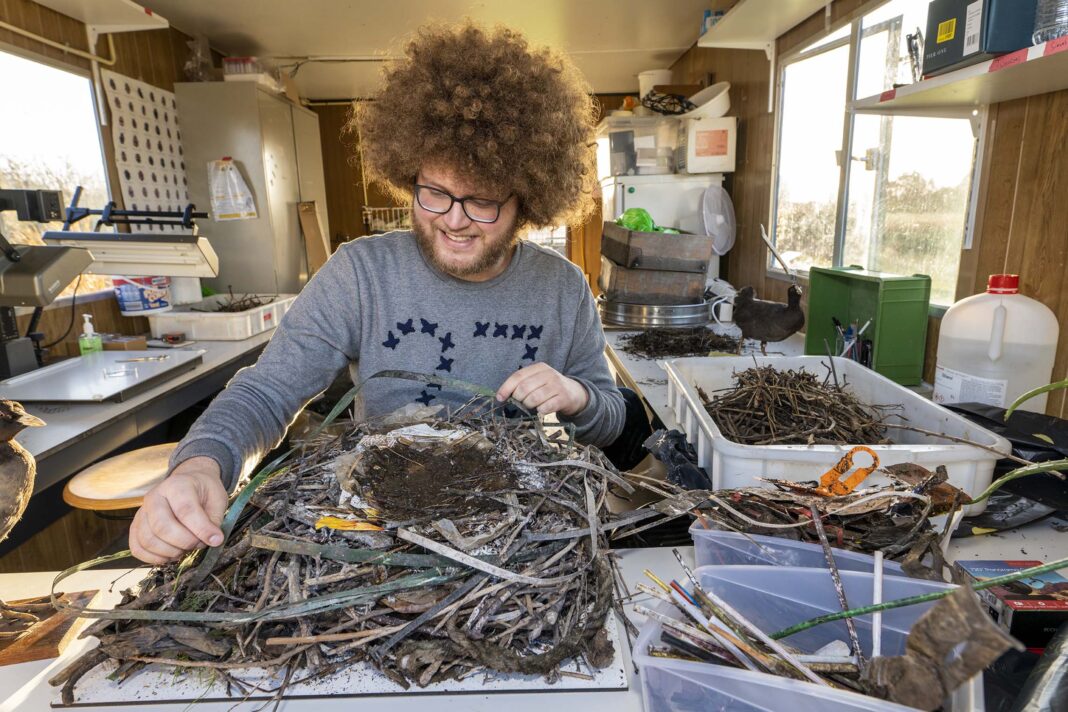
Urban ecologist Auke-Florian Hiemstra sorts through trash found inside a coot’s nest.Hielco Kuipers
Urban ecologist Auke-Florian Hiemstra sorts through trash found inside a coot’s nest. Hielco Kuipers

Birds are urban foragers in the most complete sense. I once found a nest in my backyard with a piece of dark blue wool I had been using to knit a scarf for a loved one. That made my heart warm. But when the winds blow in the spring, the old birds nests in my city come loose and I find all manners of plastic bits in their nests from construction sites to wrappers from food. That makes my heart sad. Especially with so much plastics being found in the human body.

Auke-Florian Hiemstra, a scientist from Holland, is looking into the nest of urban birds and is finding the most unusual wrappers, some going back decades in time. He’s like an urban archeologist, understanding how birds construct their nests and reuse materials year after year. One nest, from a Eurasian coot (Fulica atra), was retrieved from an Amsterdam canal with layers going back 30 years in time: the outer layers contained several face masks from the pandemic, while the base held a Mars bar wrapper promoting the 1994 FIFA World Cup.

The discovery sheds light on the growing interaction between urban wildlife and human-made materials, a trend that has intensified in recent decades. Birds, particularly in cities, are increasingly incorporating plastic and other human debris into their nests. He has even found bird nests made from anti-bird spikes. “Even for me as a nest researcher, these are the craziest bird nests I’ve ever seen. Today my paper came out on this rebellious behaviour. And it’s like telling a joke…”

Bird nests made from anti-bird spikes! ? Even for me as a nest researcher, these are the craziest bird nests I've ever seen. Today my paper came out on this rebellious behaviour. And it's like telling a joke... Bird nests made from anti-bird spikes! ? Even for me as a nest researcher, these are the craziest bird nests I've ever seen. Today my paper came out on this rebellious behaviour. And it's like telling a joke...

Typically, coots build new nests each year, but in urban areas, “reusing the foundation of older plastic nests may save time, giving the birds more opportunities to forage or defend their territory,” says Hiemstra. However, he adds, “These face masks — part of our pandemic layer — pose a serious hazard for coots, especially with their large, dinosaur-like feet.”

Auke-Florian Hiemstra

This can offer practical benefits, such as reusing the structural components of old nests, which can save valuable time and energy. Yet, these materials also come with risks. While the plastic may be convenient, it is not biodegradable and poses a long-term hazard to the birds.

Bird nests and food wrappers help date the nests

The face masks found in the nest are particularly concerning, as they can entangle or restrict the movement of the coots, especially given their large, heavy feet. This poses a significant danger, as entanglement can affect the birds’ ability to forage for food or escape from predators.

Furthermore, the accumulation of plastic in natural habitats is a growing environmental issue, with animals unknowingly ingesting or getting trapped in discarded plastic materials. Trump brings back the plastic straw is a win for some, a loss for wildlife.

The researchers are calling for more awareness of this issue, urging urban planners and environmentalists to consider the impact of waste on local wildlife. As human society produces ever more plastic waste, it is essential to find ways to mitigate its effects on the ecosystems that share our cities.

Hiemstra hopes that this study on birds nests will encourage more research into how wildlife adapts to urban environments and the materials they encounter there, while also highlighting the need for better waste management and conservation efforts.
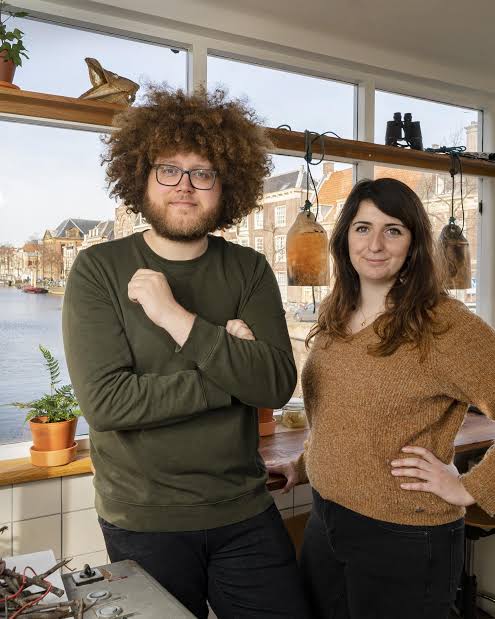
Hiemstra, together with his girlfriend Liselotte Rambonnet and a team of volunteers, takes to the city’s canals every week to rid them of plastic waste. He has also written a children’s book about animals in the city.


Karin Kloosterman
Karin Kloostermanhttp://www.greenprophet.com
Karin Kloosterman is an award-winning journalist, innovation strategist, and founder of Green Prophet, one of the Middle East’s pioneering sustainability platforms. She has ranked in the Top 10 of Verizon innovation competitions, participated in NASA-linked challenges, and spoken worldwide on climate, food security, and future resilience. With an IoT technology patent, features in Canada’s National Post, and leadership inside teams building next-generation agricultural and planetary systems — including Mars-farming concepts — Karin operates at the intersection of storytelling, science, and systems change. She doesn’t report on the future – she helps design it. Reach out directly to [email protected]

Read More

TRENDING

Do you have microplastics in your sperm?

Biohacker finds a way to remove microplastics from his sperm

Billie Eilish’s Mom Takes the Stage at Hollywood Climate Summit — But Does Hollywood Still Care About Climate Change?

Hollywood once promised to help save the planet. Leonardo DiCaprio warned of climate catastrophe from awards stages. Celebrities flew to climate conferences. Studios pledged greener productions. Streaming platforms rushed to commission environmental documentaries. But in 2026, with the aftermath of wildfires, heatwaves and floods becoming routine, a question lingers: Does Hollywood still care about climate change?

What is holistic dentistry?

A recent study of graduating dental hygiene students in the United States suggests there is a knowledge gap. Researchers found that 42% of respondent students were unfamiliar with holistic dentistry, while 60% did not feel comfortable discussing it with patients. Yet nearly half believed the topic deserved greater attention in dental hygiene education.

Baby fruit pouches ejecting microplastics into every serving

For generations, feeding a baby meant pureeing what you...

Baby teeth read like tree rings paint a picture of toxins in early life

A new study from the Icahn School of Medicine at Mount Sinai in New York offers a striking insight into how the environments we are born into can quietly shape our brains years later. By analyzing naturally shed baby teeth, the ones tucked under pillows for the tooth fairy, researchers have reconstructed a detailed timeline of exposure to environmental metals during pregnancy and early infancy.

Yerukim Forms a New Green Economy Where the Money is Really Green

The Yerukim members who pick up the recyclables get to keep the monetary reward, the public earns "green" bills that can be used in shops, and business owners get to be associated with environmentalism.

Choosing Riyadh over Dubai? What Investors Should Know

Saudi Arabia is deploying capital at unmatched scale to catalyze tourism and advanced industry while rewiring its power-and-water backbone. The investable frontier is widening—especially in renewables, grid storage, water efficiency/desal retrofits, and hospitality operating platforms. Prudent investors will insist on phased delivery, enforceable KPIs (energy, water, biodiversity), and RHQ/zone compliance—while pricing political-economy and reputational risks alongside growth upside.

Sell your cooking oil for biodiesel money

Want to make money on old french fry oil? Sell it.

Qatar Alternative Energy Summit Pairs Investors And Innovators

Alternative energy investors and innovators can meet n' greet in Doha, Qatar March 16 and 17.

Here’s How To Implement The Four Pillars Of Employee Engagement

If you throw a party for your work team and they are vegans, don't make it a barbecue. Know the sustainability values of your team to boost moral and retain good people.

Locals From Rishon Fight IKEA

Big Box stores are a pretty new concept in Israel, and thank God that not every Israeli city wants them in their backyard. A word from someone who has see the beautiful farmland around her hometown Newmarket, Ontario stripped and converted into vulgar strip malls of big box shops: they have no place in a healthy and sustainable town or city.

The Jewish National Fund Meets An Inconvenient Truth

According to the JNF, it has transformed thousands of acres of barren land into green forests in Israel. They state that each person emits about 23 tons of carbon per year, estimating that each tree planted can absorb one ton of carbon in its lifetime. That's a whole lot of trees you'd need to be planting. Could so many fit in Israel?

How to quiet noise from construction in your office

Streets need to be resurfaced in New York but the humming and grinding noise is unsettling. Noise is environmental pollution. 

Popular Categories