Can we breed cows that don’t fart?

alternative dairy farming
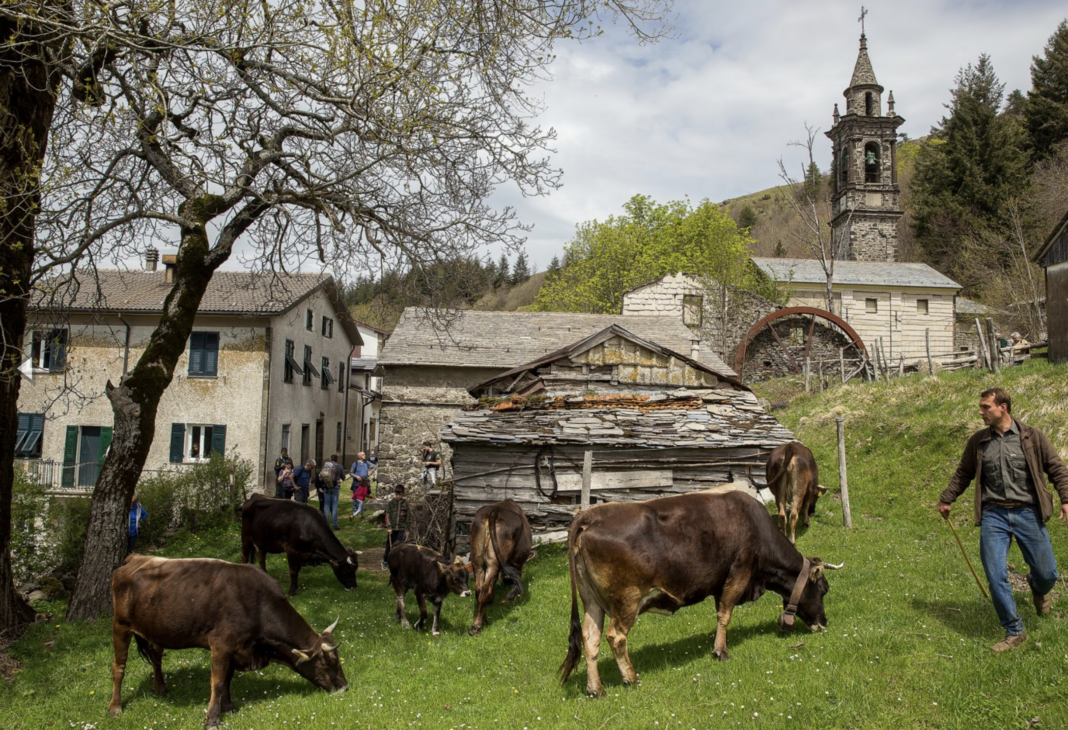
Slow Food cows make high fat milk using regenerative agriculture. Such food made by mistakenly labeled as unhealthy.

Selective breeding for cows with more efficient gut biomes might be better than Bovaer

People are afraid of the cow supplement Bovaer added to animal feed and used in milk supplied to large chains like Aldi. Bovaer is touted to reduce cow farts in animals, and make rumination more efficient thus generating less methane gas. But people don’e want Bovaer in their milk and have been dumping it in response. Could there be a better way? By breeding the cows with more productive microbiomes? This is the question of a research team.

As we approach a point of no return in terms of global warming and Europeans catch their collective breath following the highest temperatures ever recorded across the continent, and communities in the United States’ Plains states continue to assess the damage from unprecedented flooding and tornado action in May and June, an international research team headed by Prof. Itzhak Mizrahi  of BGU’s  Department of Life Sciences  and of The National Institute for Biotechnology in the Negev (NIBN) and by Prof. Emeritus R.J. Wallace of Scotland’s University of Aberdeen, has found that cow genes can be used to control rumen microbiomes in order to control the amount of greenhouse gasses that animals emit.

Should cows be eating Bovaer so they produce less methane?

In addition to the ‘hard science’ value of the discovery, the findings have profound implications for dairy and beef farmers trying to reduce their industry’s contribution to climate change as well as bolster dairy producers’ attempts to maintain or improve milk production efficiency while maintaining product safety.

The study, which covered 1016 cows (816 Holstein dairy cows, 200 Nordic Red dairy cows) spread over four European countries (Italy, Finland, Sweden and the United Kingdom), found that that a small number of host-determined, heritable microbes make significant contributions to explaining experimental variables and host phenotypes. This, they predict, will lead to microbiome-led breeding/genetic programs to provide a sustainable solution to increase efficiency and reduce emissions from ruminant livestock.

At the cow dung festival
At the cow dung festival via Hindustan

“Our findings are both a major breakthrough for basic science and will have a positive impact on two major challenges facing the international community for the foreseeable future: climate change and food security,” says Prof. Mizrahi, who also serves as a member of the  National Institute for Biotechnology in the Negev.

“Even now, the planet is operating at maximum output for meat and dairy products, and that problem is only going to get worse in the coming decades: By 2050 the world will have approximately 9 billion people. That’s going to mean a serious crisis in protein nutrition.

“We expect to be able to increase production efficiency while at the same time reducing methane emissions. It would be hard to think of a more important ‘win-win’ for the planet than that,” Prof. Mizrahi added.

The study offers such as inoculating key core species associated with feed efficiency or methane emissions as precision probiotics approach could be considered as likely to complement the heritable microbiome towards optimized rumen function, they said.

Significantly, the researchers believe that although the current focused on two bovine dairy breeds, the results are likely to be applicable to beef animals and other ruminant species. “Given the high importance of diet in performance and the composition of the rumen microbiome, such programs should take special cognizance of likely feeding regimes. Within that context, following the overall predictive impact of identified trait-associated heritable microbes on production indices should result in a more efficient and more environmentally friendly ruminant livestock industry,” the study said.

Karin Kloosterman
Karin Kloostermanhttp://www.greenprophet.com
Karin Kloosterman is an award-winning journalist, innovation strategist, and founder of Green Prophet, one of the Middle East’s pioneering sustainability platforms. She has ranked in the Top 10 of Verizon innovation competitions, participated in NASA-linked challenges, and spoken worldwide on climate, food security, and future resilience. With an IoT technology patent, features in Canada’s National Post, and leadership inside teams building next-generation agricultural and planetary systems — including Mars-farming concepts — Karin operates at the intersection of storytelling, science, and systems change. She doesn’t report on the future – she helps design it. Reach out directly to [email protected]

Read More

TRENDING

Weston Higginbotham found dead in a Kyoto forest: is climate anxiety part of the story?

In some ways, Weston has become a symbol of a generation wrestling with environmental and technological anxiety. Friends and family described him as deeply concerned about environmental issues. Reports also noted that he questioned the growing role of artificial intelligence in daily life, even reportedly disagreeing with his mother about her use of AI.

Billie Eilish’s Mom Takes the Stage at Hollywood Climate Summit — But Does Hollywood Still Care About Climate Change?

Hollywood once promised to help save the planet. Leonardo DiCaprio warned of climate catastrophe from awards stages. Celebrities flew to climate conferences. Studios pledged greener productions. Streaming platforms rushed to commission environmental documentaries. But in 2026, with the aftermath of wildfires, heatwaves and floods becoming routine, a question lingers: Does Hollywood still care about climate change?

Can Scientists Predict Coral Bleaching Before It Happens?

Now researchers at the Woods Hole Oceanographic Institution (WHOI) in the US say they have developed a way to predict coral bleaching five to six months before it occurs, potentially giving reef managers enough time to intervene and save vulnerable corals.

10 Amazing Facts About the Sidr Tree

Most people in the West have never heard of the Sidr tree. That's strange when you think about it. This tough, thorny desert tree has fed people, bees, birds, and camels for thousands of years. It appears in Islamic tradition. Its honey sells for astonishing prices.

5 projects to help kickstart your company’s sustainability journey 

True progress happens when environmental ambition meets action. Decarbonizing efficiently is possible for any business in any sector, but actually getting started can sometimes feel daunting.   The trick? It’s to start small and build momentum. Here are five potential projects to help you get started.  

Yerukim Forms a New Green Economy Where the Money is Really Green

The Yerukim members who pick up the recyclables get to keep the monetary reward, the public earns "green" bills that can be used in shops, and business owners get to be associated with environmentalism.

Choosing Riyadh over Dubai? What Investors Should Know

Saudi Arabia is deploying capital at unmatched scale to catalyze tourism and advanced industry while rewiring its power-and-water backbone. The investable frontier is widening—especially in renewables, grid storage, water efficiency/desal retrofits, and hospitality operating platforms. Prudent investors will insist on phased delivery, enforceable KPIs (energy, water, biodiversity), and RHQ/zone compliance—while pricing political-economy and reputational risks alongside growth upside.

Sell your cooking oil for biodiesel money

Want to make money on old french fry oil? Sell it.

Qatar Alternative Energy Summit Pairs Investors And Innovators

Alternative energy investors and innovators can meet n' greet in Doha, Qatar March 16 and 17.

Here’s How To Implement The Four Pillars Of Employee Engagement

If you throw a party for your work team and they are vegans, don't make it a barbecue. Know the sustainability values of your team to boost moral and retain good people.

Locals From Rishon Fight IKEA

Big Box stores are a pretty new concept in Israel, and thank God that not every Israeli city wants them in their backyard. A word from someone who has see the beautiful farmland around her hometown Newmarket, Ontario stripped and converted into vulgar strip malls of big box shops: they have no place in a healthy and sustainable town or city.

The Jewish National Fund Meets An Inconvenient Truth

According to the JNF, it has transformed thousands of acres of barren land into green forests in Israel. They state that each person emits about 23 tons of carbon per year, estimating that each tree planted can absorb one ton of carbon in its lifetime. That's a whole lot of trees you'd need to be planting. Could so many fit in Israel?

How to quiet noise from construction in your office

Streets need to be resurfaced in New York but the humming and grinding noise is unsettling. Noise is environmental pollution. 

Popular Categories