If there’s one thing we learned this week, it’s that AI isn’t just a playground for bored tech bros and teens asking ChatGPT to do their homework or work as their therapists. It’s becoming one of the biggest energy hogs on Earth—and maybe, just maybe, it could be the force that finally pushes us into a clean energy future.
In a bombshell new report, the International Energy Agency (IEA) says that data centers—driven by AI’s explosive growth—could suck up 945 terawatt-hours of electricity per year by 2030. That’s about as much power as Japan uses in a year. (Somewhere, a wind turbine just shuddered.)
Related: AI and saving energy in farming
Yet the International Monetary Fund (IMF) brings a rare sliver of optimism: they predict that the economic lift from AI—about a 0.5% boost to global GDP annually from 2025 to 2030—could outweigh the environmental damage. Of course, that’s assuming we don’t completely fumble the transition to clean power. And the opportunities for innovators are enormous.
Hank Paulson, former U.S. Treasury Secretary and one of the old-school bigwigs who deals with economic earthquakes, is sounding the alarm: clean energy isn’t just a good idea—it’s the only way the West can stay ahead of China in the AI arms race.
China is pouring money into renewables and nuclear faster than you can say “photovoltaic.” US and European politicians? Still arguing over subsidies.
“The energy landscape has changed dramatically in recent years,” writes Paulson. “Russia’s invasion of Ukraine reshaped it overnight. Prices soared and governments scrambled to reduce reliance on Russian gas. Energy security became paramount. As Europe and other regions that are not energy independent seek to address these vulnerabilities, they are increasingly looking to solar and wind to reduce fossil fuel dependence.
“China is forging ahead, pairing long-term industrial strategy with massive investment in both AI infrastructure and the energy to support it. Its data-centre market is expected to grow by nearly $275bn between 2025 and 2029. It invested more in renewables in 2024 than the US, EU and UK combined. Beijing’s clear ambition is to dominate the technologies of the future, understanding that energy policy will be key.
“Meanwhile, in the US, as AI models become more complex and are deployed at greater scale and cloud power grows, electricity demand is rising faster than utilities can build capacity. Some data centres now consume as much power as mid-sized cities.
“In Virginia, they consumed roughly a quarter of the state’s power load in 2023. This has increased concern over strains on the system and higher residential bills, leading to new regulations and an effective moratorium on building data centres in the state.”
Woefully some billion dollar landmark solar energy projects shut down, like Iavnpah in Califonia, some companies are already sprinting ahead:
BrightNight, with its AI-driven PowerAlpha platform, just won “CleanTech AI Innovation of the Year.” They’re fine-tuning hybrid renewable projects (think solar + wind + storage) to maximize output while minimizing costs. It’s like giving Mother Nature a PhD in systems engineering.
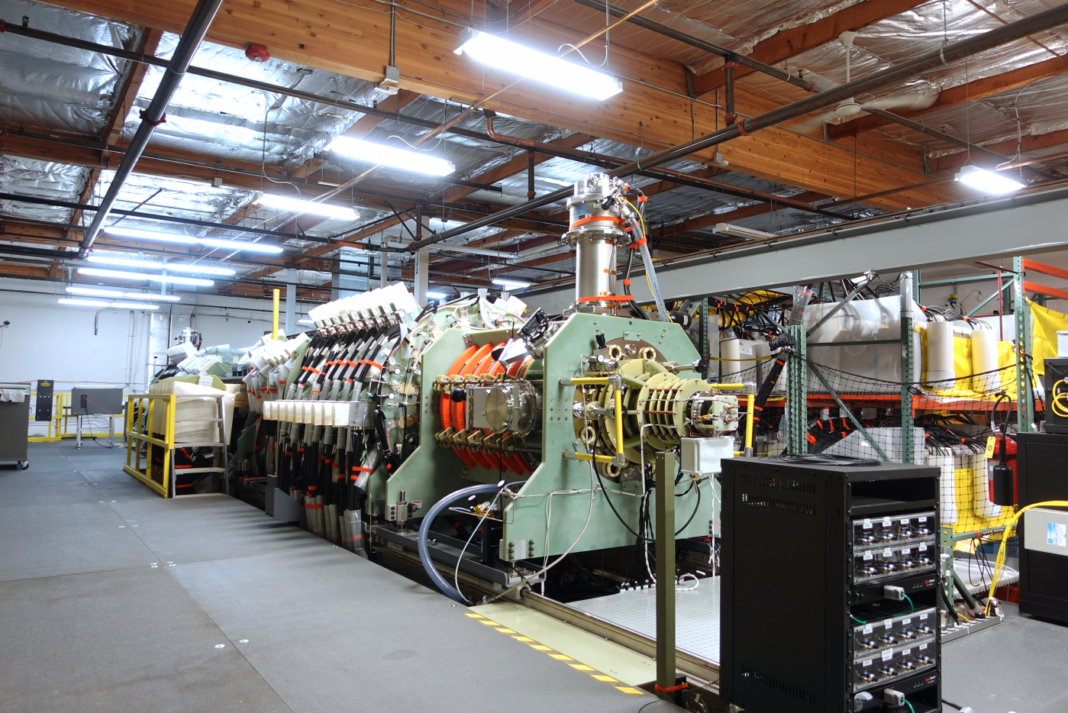
Helion Energy (U.S.) and the European fusion project SPARC both hit historic milestones. Helion Energy is a U.S.-based company working on nuclear fusion — the holy grail of clean, virtually limitless energy. In April 2025, electricity generated from a fusion reactor was successfully fed into the European grid for the first time. It’s tiny now—but this is what scientists have dreamt about for decades: energy as abundant as the stars, without the radioactive hangover.
University of Illinois researchers unveiled an AI reactor-monitoring system that’s 1,400 times faster than anything we’ve used before, setting a new gold standard for nuclear safety.
PowerGNN, a fresh-off-the-lab Graph Neural Network from Stanford researchers, is making sense of renewable-heavy power grids. Predicting solar and wind outputs used to be like guessing the weather on Mars. Now, it’s getting shockingly precise.
The thread running through all these breakthroughs? Speed. Intelligence. Urgency.
The big story of the week is this: AI could crash the grid—or it could save it. And companies are rushing to make sure it’s the latter.