
Ancient potters in Syria were child laborers

Pottery children Syria, Ebla

Children as young as 8 years have fingerprints on 4,500 year-old pottery vessels found in an archeology site in Syria 

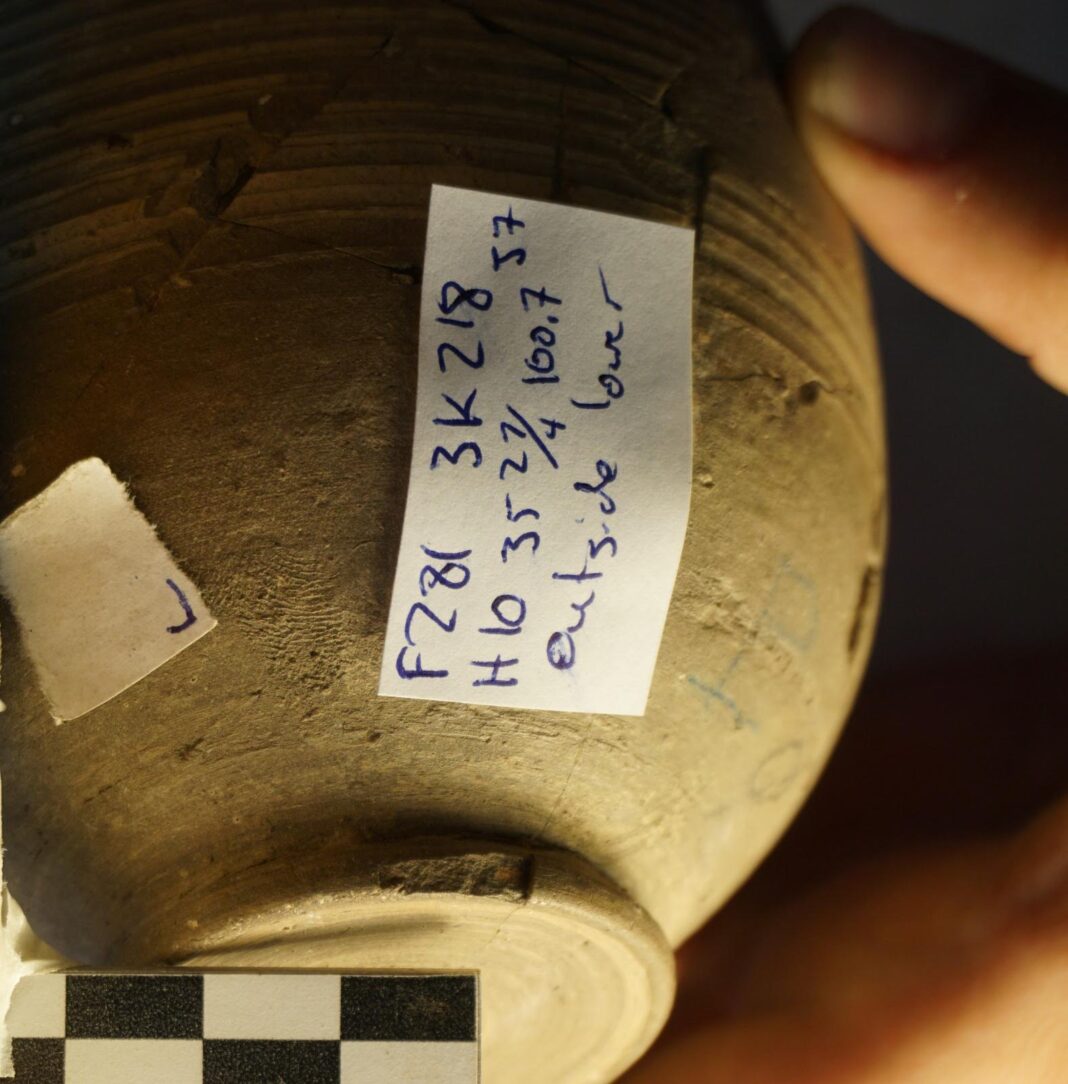
Archaeologists analyzed 450 pottery vessels made in Tel Hama, a town at the edge of the Ebla Kingdom, one of the most important Syrian kingdoms in the Early Bronze Age (about 4,500 years ago), and found that two thirds of the pottery vessels were made by children – starting at the ages of seven and eight.

Along with the use of children for the needs of the kingdom, they also found evidence of the children’s’ independent creations outside the industrial framework, which illustrate the spark of childhood even in early urban societies. The research was led by Akiva Sanders from Tel Aviv University in cooperation with researchers from Copenhagen.

The findings were published in the journal Childhood in the Past.

“Our research allows us a rare glimpse into the lives of children who lived in the area of ​​the Ebla Kingdom, one of the oldest kingdoms in the world,” says Sanders. “We discovered that at its peak, roughly from 2400 to 2000 BCE, the cities associated with the kingdom began to rely on child labor for the industrial production of pottery. The children worked in workshops starting at the age of seven, and were specially trained to create cups as uniformly as possible – which were used in the kingdom in everyday life and at royal banquets.” 

Related: This pottery glaze could work on Mars

As is well known, a person’s fingerprints do not change throughout their life. For this reason, the size of the palm can be roughly deduced from measuring the density of the margins of the fingerprint – and from the size of the palm, the age and sex of the person can estimated.

The pottery from Tel Hama, on the southern border of the Kingdom of Ebla, was excavated in the 1930s, and since then has been kept in the National Museum in Denmark. From the analysis of the fingerprints of the pottery it appears that most of them were made by children. In the city of Hama city two thirds of the pottery was made by children – the other third was created by older men.

Akiva Sanders from Tel Aviv University

“At the beginning of the Early Bronze Age, some of the world’s first city-kingdoms arose in the Levant and Mesopotamia,” says Sanders. “We wanted to use the fingerprints on the pottery to understand how processes such as urbanization and the centralization government functions affected the demographics of the ceramic industry. In the town of Hama, an ancient center for the production of ceramics, we initially see potters around the age of 12 and 13, with half the potters being under 18, and with boys and girls in equal proportions.

“This statistic changes with the formation of the Kingdom of Ebla, when we see that potters were starting to produce more goblets for banquets. And since more and more alcohol-fueled feasts were held, the cups were frequently broken – and therefore more cups needed to be made.

Palace in Ebla
A palace in the ancient Syrian kingdom of Ebla

“Not only did the Kingdom begin to rely more and more on child labor, but the children were trained to make the cups as similar to each other as possible. This is a phenomenon we also see in the industrial revolution in Europe and America: it is very easy to control children and teach them specific movements to create standardization in handicrafts.”

Modern, handmade pottery vessels bahaus and brut style by Kloosterman Clay
Modern, handmade pottery vessels Bauhaus and brutal style by Kloosterman Clay. Today child labor is considered a crime.

However, there was one bright spot in the children’s lives: making tiny figurines and and miniature vessels for themselves. “These children taught each other to make miniature figurines and vessels, without the involvement of the adults,” says Dr. Sanders. “It is safe to say that they were created by children – and probably including those skilled children from the cup-making workshops. It seems that in these figurines the children expressed their creativity and their imagination.”

Ancient artifacts are easy to find and loot from Syria. Most of the archeology sites are without strict security. And terror groups like ISIS have blown up major archeology sites in Syria and the Middle East over the years.


Read More

TRENDING

Iron age folks made tools from dead peoples’ bones

Scientists have uncovered evidence of an Iron Age funerary tradition involving the deliberate removal of human brains and the fashioning of long bones into sharp tools.

Quilts, Soil, and the New Folk Memory Movement

Experimental biofabricators are now printing patterns on fabric using mushroom-based inks, and even making mushroom paper and mushroom-based leather—creating textiles that age, change, and biodegrade intentionally. Quilts that are meant to return to the earth.

Water conflicts in the Middle East region to watch in 2025

Rising temperatures, unpredictable rainfall, and more frequent droughts amplify existing disputes. Water scarcity can fuel unrest, as seen in Iran’s Khuzestan protests, and can undermine fragile peace deals in post-conflict states like Libya and Yemen.

Arab agricultural land is on the brink

Across the Arab world, croplands face a perfect storm of stressors. Excessive fertilizers and pesticides erode soil ecology. Poor drainage and over-irrigation drive salinization, leaving fields crusted with salt. Rising temperatures, dwindling groundwater, and more frequent sand-and-dust storms—all amplified by climate change—compound the crisis.

Types of seed banks and how they work in hot climates

You may have heard about the doomsday Svalbard Global Seed Vault but there are smaller versions of seed banks all over the world. The seed banks in the Middle East protect ancient seeds like wheat, chick peas, fava beans, and sesame.

Yerukim Forms a New Green Economy Where the Money is Really Green

The Yerukim members who pick up the recyclables get to keep the monetary reward, the public earns "green" bills that can be used in shops, and business owners get to be associated with environmentalism.

Choosing Riyadh over Dubai? What Investors Should Know

Saudi Arabia is deploying capital at unmatched scale to catalyze tourism and advanced industry while rewiring its power-and-water backbone. The investable frontier is widening—especially in renewables, grid storage, water efficiency/desal retrofits, and hospitality operating platforms. Prudent investors will insist on phased delivery, enforceable KPIs (energy, water, biodiversity), and RHQ/zone compliance—while pricing political-economy and reputational risks alongside growth upside.

Sell your cooking oil for biodiesel money

Want to make money on old french fry oil? Sell it.

Qatar Alternative Energy Summit Pairs Investors And Innovators

Alternative energy investors and innovators can meet n' greet in Doha, Qatar March 16 and 17.

Here’s How To Implement The Four Pillars Of Employee Engagement

If you throw a party for your work team and they are vegans, don't make it a barbecue. Know the sustainability values of your team to boost moral and retain good people.

Locals From Rishon Fight IKEA

Big Box stores are a pretty new concept in Israel, and thank God that not every Israeli city wants them in their backyard. A word from someone who has see the beautiful farmland around her hometown Newmarket, Ontario stripped and converted into vulgar strip malls of big box shops: they have no place in a healthy and sustainable town or city.

The Jewish National Fund Meets An Inconvenient Truth

According to the JNF, it has transformed thousands of acres of barren land into green forests in Israel. They state that each person emits about 23 tons of carbon per year, estimating that each tree planted can absorb one ton of carbon in its lifetime. That's a whole lot of trees you'd need to be planting. Could so many fit in Israel?

How to quiet noise from construction in your office

Streets need to be resurfaced in New York but the humming and grinding noise is unsettling. Noise is environmental pollution. 

Popular Categories