Arab agricultural land is on the brink

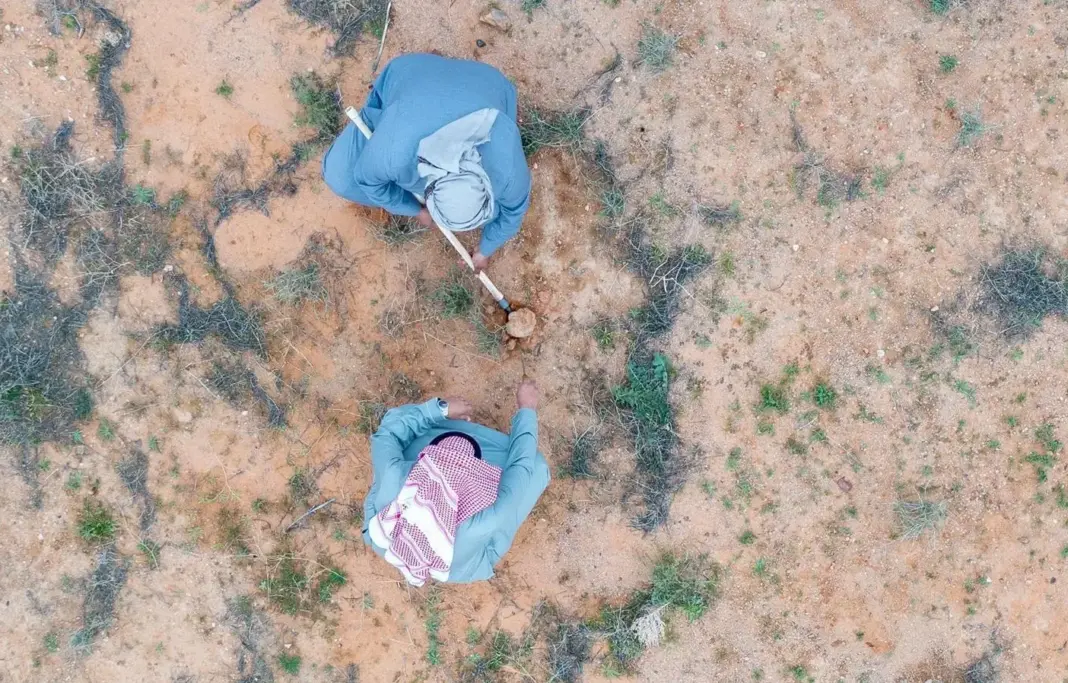
Saudi Arabia is home to desert truffles.
Truffle hunting in the deserts of Saudi Arabia

A new study by the UN’s Food and Agriculture Organization (FAO) paints a stark picture of agricultural land degradation, particularly in the Arab region. More than 46 million hectares—nearly two-thirds of all land suffering human-induced damage in the region—are now at risk. The findings, published in Agriculture (MDPI), stress the urgent need to restore degraded land to safeguard food supplies, especially where climate pressures are mounting.

The Arab Spring started because of the price of bread and the lack of water resources to grow food. The civil war in Syria began for the same reasons. As the Arab world gets drier, conflicts in countries such as Iraq, Afghanistan, Iran and Pakistan will only get more intense.

Globally, an estimated 1.66 billion hectares of land have been degraded by human activities such as deforestation, overgrazing, mismanaged irrigation, and heavy chemical use. Over 60 percent of that damage falls on croplands and pastures—the soils that feed 95 percent of the world’s population. If allowed to worsen, degradation could undercut entire agrifood systems and the communities that depend on them.

Related: this greenhouse technology grows food on salty aquifers 

Across the Arab world, croplands face a perfect storm of stressors. Excessive fertilizers and pesticides erode soil ecology. Poor drainage and over-irrigation drive salinization, leaving fields crusted with salt. Rising temperatures, dwindling groundwater, and more frequent sand-and-dust storms—all amplified by climate change—compound the crisis. These are unmistakably human-driven pressures, and they are accelerating. Consider that Morocco lost half its wheat last year from drought. How many more migrants and climate refugees from the Middle East and North Africa can Europe accept? The solution is to help.

Less than 4 percent of degraded land in the Arab region is currently earmarked for restoration. FAO analysts calculate that rehabilitating 26 million hectares of worn-out cropland could trim yield gaps by as much as 50 percent for oil crops and lift cereals, roots, and tubers toward their full potential—a direct boost to local food security and rural incomes.

The study urges governments, farmers, investors, and researchers to adopt integrated soil, water, and land-management strategies designed to stop further degradation and rebuild fertility. Rather than relying on one-off projects, it recommends coordinated regional programs that share data, finance, and know-how—tailored to the diverse ecological zones from Morocco’s Atlantic coast to Iraq’s river valleys. Israel has water technologies from water companies such as Netafim to help rip irrigation deliver more drops per crop.

Momentum is growing. Recent ministerial meetings in Riyadh committed to ambitious restoration targets, and the UN’s FAO-backed NENA Regional Investment Framework for Ecosystem Restoration is lining up “champion countries” to pilot scalable projects. Innovative tools such as the Suitability Crop Platform—an open database of soil profiles, climate metrics, and crop requirements—are making it easier for farmers and planners to match the right crops to recovering lands.

See this museum of Middle East soil in the UAE

Soil bank in the UAE
A soil bank in the UAE

Healthy soils do more than grow food. They store carbon, regulate water, and support biodiversity—services that underpin every other climate-adaptation effort. By restoring degraded fields, countries in the Arab region can build jobs, reduce rural poverty, and bolster resilience against heat and drought. The lesson is clear: investing in the ground beneath our feet is the fastest way to secure food sovereignty in a hotter, drier future.

Karin Kloosterman
Karin Kloostermanhttp://www.greenprophet.com
Karin Kloosterman is an award-winning journalist, innovation strategist, and founder of Green Prophet, one of the Middle East’s pioneering sustainability platforms. She has ranked in the Top 10 of Verizon innovation competitions, participated in NASA-linked challenges, and spoken worldwide on climate, food security, and future resilience. With an IoT technology patent, features in Canada’s National Post, and leadership inside teams building next-generation agricultural and planetary systems — including Mars-farming concepts — Karin operates at the intersection of storytelling, science, and systems change. She doesn’t report on the future – she helps design it. Reach out directly to [email protected]

Read More

TRENDING

Regenerative Wool or Greenwashing? Zentera Responds to Critics

Zentera responds to questions about ZQ wool, animal welfare, regenerative farming, ethical fashion and the fallout from PETA's New Zealand investigation.

Tanner Winterhof on the Custom Harvesters Quietly Holding American Agriculture Together

In late January, in a Des Moines hotel ballroom that smelled faintly of diesel and convention coffee, Tanner Winterhof spent three days hosting the members and attendees of the  U.S. Custom Harvesters Inc. annual convention on his podcast as Farm4Profit’s official media partner for the show.

Jujube, the sidr tree of medicine and magic

A magic holy sidr bath to deflect the evil eye? It needs 7 powdered sidr leaves stirred into a bucket of warm water. The hadith of the Prophet Muhammad allows to repeat healing prayers and verses from the Koran to increase the water’s potency. 5 grams, or 1 tablespoon of sidr powder equals 7 leaves.

Farm To Table Israel Connects People To The Land

Farm To Table Israel is transforming the traditional dining experience into a hands-on journey.

What Happens When Hyenas Pee On Bedouins?

According to an anecdote Bedouin people believe that if a hyena urinates on them, it will proceed to drag them to a cave and feast on their body. Because of this, they won't hesitate to kill them on the spot if they come across one.

Locals From Rishon Fight IKEA

Big Box stores are a pretty new concept in Israel, and thank God that not every Israeli city wants them in their backyard. A word from someone who has see the beautiful farmland around her hometown Newmarket, Ontario stripped and converted into vulgar strip malls of big box shops: they have no place in a healthy and sustainable town or city.

The Jewish National Fund Meets An Inconvenient Truth

According to the JNF, it has transformed thousands of acres of barren land into green forests in Israel. They state that each person emits about 23 tons of carbon per year, estimating that each tree planted can absorb one ton of carbon in its lifetime. That's a whole lot of trees you'd need to be planting. Could so many fit in Israel?

How to quiet noise from construction in your office

Streets need to be resurfaced in New York but the humming and grinding noise is unsettling. Noise is environmental pollution. 

EarthX and a blueprint for sustainable investing

Trammell S. Crow, a Dallas-based businessman and father of four, is focusing his efforts on impact investing, and media that focuses on saving the planet through EarthX.

Mining Afghanistan’s Mineral Discoveries Similar to Avatar

Now that American forces in Afghanistan are commemorating the longest period of any war that America has been involved in, including the 1965-73 Vietnam War, the recent discoveries of large and extremely valuable mineral and metal deposits may finally bring to light a reason to continue the presence of US fighting forces in this war torn and backward country.

From Pilot Plant to Global Stage: How Aduro Clean Technologies’ 2026 Expansion Signals a Turning Point for Chemical Recycling Investors Like Yazan Al Homsi

The company's Next Generation Process (NGP) Pilot Plant in London, Ontario, has officially moved into initial operating campaigns, generating the kind of structured, repeatable data that separates laboratory promise from commercial viability.

Nobul’s Regan McGee on Shareholder Value: “Complacency Is the Silent Killer” 

Why the governance framework designed to protect shareholders so...

Should You Invest in the Private Market?

startustartup Unlike public stock exchanges, which offer daily trading, strict...

Popular Categories