Saudi Arabia initiates a wild plant survey

Plant hunter Saudi Arabia

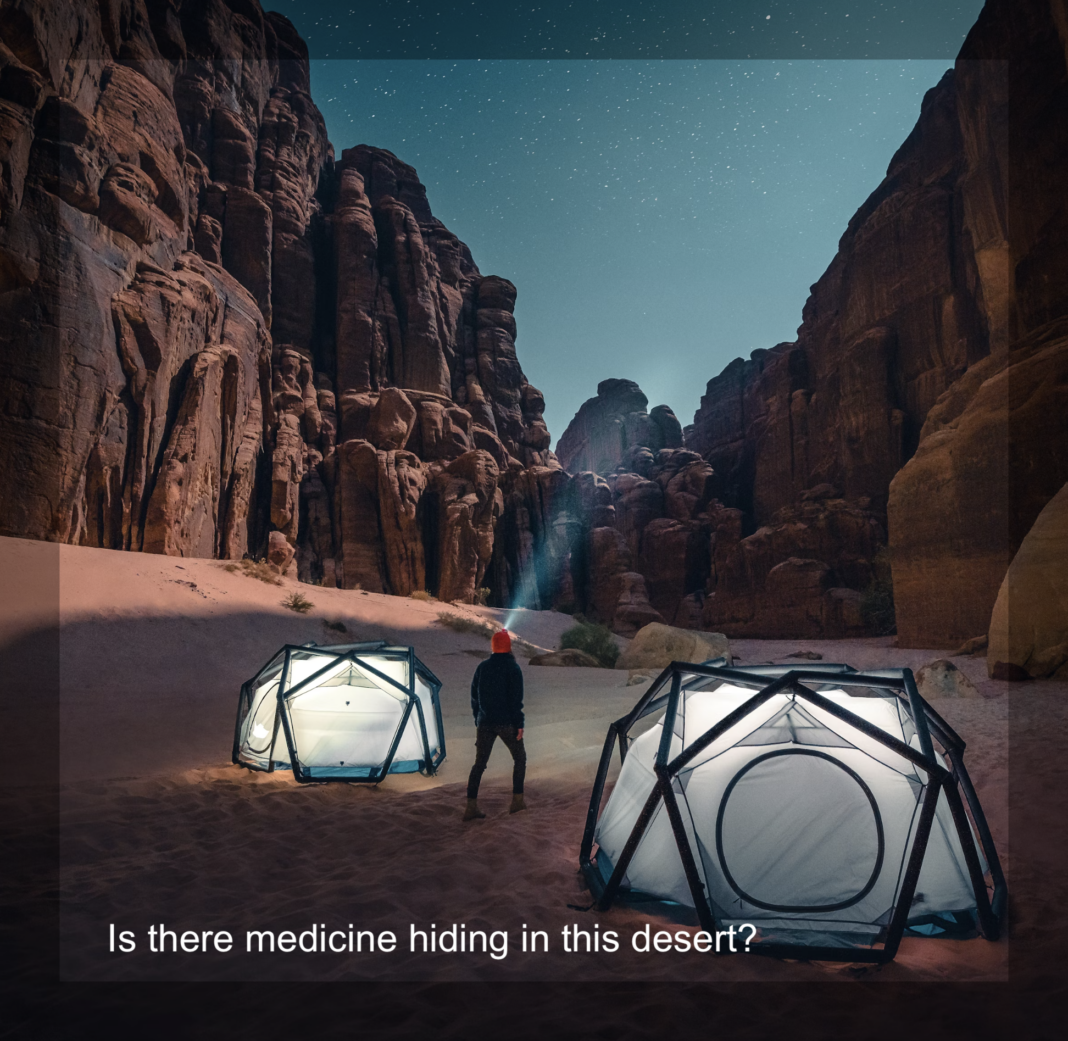
Saudi Arabia until recently was hermetically sealed to the outside world. But times are changing and the Kingdom of Saud which once dwelled in mud palaces are opening up the oil-wealthy kingdom to tourists, archeologists, divers, hydroponics companies, and lately for seeds banks.

The National Center for Vegetation Cover Development and Combating Desertification (NCVC) has launched a project to catalog and analyze wild plants in Saudi Arabia with medicinal, aromatic, toxic, nutritional, and economic properties.

This initiative, in collaboration with the College of Pharmacy at King Saud University, aims to expand scientific knowledge of the Kingdom’s native plant species and provide research-based guides to support sustainable resource use and conservation. Such pharmacological data could lead to new discoveries in medicine.

The project will create detailed guides featuring scientific and geographical insights on wild plants with medicinal, aromatic, toxic, nutritional, and economic value. It will document key findings, map plant locations and characteristics, and benchmark them against the latest regional and global research. Additionally, the initiative includes the development of tailored media content and digital resources to raise awareness among all segments of society about the importance of native plants and their diverse applications.

This effort aligns with the NCVC’s mission and supports the goals of the Saudi Green Initiative and Vision 2030. It strengthens research partnerships among government agencies, academic institutions, and private sector stakeholders, fostering environmental and economic sustainability. By safeguarding the Kingdom’s plant resources, the project further underscores the NCVC’s role as a leading authority on vegetation cover and biodiversity conservation.

The NCVC remains committed to protecting and rehabilitating vegetation sites across Saudi Arabia, combating illegal logging, and managing rangelands, forests, and national parks. These efforts contribute to sustainable development and the preservation of the Kingdom’s natural heritage, in line with the objectives of the Saudi Green Initiative.

Here is a list of 10 unusual medicinal plants found in Saudi Arabia, along with their common names in Arabic and English, and their traditional uses:


Plant Name Common Name (Arabic) Common Name (English) Traditional Use
Calotropis procera العشار (Al-‘Ashar) Apple of Sodom Used for treating skin diseases and as an anti-inflammatory agent.
Ziziphus spina-christi السدر (As-Sidr) Christ’s Thorn Jujube Employed to treat various ailments, including digestive disorders and infections.
Reichardia tingitana الهندباء (Al-Hindiba) Wild Chicory Its leaves are used to treat constipation, colic, and inflamed eyes.
Ruellia tuberosa غير متوفر Minnieroot Used as a diuretic, anti-diabetic, antipyretic, analgesic, antihypertensive, and to treat gonorrhea.
Rumex crispus الحميض (Al-Humeidh) Curly Dock The root is used for treating anemia, skin conditions, respiratory issues, and enlarged lymph nodes.
Commiphora gileadensis بلسان مكة (Balsan Makkah) Balm of Gilead Renowned for its aromatic resin used in perfumes and traditional medicine for its healing properties.
Soda rosmarinus الأشنان (Al-Ushnan) Saltwort Historically used for producing potash and as a cleansing agent; also employed in traditional medicine for oral health.
Anethum graveolens الشبت (Al-Shabat) Dill Commonly used to aid digestion and soothe upset stomachs.
Mentha longifolia النعناع البري (Al-Na’na’ Al-Bari) Wild Mint Popular in teas, sauces, and desserts; also used for digestive comfort.
Peganum harmala الحرمل (Al-Harmal) Syrian Rue Traditionally used for its analgesic and anti-inflammatory properties.
Karin Kloosterman
Karin Kloostermanhttp://www.greenprophet.com
Karin Kloosterman is an award-winning journalist, innovation strategist, and founder of Green Prophet, one of the Middle East’s pioneering sustainability platforms. She has ranked in the Top 10 of Verizon innovation competitions, participated in NASA-linked challenges, and spoken worldwide on climate, food security, and future resilience. With an IoT technology patent, features in Canada’s National Post, and leadership inside teams building next-generation agricultural and planetary systems — including Mars-farming concepts — Karin operates at the intersection of storytelling, science, and systems change. She doesn’t report on the future – she helps design it. Reach out directly to [email protected]

Read More

TRENDING

5 Reasons Why You Should Save Seeds (and plant them)

Saving seeds from tomatoes, peppers, herbs and flowers helps preserve biodiversity, strengthen food security, and keep heirloom varieties alive. Even a small balcony garden can make a difference.

NEOM’s The Line is delayed as Saudi mirage hits reality

Without blinking indeed: Saudi Arabia has reportedly delayed major work on The Line,  the planned 170-kilometer mirrored city slicing through the desert, until after 2030. Tourism projects along the Red Sea are being pushed back, and Trojena, the fantasy ski resort in the mountains fueled with artificial snow, is also effectively frozen.

Desalination experts debunk Aqua Solaire, the floating desalination barge

AI makes it easy to dream, develop, and create images of what could be world-changing ideas, until the reality sets in. A new project making the rounds is Aqua Solaire, an allged French concept for a solar-powered desalination vessel designed to bring drinking water to coastal communities facing drought, storms, and infrastructure failures.

Shebara hotel Saudi Arabia – is it eco-luxury dream or desert illusion?

A new breed of luxury has landed on the Red Sea, mirrored pods floating above coral reefs, reflecting sky and sea like something not entirely of this Earth. Energy powered by solar powers, drinking water pulled from the sea using desalination. 

When peace returns, will we rediscover Saudi Arabia’s mud-brick soul?

When the region settles after the American war with Iran, and it will, American and European travelers will come back. Not just for spectacle or headline projects, but for places that feel real. Places that haven’t been engineered to impress and which get into your soul. We predict that visitors to Saudi Arabia will want to see places like Rijal Alma.When the region settles after the American war with Iran, and it will, American and European travelers will come back. Not just for spectacle or headline projects, but for places that feel real. Places that haven’t been engineered to impress and which get into your soul. We predict that visitors to Saudi Arabia will want to see places like Rijal Alma.

Yerukim Forms a New Green Economy Where the Money is Really Green

The Yerukim members who pick up the recyclables get to keep the monetary reward, the public earns "green" bills that can be used in shops, and business owners get to be associated with environmentalism.

Choosing Riyadh over Dubai? What Investors Should Know

Saudi Arabia is deploying capital at unmatched scale to catalyze tourism and advanced industry while rewiring its power-and-water backbone. The investable frontier is widening—especially in renewables, grid storage, water efficiency/desal retrofits, and hospitality operating platforms. Prudent investors will insist on phased delivery, enforceable KPIs (energy, water, biodiversity), and RHQ/zone compliance—while pricing political-economy and reputational risks alongside growth upside.

Sell your cooking oil for biodiesel money

Want to make money on old french fry oil? Sell it.

Qatar Alternative Energy Summit Pairs Investors And Innovators

Alternative energy investors and innovators can meet n' greet in Doha, Qatar March 16 and 17.

Here’s How To Implement The Four Pillars Of Employee Engagement

If you throw a party for your work team and they are vegans, don't make it a barbecue. Know the sustainability values of your team to boost moral and retain good people.

Locals From Rishon Fight IKEA

Big Box stores are a pretty new concept in Israel, and thank God that not every Israeli city wants them in their backyard. A word from someone who has see the beautiful farmland around her hometown Newmarket, Ontario stripped and converted into vulgar strip malls of big box shops: they have no place in a healthy and sustainable town or city.

The Jewish National Fund Meets An Inconvenient Truth

According to the JNF, it has transformed thousands of acres of barren land into green forests in Israel. They state that each person emits about 23 tons of carbon per year, estimating that each tree planted can absorb one ton of carbon in its lifetime. That's a whole lot of trees you'd need to be planting. Could so many fit in Israel?

How to quiet noise from construction in your office

Streets need to be resurfaced in New York but the humming and grinding noise is unsettling. Noise is environmental pollution. 

Popular Categories