

Washington State made history, becoming the first—and only—place in the world to successfully remove and permanently ban commercial net pen aquaculture.
Farmed fish can occur at sea and on land in pools, rainfed ponds, in tanks or in raceways. The approach is called aquaculture and for decades has been sold as a viable, and sustainable alternative to fishing from seas that are overfished. But not all environments are suitable for marine aquaculture, where fish live in cages and their effluent discharges at high concentrations in the coastal areas.
In addition to sea lice and viruses, a number of other pathogens found in farmed fish may pose a risk to wild salmon. Bacteria: Two bacterial diseases have the potential to impact wild salmon. The first, bacterial kidney disease (BKD) is caused by Renibacterium salmoninarum.
Because of the reduction of wild salmon in areas like Puget Sound, local orcas are starving as wild populations dwindle.

On January 7, the Washington State Board of Natural Resources cast a landmark vote to adopt a new rule prohibiting commercial finfish net pen aquaculture in all state-managed marine waters. Fish pens endandered Puget Sound’s ecosystems, and the activists who brought this decision to life say they are safeguarding the health of Washington’s public waters for generations to come.
Related: fishing for peace and fish farms for Gaza?
“This is a landmark moment for environmental protection,” said Emma Helverson, Executive Director of Wild Fish Conservancy who led the change in law. “Thanks to the commitment of the public and the leadership of Tribal Nations, we have achieved something extraordinary. This victory is not just for Puget Sound—it’s for every community, every species, and every ecosystem that has been impacted by the harmful practice of commercial net pens.”
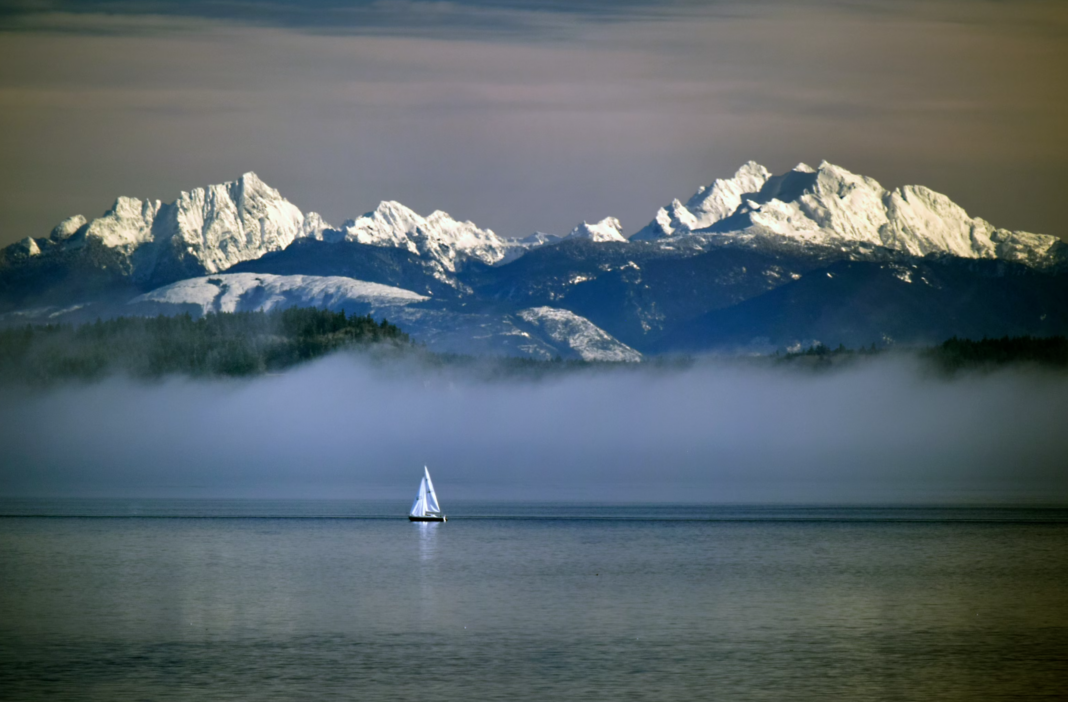
Puget Sound is home to wild salmon and Southern Resident orcas.

This week’s victory is the direct result of Commissioner of Public Lands Hilary Franz’s 2022 decision to deny the industry new decade-long leases for net pens, and her subsequent executive order directing the Department of Natural Resources to develop rules to permanently ban this practice.
These actions resulted in the complete removal of commercial net pens in Washington, making 2024 the first year in four decades that Puget Sound was free from daily pollution and the devastating impacts that net pens cause.
Just days before the vote, Tahlequah (J35), the Southern Resident orca who made global headlines in 2018 after she carried her stillborn calf for 17 days straight, was observed once again grieving her newest dead calf. Recent research shows an alarming 69% of Southern Resident orca pregnancies end in miscarriage due to malnutrition and that miscarriages far outnumber births of endangered orcas. J35 “Tahlequah” (pronounced tah-le-KWAH) is a 25-year-old female Southern resident killer whale. She is the matriarch of the J17 matriline.
The stark reality of mother orcas losing their calves is a painful reminder that these whales are starving and struggling to survive due to the depletion of large, quality, and abundant wild Chinook salmon, their primary food source.

“I hope the public will join us in thanking Commissioner Hilary Franz and her committed agency staff. From the very first steps she took in response to the 2017 Cypress Island net pen collapse, Commissioner Franz has been a fierce and unwavering leader, holding the industry accountable for their harmful actions, listening to the public’s voices, and ultimately making this historic victory possible,” says Helverson.
In a conflicting report from 2011, Green Prophet reported that farmed fishing isn’t so evil after all.
The rule was adopted by a majority 4-2 vote, with Commissioner Franz, Skagit County Commissioner Lisa Janicki, University of Washington’s Dan Brown, and Governor Jay Inslee’s financial advisor Jim Cahill all voting to approve the ban. The decision was informed by overwhelming public support, with over 80% of public comments submitted in favor of the permanent ban and is a direct response to the ongoing crisis facing wild salmon populations and Southern Resident killer whales, which rely on healthy, abundant runs for survival.
“In casting their votes for the permanent ban, these leaders set a new standard of environmental stewardship for governments and leaders, emphasizing that merely minimizing risks isn’t enough given the crisis facing wild salmon and the orcas who depend on them, “says Helverson. “These leaders recognize completely avoiding risk and harm is the only way to prevent the further decline toward extinction for these iconic species and to protect the public’s immense sacrifices and investments in their recovery.”
Since 2017, Wild Fish Conservancy has led the Our Sound, Our Salmon (OSOS) campaign and coalition to protect wild salmon and Puget Sound from the harm of net pen aquaculture. Over the past decade, this dedicated coalition has worked alongside Washington’s Tribal Nations in the legislature, courts, and countless advocacy efforts.
Washington’s success will also serve as a powerful model providing important momentum for the global movement to eliminate open water net pens, an industry that poses a threat to marine ecosystems everywhere in the world they exist.
Similar efforts to protect public waters and ecosystems from this industry are already underway in countries such as British Columbia, Chile, Scotland, Norway, Finland, and Tasmania and through the Global Salmon Farming Resistance.
How we can help? According to the Global Salmon Institute, the farmed salmon industry has grown substantially in the past 60 years. Approximately 70% of salmon produced worldwide is farmed. In 2021, more than 2.8 million tons of farmed salmonids were produced. In comparison, only around 705,000 tons of wild salmonids were caught.
Outside the United States in developing economies in the Middle East like Saudi Arabia, farmed fishing is growing quickly and there are non-existent activist groups to protect nature. Saudi Arabia’s fish farming industry, the production of fish farmed in saltwater and inland waters has surged by 56.4% since 2021, reaching an unprecedented 140,000 tons in 2023. In addition to aquaculture, marine fisheries in the Red Sea and Arabian Gulf contributed 74,700 tons, which represents a 16.2% increase over 2022. This brings the total fish production from aquaculture and marine fishing to 214,000 tons in 2023 –– yet how many activists or researchers are documenting the harm to the whales and sharks in the Red Sea?
Meanwhile the goal in Saudi Arabia, according to its Ministry of Environment, Water, and Agriculture is to increase the per capita fish consumption to 30 pounds annually. Popular fish varieties in Saudi Arabia include Nile tilapia, sea bass, dentex, and shrimp.

Over in Lebanon, the situation is bleak. Fishermen target Mediterranean fish using dynamite.