How to build a terrarium

how to build a terrarium
Learn how to build a terrarium in some quick and easy steps

Welcome to the world of terrariums! You came here because you might have seen the video about the man who built a terrarium 50 years later it was still thriving.  These delightful little ecosystems are like magical gardens tucked into a transparent plastic or glass world. Picture yourself as a skilled architect, creating a miniature paradise for your leafy friends. Let’s embark on a journey of imagination and make this terrarium adventure even more fun!

Making a terrarium is a fun and creative way to bring a miniature garden into your home or office. Terrariums are self-contained ecosystems that require minimal maintenance. 

Why build a terrarium?

Terrariums are a fantastic addition to your home for many reasons. They can elevate your living space with their natural beauty. The terrarium’s miniature garden can be enjoyed without the mess and hassle of traditional gardening. With their self-contained ecosystem, terrariums require minimal maintenance, making them easy to look after and perfect for those with busy lifestyles. 
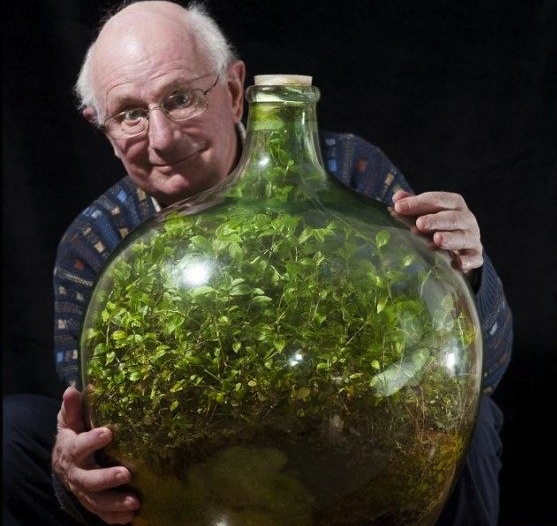
David Latimer from the UK bottled a terrarium 50 years ago

Creating a terrarium can also be a fun and creative project that allows for personal artistic expression. They provide a way to keep plants alive and thriving throughout the year, even if unsuitable for your native environment. Additionally, tending to a terrarium can be a calming and stress-relieving activity.

Terrariums allow you to grow plants in places with low natural light, such as offices or rooms with limited sunlight, providing a green touch to spaces that are not conventional for traditional gardening. Terrariums are an excellent choice for plant enthusiasts and those seeking to enhance their indoor spaces.

Here’s a step-by-step guide on how to make a terrarium:

Choose a container: Select a clear glass or plastic container with a lid. It could be a fish tank, a glass jar, a vase, or a transparent container. An old Italian wine jar works well.

Gather materials: You’ll need the following materials:

• Gravel or pebbles (for drainage)
• Activated charcoal (to filter the water)
• Potting soil 
• Small plants (such as moss, succulents, or ferns)
• Decorative elements (such as rocks, pebbles, or figurines)
• Spray bottle or watering can (for watering)


Prepare the container:

• Start by adding a layer of gravel or pebbles at the bottom of the container.
◦  This layer will provide drainage for excess water.
• On top of the gravel, add a thin layer of activated charcoal. 
◦ The charcoal helps filter the water and keeps it fresh.
• Add a layer of potting soil or your chosen substrate. 
◦ Make sure it’s deep enough for the roots of your plants.

Planting

• Plan your design before placing the plants. 
• Consider the size and growth habits of each plant.
• Create small holes in the soil to accommodate the roots of the plants.
• Gently place the plants into the holes and cover their roots with soil. 
• Press down gently to secure them in place.
• Leave enough space between the plants so they have room to grow.

Decorate

• Add decorative elements like rocks, pebbles, or figurines to enhance the visual appeal of your terrarium. 
• Be creative and create a miniature landscape.

Moisture

• Water the terrarium sparingly using a spray bottle or a watering can. Avoid overwatering, as it can lead to fungal growth or root rot.
• Monitor the moisture level by checking the soil. If it’s too dry, mist the terrarium lightly. If it’s too wet, leave the lid open to allow excess moisture to evaporate.

Placement and maintenance:

• Place your terrarium in a location with indirect sunlight. 
• Avoid direct sunlight, which can create excessive heat and damage the plants.
• Monitor the terrarium regularly. 
• Remove any dead leaves or plants to maintain a healthy environment.
• If condensation builds up inside the terrarium, open the lid briefly to allow air circulation.

Remember that each terrarium is unique, and you can experiment with different plants, containers, and decorations to create your own personalized miniature garden.

Enjoy the process, and have fun creating your terrarium!

Read More

TRENDING

How to grow an olive tree in a container

Don't have a garden? You can still own a fruiting olive tree, grown in a container. A sunny balcony and the right climate are the essential things; that, and time.

Make moss graffiti

Express your green views for all to see - right on the walls of your house, restaurant or office. Moss grafitti is the hottest trend in urban agriculture, after hydroponics and vertical farming.

Going green with Saint Patrick’s Day iconography

? BEER:  Spirulina, a blue-green algae superfood packed with protein, copper, and B vitamins, is growing in popularity among international brewers. RedDot Brewhouse, located next to the Singapore Botanical Gardens, offers a spirulina-infused lager.

City garden project pays you to compost and earn coupons for food

Tel Chubez is an urban agricultural farm located in the Shapira operating on principles of a circular economy. This vacant city land was transformed three years ago into a farm, providing residents with a green, productive space within the City, increasing wellness and access to fresh and healthy food while strengthening community resilience and increasing biodiversity.

Curating 50 Good, Green Reads for a Sustainable Planet

A curated collection of 50 transformative books that guide readers towards a deeper understanding of sustainability. Spanning diverse topics such as regenerative capitalism, circular economies, and climate justice, these reads offer valuable insights for individuals, leaders, and policymakers. From the classic 'Silent Spring' to contemporary guides like '101 Ways to Go Zero Waste,' this list is a rich resource for anyone seeking inspiration and actionable solutions in the pursuit of a greener and more sustainable world.

Yerukim Forms a New Green Economy Where the Money is Really Green

The Yerukim members who pick up the recyclables get to keep the monetary reward, the public earns "green" bills that can be used in shops, and business owners get to be associated with environmentalism.

Choosing Riyadh over Dubai? What Investors Should Know

Saudi Arabia is deploying capital at unmatched scale to catalyze tourism and advanced industry while rewiring its power-and-water backbone. The investable frontier is widening—especially in renewables, grid storage, water efficiency/desal retrofits, and hospitality operating platforms. Prudent investors will insist on phased delivery, enforceable KPIs (energy, water, biodiversity), and RHQ/zone compliance—while pricing political-economy and reputational risks alongside growth upside.

Sell your cooking oil for biodiesel money

Want to make money on old french fry oil? Sell it.

Qatar Alternative Energy Summit Pairs Investors And Innovators

Alternative energy investors and innovators can meet n' greet in Doha, Qatar March 16 and 17.

Here’s How To Implement The Four Pillars Of Employee Engagement

If you throw a party for your work team and they are vegans, don't make it a barbecue. Know the sustainability values of your team to boost moral and retain good people.

Locals From Rishon Fight IKEA

Big Box stores are a pretty new concept in Israel, and thank God that not every Israeli city wants them in their backyard. A word from someone who has see the beautiful farmland around her hometown Newmarket, Ontario stripped and converted into vulgar strip malls of big box shops: they have no place in a healthy and sustainable town or city.

The Jewish National Fund Meets An Inconvenient Truth

According to the JNF, it has transformed thousands of acres of barren land into green forests in Israel. They state that each person emits about 23 tons of carbon per year, estimating that each tree planted can absorb one ton of carbon in its lifetime. That's a whole lot of trees you'd need to be planting. Could so many fit in Israel?

How to quiet noise from construction in your office

Streets need to be resurfaced in New York but the humming and grinding noise is unsettling. Noise is environmental pollution. 

Popular Categories