
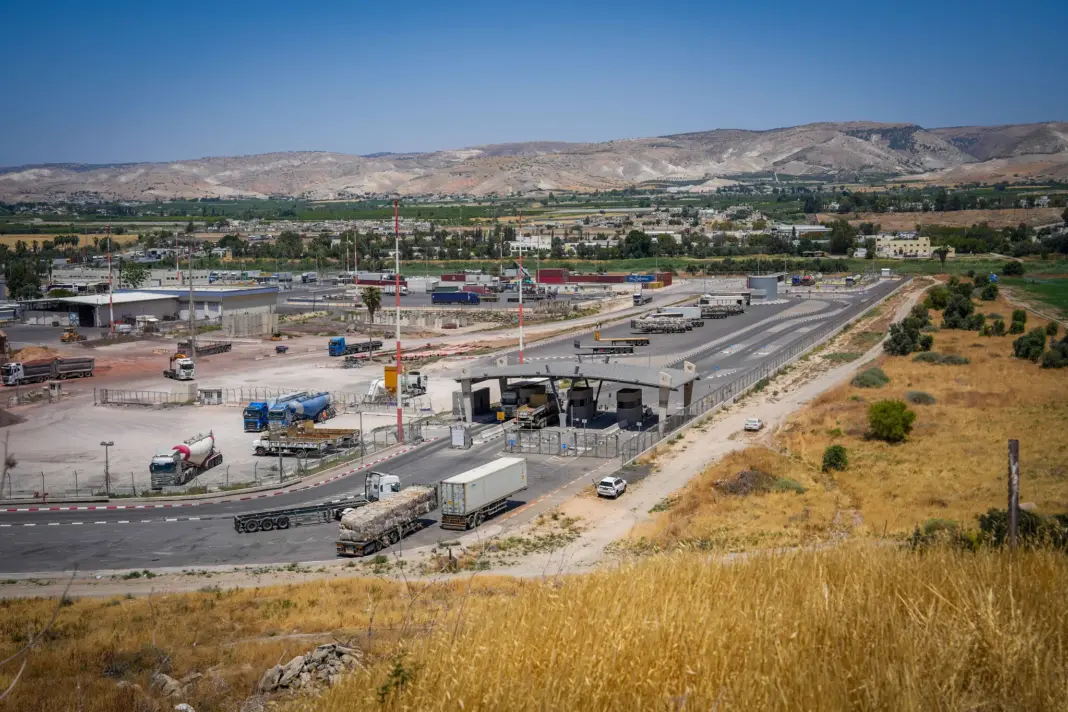
Peace hospital opens between Jordan and Israel

The Jordan Gateway Hospital
The Jordan Gateway Hospital heralding peace between Jordan and Israel

Can a cross-border hospital between Israel and Jordan anchor environmental cooperation too?

Israel and Jordan are moving ahead with one of the most ambitious cross-border development projects in the Middle East: the Jordan Gateway, a joint industrial and employment zone straddling the border near the Jordan River Crossing. Conceived during the 1994 Israel–Jordan peace talks, the zone is finally gaining momentum after years of legal disputes and construction delays.

Now, Israeli officials have confirmed that a hospital on the Israeli side, designed primarily to treat Jordanian patients, is under active government consideration. We’ve written about water cooperation and the Red Dead Canal which never happened. And now that Israel is cooperating with India, the UAE and Saudi Arabia, the region is gearing up for movement of goods, people and know-how form the east to the west.

The proposed medical centre, described by Emek HaMaayanot Regional Council head Itamar Matiash as “a centre for cancer treatment, so that people from Jordan or further away could come and receive treatment,” would become the flagship of a wider cluster of medical, academic and innovation-based services planned for the Israeli half of the zone.

Meanwhile, the Jordanian side is already home to several low-tech factories aimed at reducing unemployment, which remains around 18 per cent in the kingdom compared with roughly 3 per cent in Israel.

The defining feature of the Jordan Gateway is its carefully engineered border model. Workers from both countries will be able to enter the shared industrial zone while remaining inside an “ex-territorial bubble”. Jordanians entering the Israeli zone will not be granted entry to Israel beyond the site, and Israelis crossing to the Jordanian side will not enter Jordan proper. Full entry into either country will continue to require the formal Allenby Crossing procedures.

This controlled permeability reflects both diplomatic pragmatism and urgent security realities following the 2023 Hamas-led attack and subsequent regional instability, as well as recent violent incidents involving drivers crossing from Jordan into Israel to commit acts of terror. But not everyone should suffer from terrorism.
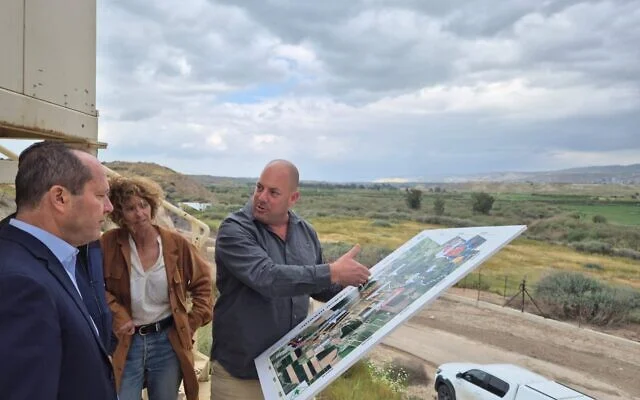
Jordan gateway map
Jordan gateway map

Beyond bilateral cooperation, the project’s strategic significance extends far beyond the Jordan Valley. The site is now positioned as a critical node in the India–Middle East–Europe Economic Corridor (IMEC), the US-backed transport vision designed to link Indian manufacturing hubs to Gulf ports, Israel and ultimately to European markets. This route circumvents passing through Iranian waters and areas of the Red Sea being terrorized by Yemen’s Houthis and Somalian pirates.

Under current planning, goods could cross into Israel at the Jordan Gateway, be transferred onto rail lines to Haifa Port and then shipped onwards to Europe. Officials from the United States and European Union have already conducted site visits and expressed interest in the zone’s potential role as a resilient logistics alternative to traditional Red Sea and Suez routes.

But if the Jordan Gateway is to become a model for regional integration, its long-term success will depend as much on environmental governance as on geopolitics. The Jordan River Valley is an ecologically fragile corridor long damaged by over-extraction, pollution and climate-driven water scarcity.

Fortunately, the region already hosts some of the world’s most established cross-border environmental collaborations.

EcoPeace Middle East founded by Gidon Bromberg (and featured on Green Prophet regularly) —bringing together Jordanian, Palestinian and Israeli practitioners—has spent decades advocating joint water management and ecological restoration.

Its “Green Blue Deal for the Middle East” proposes exactly the type of shared environmental planning the Jordan Gateway will require. Likewise, the Arava Institute for Environmental Studies, located near the Israel–Jordan border, has trained more than 1,800 Israeli, Palestinian, Jordanian and international students in solar energy, desert agriculture and water-scarce resilience.

These networks offer rare and durable frameworks for cooperation that continue even during periods of political tension. Participation by Jordanian and Palestinian students, however, is often kept discreet, as some prefer not to publicize their involvement in cross-border programs to avoid potential social pressures when returning to their home communities.

If aligned with such environmental expertise, the Jordan Gateway could evolve into more than an industrial park or logistics hub. It could become a proof-of-concept for environmentally grounded peacebuilding—a space where economic incentives, ecological restoration and pragmatic diplomacy reinforce one another. In a region where borders often divide ecosystems that must function as a whole, this may be the most significant experiment of all. Peace comes only through shared values, and content.

Without that, peace making is an empty word.

“For a long time, my soul dwelt with those who hate peace,” says Psalm 120.

Karin Kloosterman
Karin Kloostermanhttp://www.greenprophet.com
Karin Kloosterman is an award-winning journalist, innovation strategist, and founder of Green Prophet, one of the Middle East’s pioneering sustainability platforms. She has ranked in the Top 10 of Verizon innovation competitions, participated in NASA-linked challenges, and spoken worldwide on climate, food security, and future resilience. With an IoT technology patent, features in Canada’s National Post, and leadership inside teams building next-generation agricultural and planetary systems — including Mars-farming concepts — Karin operates at the intersection of storytelling, science, and systems change. She doesn’t report on the future – she helps design it. Reach out directly to [email protected]

Read More

TRENDING

Dan Zaslavsky’s energy tower dream is rising again in Iran and China

The Energy Tower idea never made the leap from drawings and engineering studies to full-scale construction. But nearly two decades after most people stopped talking about it, the concept is quietly evolving in two unexpected places: China and Iran. The concept let dreamers dream and doers do - figuring out more pleasing designs and engineering.

A visit to Amirim, Israel’s first all-vegetarian village in the Galilee

Just 15 kilometers from Tzfat there is a moshav that was founded in the late 50s that was ideologically influenced by organic, vegetarian and vegan principles. My hostess at Ohn-Bar, the tzimmer where I stayed, explained that the people of Amirim were among the pioneers of Israel’s strong vegetarian movement.

Can Scientists Predict Coral Bleaching Before It Happens?

Now researchers at the Woods Hole Oceanographic Institution (WHOI) in the US say they have developed a way to predict coral bleaching five to six months before it occurs, potentially giving reef managers enough time to intervene and save vulnerable corals.

Israeli Hydrogen Startup H2Pro Are Trying to Solve Clean Energy’s Hardest Problem

The company has attracted backing from major investors including Breakthrough Energy Ventures, the climate fund founded by Bill Gates, along with industrial partners such as Sumitomo, ArcelorMittal, and Temasek, a multi-billion dollar company that owns Singapore airlines. H2Pro has raised more than $100 million USD and is moving from pilot projects toward commercial-scale deployments.

Desalination experts debunk Aqua Solaire, the floating desalination barge

AI makes it easy to dream, develop, and create images of what could be world-changing ideas, until the reality sets in. A new project making the rounds is Aqua Solaire, an allged French concept for a solar-powered desalination vessel designed to bring drinking water to coastal communities facing drought, storms, and infrastructure failures.

Yerukim Forms a New Green Economy Where the Money is Really Green

The Yerukim members who pick up the recyclables get to keep the monetary reward, the public earns "green" bills that can be used in shops, and business owners get to be associated with environmentalism.

Choosing Riyadh over Dubai? What Investors Should Know

Saudi Arabia is deploying capital at unmatched scale to catalyze tourism and advanced industry while rewiring its power-and-water backbone. The investable frontier is widening—especially in renewables, grid storage, water efficiency/desal retrofits, and hospitality operating platforms. Prudent investors will insist on phased delivery, enforceable KPIs (energy, water, biodiversity), and RHQ/zone compliance—while pricing political-economy and reputational risks alongside growth upside.

Sell your cooking oil for biodiesel money

Want to make money on old french fry oil? Sell it.

Qatar Alternative Energy Summit Pairs Investors And Innovators

Alternative energy investors and innovators can meet n' greet in Doha, Qatar March 16 and 17.

Here’s How To Implement The Four Pillars Of Employee Engagement

If you throw a party for your work team and they are vegans, don't make it a barbecue. Know the sustainability values of your team to boost moral and retain good people.

Locals From Rishon Fight IKEA

Big Box stores are a pretty new concept in Israel, and thank God that not every Israeli city wants them in their backyard. A word from someone who has see the beautiful farmland around her hometown Newmarket, Ontario stripped and converted into vulgar strip malls of big box shops: they have no place in a healthy and sustainable town or city.

The Jewish National Fund Meets An Inconvenient Truth

According to the JNF, it has transformed thousands of acres of barren land into green forests in Israel. They state that each person emits about 23 tons of carbon per year, estimating that each tree planted can absorb one ton of carbon in its lifetime. That's a whole lot of trees you'd need to be planting. Could so many fit in Israel?

How to quiet noise from construction in your office

Streets need to be resurfaced in New York but the humming and grinding noise is unsettling. Noise is environmental pollution. 

Popular Categories