Foot-and-Mouth Disease Is Spreading Again — What That Means for Farmers, Food, and All of Us

Foot-and-mouth disease (FMD) or hoof-and-mouth disease (HMD) is an infectious and sometimes fatal viral disease that primarily affects even-toed ungulates, including domestic and wild bovids.[1][2] The virus causes a high fever lasting two to six days, followed by blisters inside the mouth and near the hoof that may rupture and cause lameness.
Image via Wikipedia
A new wave of foot-and-mouth disease (FMD) is spreading through Europe and the Near East, and experts at the Food and Agriculture Organization (FAO) are urging countries to take urgent steps to stop it. The recent detection of an unfamiliar strain of the virus in Iraq and Bahrain has raised alarms, especially since this version, known as SAT1, is not normally found in this region. It likely arrived from East Africa and could easily spread to nearby countries that are unprepared to handle it. It was recently found in Kuwait.

Slow Food and regenerative farming may be an answer.

FMD doesn’t infect humans, but the damage it causes to livestock—and to farmers’ livelihoods—is severe. The virus spreads quickly among animals like cattle, sheep, pigs, and goats. It causes fever and painful blisters on the mouth and feet, leading to lameness, less milk and meat production, and in some cases, sudden death in younger animals.

Europe, which is usually free of FMD, is now facing its worst outbreak since 2001. Germany detected a case in January 2025 and managed to contain it, but since then the disease has spread to Hungary and Slovakia, and is proving harder to stop. As a result, the UK has banned meat and dairy imports from affected countries, including Austria due to its proximity to Hungary.
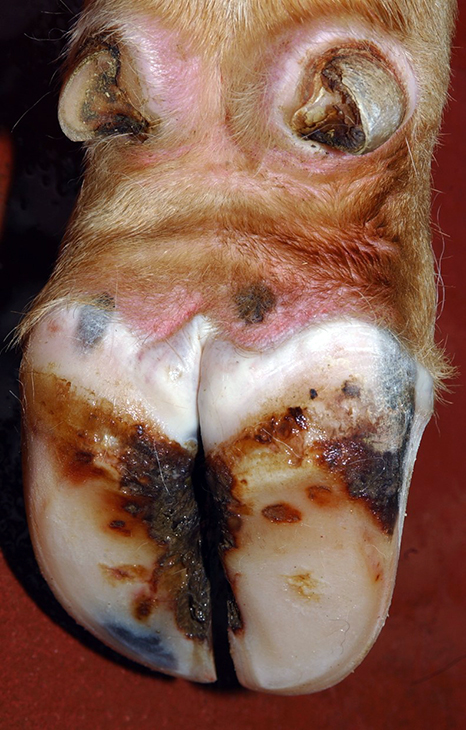
Foot and Mouth Disease on hoof, University of Oaklahoma
Foot and Mouth Disease on hoof, University of Oklahoma

The economic fallout from FMD is enormous. Even in countries where the disease is common, it causes an estimated $21 billion in losses every year—mostly from reduced productivity and the cost of vaccines. But when trade bans, culling, and market disruptions are included, the true financial impact is far greater. For small-scale farmers and rural communities, a single outbreak can be devastating.

In response, FAO is calling on all countries to strengthen their prevention and response efforts. This includes increasing public awareness, especially among farmers and market workers; improving on-farm biosecurity by keeping sick animals isolated and stopping the spread of contaminated equipment or people; and making sure that vaccines, where used, are carefully matched to the circulating virus strain.
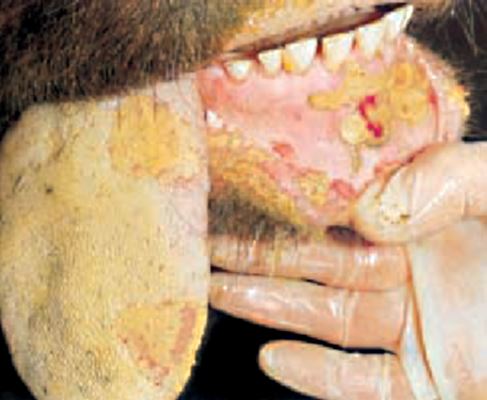
Foot and mouth disease, CABI Bioscience

Vaccination can be very effective, but it needs to be part of a larger strategy that includes active surveillance, testing, and fast action when new outbreaks are detected. Countries should also review their contingency plans to ensure they can respond quickly to new outbreaks. This includes having clear procedures for isolating infected areas, investigating the source, and carrying out targeted vaccinations.

FMD may not pose a health threat to people, but its impact on food systems is real. It affects what we eat, how much it costs, and the stability of trade between countries. The recent outbreaks are a reminder that animal diseases don’t respect borders—and that early detection, clear communication, and coordinated action are the best tools we have to protect both animals and livelihoods.

As the FAO warns, staying alert now could prevent much greater harm later.

TRENDING

Street Vegan in Sri Thanu is a must-stop family lunch spot on Koh Phangan, Thailand

If you’re anywhere near Sri Thanu on Koh Phangan, Thailand, around the yoga centers: Zen Beach, Haad Yao, or Salad Beach—make time for Street Vegan. It's vegan and so satisfying that one meal might convince you that eating plant-based is not a compromise. I suggest for any vegan restaurant owner or chef to come to this modestly-priced venue to learn from a master.

Monitoring farmers’ tillage patterns from space

Tillage is one of the clearest signals of how a farm treats its soil. Intensive plowing can degrade structure, release carbon, and increase erosion. Conservation practices—no-till, cover cropping, minimal disturbance—do the opposite. They build soil, retain water, and support biodiversity. But until now, measuring these practices at scale has been slow, expensive, and often self-reported.

April Is National Garlic Month

April is National Garlic Month! We’re close to the end of April, but fear not: the North American garlic harvest lasts through July, and you can pick up the bulbs until Fall. Even after the green stalks wither and the bulbs are drier, your garlic will remain pungent for any months if you store it well.

Tony Cho’s model for regenerative cities

Tony Cho is a regenerative developer and community builder focused on designing cities as living ecosystems that support human connection and ecological balance. A key figure in Miami’s urban transformation, he helped shape the Wynwood Arts District and founded the Magic City Innovation District. Influenced by an unconventional upbringing that included time in an ashram, Cho brings a spiritual lens to real estate, blending culture, community, and capital into what he calls regenerative placemaking.

Make nettle dumplings, also known as nettles malfatti

Springtime foraging yields a harvest of wild greens to cook at home, like nettles. Make delicious nettles malfatti dumplings with this recipe.

Nobul’s Regan McGee on Shareholder Value: “Complacency Is the Silent Killer” 

Why the governance framework designed to protect shareholders so...

Should You Invest in the Private Market?

startustartup Unlike public stock exchanges, which offer daily trading, strict...

How to build a 100-year-company

Kongō Gumi is a Japanese construction company, purportedly founded in 578 A.D., making it the world's oldest documented company. What can we learn about building sustainable businesses from them?

From Pilot Plant to Global Stage: How Aduro Clean Technologies’ 2026 Expansion Signals a Turning Point for Chemical Recycling Investors Like Yazan Al Homsi

The company's Next Generation Process (NGP) Pilot Plant in London, Ontario, has officially moved into initial operating campaigns, generating the kind of structured, repeatable data that separates laboratory promise from commercial viability.

How AI Helps SaaS Companies Reduce Repetitive Customer Support Work

SaaS products are designed for large numbers of users with different levels of experience, and also in renewable energy.

Pulling Water from the Air

Faced with water shortage in Amman, Laurie digs up...

Turning Your Energy Consultancy into an LLC: 4 Legal Steps for Founders in Texas

If you are starting a renewable energy business in Texas, learn how to start an LLC by the books.

Tracking the Impacts of a Hydroelectric Dam Along the Tigris River

For the next two months, I'll be taking a break from my usual Green Prophet posts to report on a transnational environmental issue: the Ilısu Dam currently under construction in Turkey, and the ways it will transform life along the Tigris River.

Related Articles

Popular Categories