Sinkholes and Shrinking Shores: The Race to Rescue the Dead Sea

Picture of the Dead Sea
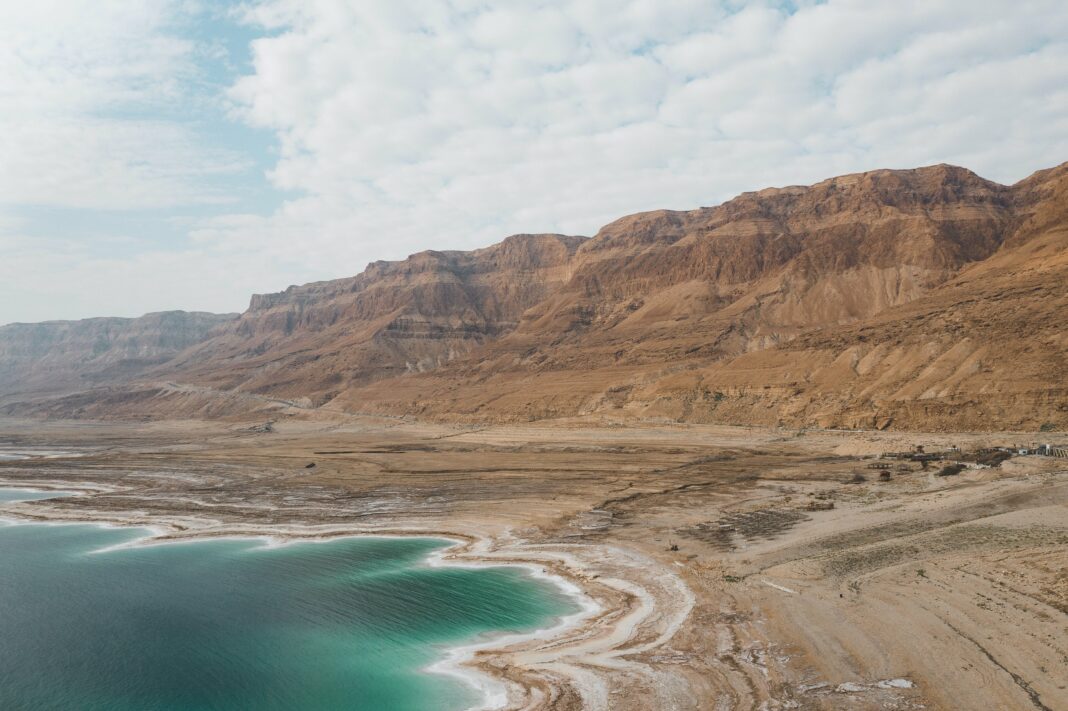
The shore of the Dead Sea

On August 5th, 2025, environmental experts from Israel, Jordan, and the Palestinian territories descended upon the University of Leeds for a three-day event centered around the Dead Sea and its irreversible decline. The gathering highlighted the urgency and attention that the region directs towards the Dead Sea.


Once spanning over 400 square miles, the Dead Sea now covers approximately 230 square miles. Currently, the Dead Sea’s water is dropping 3.3 feet per year due to the diversion of the Jordan River and the overextraction of the sea’s minerals. 

See Related Article: Environmentalist: “Explore Alternatives to Red-Dead Canal Project”

The area surrounding the sea has changed drastically in the past half-century. Landscapes are riddled with sinkholes, human activity, and leftover mineral deposits. 
https://www.nasa.gov/image-feature/the-dead-sea/
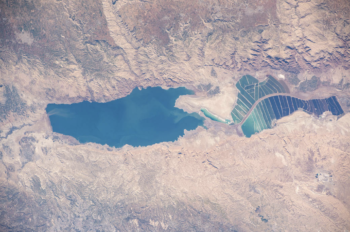
Overhead image of the Dead Sea

The Dead Sea’s rapid decline is not only an aesthetic decline but also one that affects various aspects of the world. First, it affects ecosystems and biodiversity. All parts of the natural world are connected, and something as prominent as the Dead Sea being destroyed will affect life around it. Also, local communities and infrastructure must be altered and changed due to the new sea levels and sinkholes caused by the decline. The region surrounding the sea is also a tourism hotspot, and if the Dead Sea becomes an undesirable location, the people will stop coming. Finally, the Dead Sea and its resources are not only Israel’s. Jordan and the Palestinian territories also utilize the Dead Sea. A destroyed Dead Sea would increase political tensions due to each country being negatively impacted. 

See Related Article: How EcoPeace Uses Environmental Education to Bridge Borders in the Jordan Valley

The summit, held at Leeds, brings together various actors. Israelis, Jordanians, and Palestinians represent the regional interest, and participants from the UK and other Western countries participated to assist. The talks that they had were aimed at discussing improving and creating coordinated and interconnected action. 


There have been efforts to save the Dead Sea. The Jordan River is the sea’s water source. However, now only 10% of the original water flow reaches the basin. A key effort in reviving the Dead Sea is to stop the diversion of the river’s water and allow it to flow to the Dead Sea. Additionally, there are regulations on mineral extraction and building. At the Leeds conference, many new ideas were created and shared. Water sharing frameworks, combined with river restoration efforts, re-zoning, desalination brine water, and international funding, provide help. These efforts and efforts of the future also provide an avenue for increased regional stability. Israel and Jordan both use the sea for its resources and the tourism aspect. However, there is minimal cooperation between the countries, leading to an increased decline of the sea. If the countries strengthen, add new efforts, and rely on each other more than it would cause there to be more needed cooperation. 
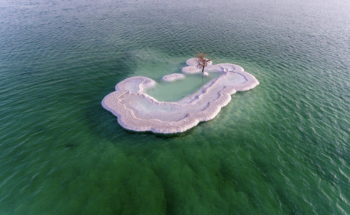
Salt in the Dead Sea

The Dead Sea’s rapid collapse is a tragedy not only for Israel but for the region as a whole. It also tests whether environmental necessity can lead to regional stability. The Leed summit is one of the many conversations currently being had to try to save the sea. Conversations are one thing; action is another, and action is needed to save the Dead Sea. 

Max Izaks
Max Izaks
Max Izaks is an environmental studies student at the University of Colorado Boulder. His academic work focuses on climate policy, environmental justice, and urban sustainability, with a particular interest in the intersection of environmental policy, justice, and law. Max has participated in educational and cultural programs abroad, including a specialized educational trip to Israel, where he broadened his professional experience. Max brings a global perspective and a commitment to finding and communicating environmental challenges and solutions. Reach out directly to [email protected]

Read More

TRENDING

Understanding Food Production: Karl Studer on the Urban-Rural Knowledge Gap

Karl Studer occupies an unusual position in American business. As President of Quanta Services, he oversees electrical infrastructure operations across the United States, Canada, and Australia, managing thousands of employees and multibillion-dollar projects.

Mona Khalil, Orange House Project founder, sea turtle protector killed in Lebanon

Mona Khalil spent decades protecting Lebanon's sea turtles and coastal ecosystems. Her death in the ongoing conflict between Israel and Hezbollah shines a light on a broader environmental tragedy unfolding across northern Israel and southern Lebanon. From damaged wetlands and disrupted bird migrations to threatened seed banks and endangered wildlife, the region's ecosystems are becoming casualties of a war with no clear end in sight.

Wave wind energy for Nvidia’s next AI energy boom?

As AI factories consume unprecedented amounts of electricity, NVIDIA is looking beyond chips and data centers to the ocean. The company recently spotlighted Israel's Eco Wave Power and its wave energy projects in Jaffa and Los Angeles, highlighting how AI, digital twins and renewable energy can work together to meet future power demands. The collaboration reflects a growing realization that the future of artificial intelligence may depend as much on clean energy infrastructure as it does on computing power.

Dan Zaslavsky’s energy tower dream is rising again in Iran and China

The Energy Tower idea never made the leap from drawings and engineering studies to full-scale construction. But nearly two decades after most people stopped talking about it, the concept is quietly evolving in two unexpected places: China and Iran. The concept let dreamers dream and doers do - figuring out more pleasing designs and engineering.

A visit to Amirim, Israel’s first all-vegetarian village in the Galilee

Just 15 kilometers from Tzfat there is a moshav that was founded in the late 50s that was ideologically influenced by organic, vegetarian and vegan principles. My hostess at Ohn-Bar, the tzimmer where I stayed, explained that the people of Amirim were among the pioneers of Israel’s strong vegetarian movement.

Yerukim Forms a New Green Economy Where the Money is Really Green

The Yerukim members who pick up the recyclables get to keep the monetary reward, the public earns "green" bills that can be used in shops, and business owners get to be associated with environmentalism.

Choosing Riyadh over Dubai? What Investors Should Know

Saudi Arabia is deploying capital at unmatched scale to catalyze tourism and advanced industry while rewiring its power-and-water backbone. The investable frontier is widening—especially in renewables, grid storage, water efficiency/desal retrofits, and hospitality operating platforms. Prudent investors will insist on phased delivery, enforceable KPIs (energy, water, biodiversity), and RHQ/zone compliance—while pricing political-economy and reputational risks alongside growth upside.

Sell your cooking oil for biodiesel money

Want to make money on old french fry oil? Sell it.

Qatar Alternative Energy Summit Pairs Investors And Innovators

Alternative energy investors and innovators can meet n' greet in Doha, Qatar March 16 and 17.

Here’s How To Implement The Four Pillars Of Employee Engagement

If you throw a party for your work team and they are vegans, don't make it a barbecue. Know the sustainability values of your team to boost moral and retain good people.

Locals From Rishon Fight IKEA

Big Box stores are a pretty new concept in Israel, and thank God that not every Israeli city wants them in their backyard. A word from someone who has see the beautiful farmland around her hometown Newmarket, Ontario stripped and converted into vulgar strip malls of big box shops: they have no place in a healthy and sustainable town or city.

The Jewish National Fund Meets An Inconvenient Truth

According to the JNF, it has transformed thousands of acres of barren land into green forests in Israel. They state that each person emits about 23 tons of carbon per year, estimating that each tree planted can absorb one ton of carbon in its lifetime. That's a whole lot of trees you'd need to be planting. Could so many fit in Israel?

How to quiet noise from construction in your office

Streets need to be resurfaced in New York but the humming and grinding noise is unsettling. Noise is environmental pollution. 

Popular Categories