Good gardens start with good seeds. Learn how to choose reliable seed companies, avoid poor-quality seeds, understand heirloom and hybrid varieties, and store seeds for better germination.
Seven years after creating her first perfume in a small Sicilian shop, my daughter had just three drops left. A family-owned perfumer in Palermo helped us recover the scent of her childhood.
Ukrainian design studio Pilsok, known for its popular Beetle backpack, transforms discarded car airbags into a striking designer jacket honouring Ukraine's emergency rescuers.
From the forests of Ontario to sea turtle conservation in Lebanon and water cooperation across the Middle East, Green Prophet founder Karin Kloosterman argues that CleanTech, EnviroTech and AgTech are already building the foundations of PeaceTech.
Good gardens start with good seeds. Learn how to choose reliable seed companies, avoid poor-quality seeds, understand heirloom and hybrid varieties, and store seeds for better germination.
Seven years after creating her first perfume in a small Sicilian shop, my daughter had just three drops left. A family-owned perfumer in Palermo helped us recover the scent of her childhood.
Ukrainian design studio Pilsok, known for its popular Beetle backpack, transforms discarded car airbags into a striking designer jacket honouring Ukraine's emergency rescuers.
From the forests of Ontario to sea turtle conservation in Lebanon and water cooperation across the Middle East, Green Prophet founder Karin Kloosterman argues that CleanTech, EnviroTech and AgTech are already building the foundations of PeaceTech.
Good gardens start with good seeds. Learn how to choose reliable seed companies, avoid poor-quality seeds, understand heirloom and hybrid varieties, and store seeds for better germination.
Seven years after creating her first perfume in a small Sicilian shop, my daughter had just three drops left. A family-owned perfumer in Palermo helped us recover the scent of her childhood.
Ukrainian design studio Pilsok, known for its popular Beetle backpack, transforms discarded car airbags into a striking designer jacket honouring Ukraine's emergency rescuers.
From the forests of Ontario to sea turtle conservation in Lebanon and water cooperation across the Middle East, Green Prophet founder Karin Kloosterman argues that CleanTech, EnviroTech and AgTech are already building the foundations of PeaceTech.
Good gardens start with good seeds. Learn how to choose reliable seed companies, avoid poor-quality seeds, understand heirloom and hybrid varieties, and store seeds for better germination.
Seven years after creating her first perfume in a small Sicilian shop, my daughter had just three drops left. A family-owned perfumer in Palermo helped us recover the scent of her childhood.
Ukrainian design studio Pilsok, known for its popular Beetle backpack, transforms discarded car airbags into a striking designer jacket honouring Ukraine's emergency rescuers.
From the forests of Ontario to sea turtle conservation in Lebanon and water cooperation across the Middle East, Green Prophet founder Karin Kloosterman argues that CleanTech, EnviroTech and AgTech are already building the foundations of PeaceTech.
Good gardens start with good seeds. Learn how to choose reliable seed companies, avoid poor-quality seeds, understand heirloom and hybrid varieties, and store seeds for better germination.
Seven years after creating her first perfume in a small Sicilian shop, my daughter had just three drops left. A family-owned perfumer in Palermo helped us recover the scent of her childhood.
Ukrainian design studio Pilsok, known for its popular Beetle backpack, transforms discarded car airbags into a striking designer jacket honouring Ukraine's emergency rescuers.
From the forests of Ontario to sea turtle conservation in Lebanon and water cooperation across the Middle East, Green Prophet founder Karin Kloosterman argues that CleanTech, EnviroTech and AgTech are already building the foundations of PeaceTech.
Good gardens start with good seeds. Learn how to choose reliable seed companies, avoid poor-quality seeds, understand heirloom and hybrid varieties, and store seeds for better germination.
Seven years after creating her first perfume in a small Sicilian shop, my daughter had just three drops left. A family-owned perfumer in Palermo helped us recover the scent of her childhood.
Ukrainian design studio Pilsok, known for its popular Beetle backpack, transforms discarded car airbags into a striking designer jacket honouring Ukraine's emergency rescuers.
From the forests of Ontario to sea turtle conservation in Lebanon and water cooperation across the Middle East, Green Prophet founder Karin Kloosterman argues that CleanTech, EnviroTech and AgTech are already building the foundations of PeaceTech.
Good gardens start with good seeds. Learn how to choose reliable seed companies, avoid poor-quality seeds, understand heirloom and hybrid varieties, and store seeds for better germination.
Seven years after creating her first perfume in a small Sicilian shop, my daughter had just three drops left. A family-owned perfumer in Palermo helped us recover the scent of her childhood.
Ukrainian design studio Pilsok, known for its popular Beetle backpack, transforms discarded car airbags into a striking designer jacket honouring Ukraine's emergency rescuers.
From the forests of Ontario to sea turtle conservation in Lebanon and water cooperation across the Middle East, Green Prophet founder Karin Kloosterman argues that CleanTech, EnviroTech and AgTech are already building the foundations of PeaceTech.
Good gardens start with good seeds. Learn how to choose reliable seed companies, avoid poor-quality seeds, understand heirloom and hybrid varieties, and store seeds for better germination.
Seven years after creating her first perfume in a small Sicilian shop, my daughter had just three drops left. A family-owned perfumer in Palermo helped us recover the scent of her childhood.
Ukrainian design studio Pilsok, known for its popular Beetle backpack, transforms discarded car airbags into a striking designer jacket honouring Ukraine's emergency rescuers.
From the forests of Ontario to sea turtle conservation in Lebanon and water cooperation across the Middle East, Green Prophet founder Karin Kloosterman argues that CleanTech, EnviroTech and AgTech are already building the foundations of PeaceTech.
Cancer is a complicated disease. It’s not one but many, and as such leaves various bio-evidence behind after it starts wreaking havoc on our body. Some cancers, but not all, can be detected by a blood test. My dad’s cancer, when it started as prostate, was detectable in a PSA test, but only when the cancer had progressed to stage 4. By the time he had developed another type of cancer, liver cancer, it was not detectable in the blood. Doctors gave him tests, said the pain isn’t cancer, and we waited for an MRI to find muscle or bone damage. The MRI found the cancer.
But scans, biopsies, waiting for biomarkers for specific tests have risks. Waiting “too long” makes dealing with cancer harder. So an easier blood test that can find cancers such as leukemia in the blood would be a godsend. New research published in the prestigious journal Nature, reports on it. The test is on aging and there are a range of applications making it possibly part of an arsenal by blood biohackers looking to live forever.
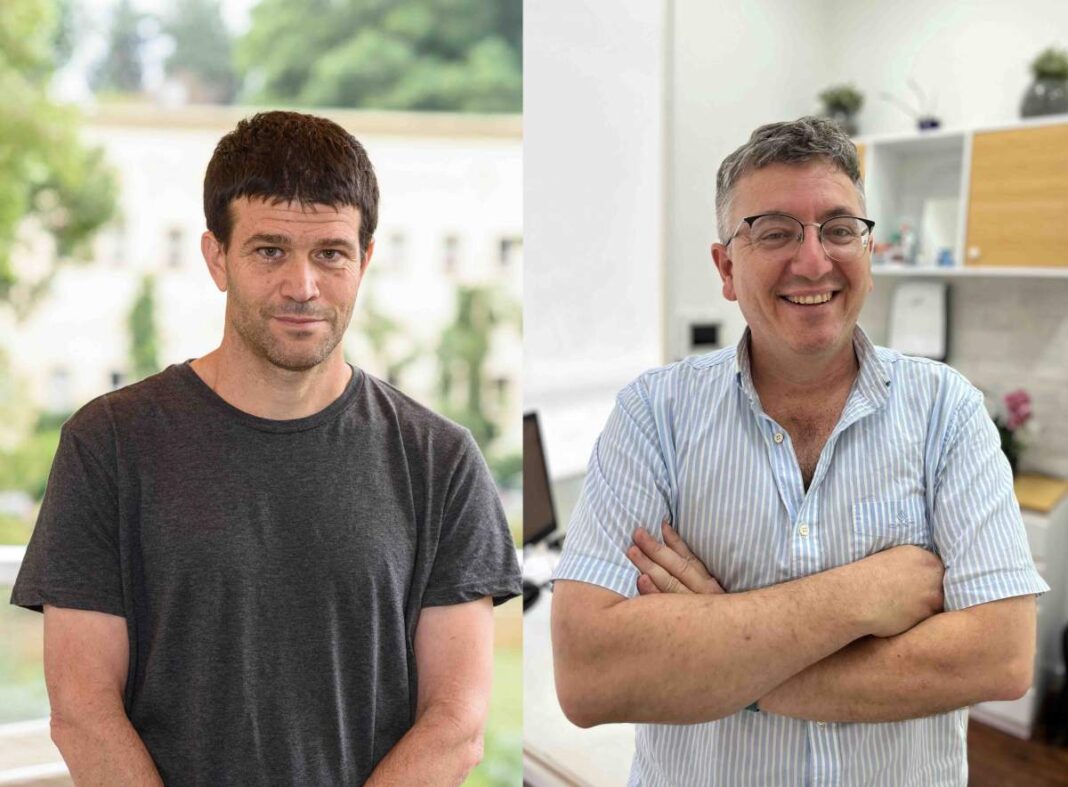
What if a blood test could reveal the pace of our aging – and the diseases that may lie ahead? The labs of Profs. Liran Shlush and Amos Tanay at the Weizmann Institute of Science have been conducting in-depth studies into the biology of blood to better understand the aging process and why some people become more susceptible to disease over the years.
Their research teams, made up of physicians, biologists and data scientists, have been tracking changes in the blood-forming stem cells, including the emergence of genetic changes in these cells in about one-third of people over the age of 40. These changes not only increase the risk of blood cancers such as leukemia, but have also been linked to heart disease, diabetes and other age-related conditions.
In a new study published this month in Nature Medicine Shlush and Tanay present findings that may lead to an innovative blood test for detecting a person’s risk of developing leukemia. This test may potentially replace the invasive, painful and invasive test of bone marrow sampling.
The study focused on myelodysplastic syndrome (MDS), an age-related condition in which blood stem cells fail to properly mature into functional blood cells. Diagnosing MDS and assessing its severity is crucial, as it can lead to severe anemia and may progress to acute myeloid leukemia, one of the most common blood cancers in adults. Until now, diagnosis has relied on bone marrow sampling, a procedure that requires local anesthesia and can cause discomfort or pain.
The findings are already being tested in a large-scale clinical trial at several medical centers around the world
In the new study, a research team led by Dr. Nili Furer, Nimrod Rappoport and Oren Milman, in collaboration with physicians and researchers the scientists showed that rare blood stem cells – which occasionally exit the bone marrow and enter the bloodstream – carry diagnostic information about MDS.
The researchers demonstrated that with a simple blood test and advanced single-cell genetic sequencing, it is possible to identify early signs of the syndrome and even assess a person’s risk of developing blood cancer. Could this info spur a person to eat better, exercise more regularly and avoid cancer altogether?
The researchers also discovered that the migrating stem cells can serve as a clock for our chronological age, and that in males, their population changes earlier than in women in a way that increases the risk of cancer. This finding may explain the higher prevalence of blood cancers among men. The scientists believe that using the test to diagnose MDS and leukemia is only the beginning, and that in the future it could be applied to a range of other blood-related disorders. The current findings are already being tested in a large-scale clinical trial at several medical centers around the world.
Karin Kloosterman is an award-winning journalist, innovation strategist, and founder of Green Prophet, one of the Middle East’s pioneering sustainability platforms. She has ranked in the Top 10 of Verizon innovation competitions, participated in NASA-linked challenges, and spoken worldwide on climate, food security, and future resilience.
With an IoT technology patent, features in Canada’s National Post, and leadership inside teams building next-generation agricultural and planetary systems — including Mars-farming concepts — Karin operates at the intersection of storytelling, science, and systems change.
She doesn’t report on the future – she helps design it.
Reach out directly to [email protected]
Could AI see breast cancer before the human eye can? UCLA researchers find that artificial intelligence may help detect missed cancers and flag women at higher risk, but important limitations remain.
A new study published in Science finds that psilocybin may prevent chemotherapy-induced peripheral neuropathy by protecting sensory nerves and keeping their mitochondrial energy supply functioning.
Bryan Johnson is biohacking his body so he can live forever. He tests his sperm motility regularly and uses saunas to remove microplastics from his sperm.
Scientists have developed a “raincoat” for lead-free tin perovskite solar cells, helping them withstand air, moisture and heat while maintaining high efficiency.
Sustainability is an approach where businesses and individuals balance the environmental, social, and economic aspects of a project such that current and future stakeholders are not overburdened with the impacts of the project in future.
The Yerukim members who pick up the recyclables get to keep the monetary reward, the public earns "green" bills that can be used in shops, and business owners get to be associated with environmentalism.
Saudi Arabia is deploying capital at unmatched scale to catalyze tourism and advanced industry while rewiring its power-and-water backbone. The investable frontier is widening—especially in renewables, grid storage, water efficiency/desal retrofits, and hospitality operating platforms. Prudent investors will insist on phased delivery, enforceable KPIs (energy, water, biodiversity), and RHQ/zone compliance—while pricing political-economy and reputational risks alongside growth upside.
If you throw a party for your work team and they are vegans, don't make it a barbecue. Know the sustainability values of your team to boost moral and retain good people.
Big Box stores are a pretty new concept in Israel, and thank God that not every Israeli city wants them in their backyard. A word from someone who has see the beautiful farmland around her hometown Newmarket, Ontario stripped and converted into vulgar strip malls of big box shops: they have no place in a healthy and sustainable town or city.