
Their ethos? Act now, ask forgiveness later.
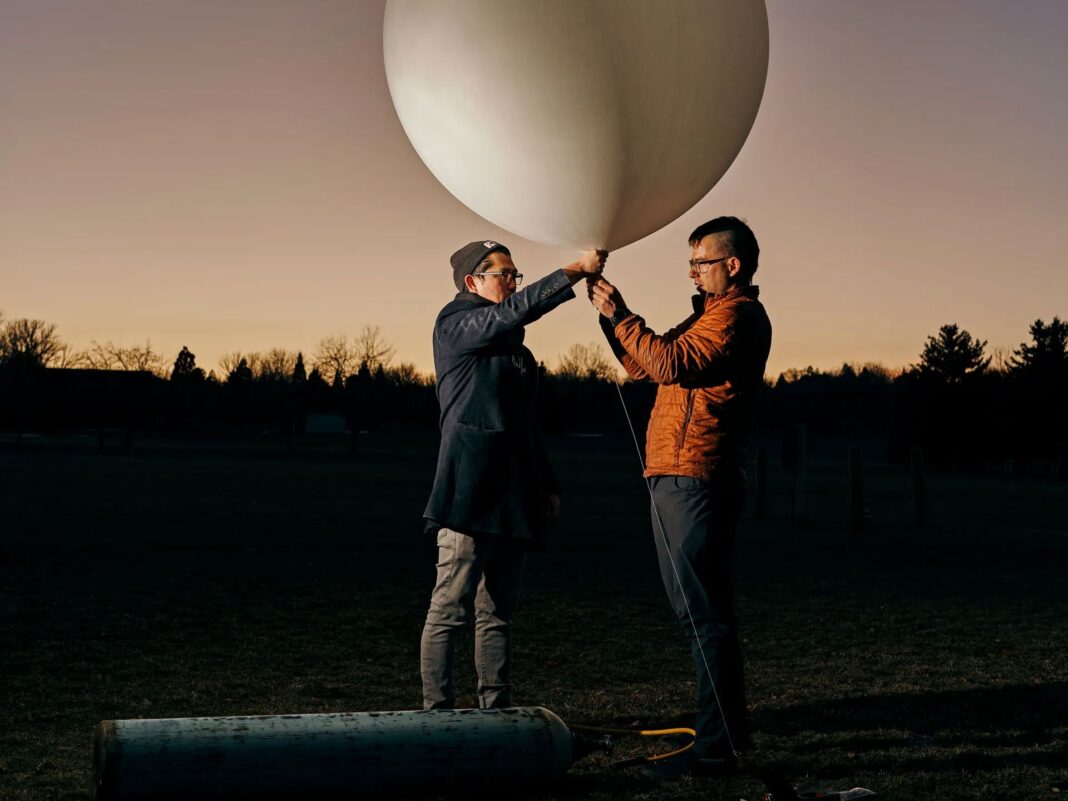
Make Sunsets, a solar geoengineering startup based in South Dakota, continues to attract both controversy and attention as it pushes ahead with its mission to “Make Earth Cool Again”—literally. The company, founded by Andrew Song and Luke Iseman, has been releasing sulfur dioxide into the stratosphere using high-altitude balloons, an experimental (and deeply polarizing) method of solar geoengineering designed to reflect sunlight and reduce global temperatures.
Related: Stardust’s $10 billion plan to blot out the sun
In a recent newsletter from 10 days ago, Make Sunsets revealed that it had responded to inquiries from the US Environmental Protection Agency (EPA), guided by two former EPA lawyers. Their cheeky tone remains unchanged: “Let’s ensure American energy dominance as well as a safe and healthy environment by Making Earth Cool Again,” they wrote.
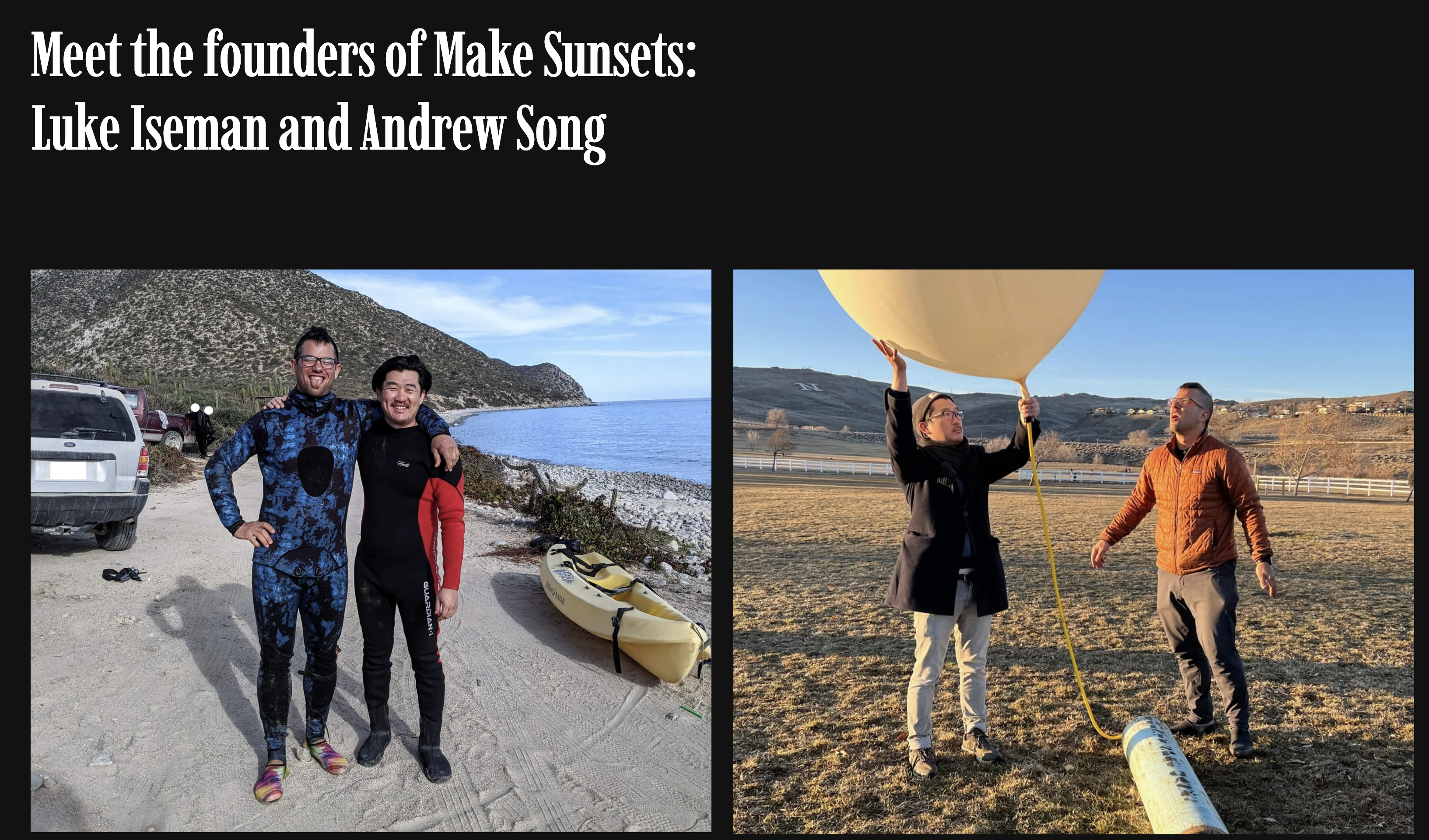 Make Sunsets foundersDespite the EPA referring to their activities as “unregulated,” the founders are confident the agency doesn’t have a solid legal basis to shut them down. “We predict they’ll stay out of our way,” they wrote. And they aren’t slowing down—this month, they launched five new balloons carrying 5,895 “Cooling Credits” worth of sulfur dioxide to altitudes of 30 km, with two of three payloads successfully recovered.
Critics Say “Wait,” They Say “Why?”
The company’s critics, including many climate scientists, argue that Make Sunsets is moving too fast with a technology whose global impacts are uncertain. Solar geoengineering could potentially reduce global temperatures, but it also poses major ethical, geopolitical, and ecological questions—who decides when and where to deploy it? What are the long-term risks?
“The existence of companies like Make Sunsets is precisely why CCAN supports public-funded research and opposes private money in both solar geoengineering testing and deployment. Research must be held to the highest bar, conducted with full transparency, and developed in a way that explicitly benefits the public good – not corporate profit margins,” says Quentin Scott, Federal Policy Director for the Chesapeake Climate Action Network (CCAN) said.
“CCAN is speaking out in strong opposition to the work of this renegade firm because it is a dangerous distraction from the serious scientific research that needs to be done.
“However, the Environmental Protection Agency (EPA) opposition to Make Sunsets is hypocritical and factually inaccurate. EPA says that Make Sunsets may be adversely impacting air quality, but the truth is that the sulfur dioxide that this company releases is dispersed too high in the atmosphere to impact the air we breathe.
“Additionally, the EPA’s pretense of using the Clean Air Act to threaten Make Sunsets is absurd when the administration is repeatedly attacking that same landmark legislation in the courts, Congress, and public discourse. If the EPA truly stood for the principle of protecting pristine air for all Americans, they would enforce the Clean Air Act provisions that they are Congressionally mandated to enforce instead of making up new ones.”
Make Sunsets, on the other hand, is openly skeptical of the academic establishment. They vented their frustration after attending the recent Degrees Global Forum in South Africa, the largest solar geoengineering gathering to date. Their takeaway: “many get paid to talk, not act,” calling out scientists who “live in a fantasy land” for believing in the feasibility of global net-zero emissions by 2100.

If global warming accelerates to dangerous levels and mitigation efforts fall short, solar geoengineering could serve as a temporary emergency measure. Make Sunsets contributes early real-world data and experimentation that could prove valuable in understanding the viability of such options in the future.
The newsletter was especially pointed in its critique: “Do we really need another study on the potential impact to maize yield in Ecuador? You know what else hurts maize yields? Record-breaking temperatures, continent-sweeping fires, and longest-recorded droughts.”
Related: Climate change Greta Thunberg sails to Gaza on Freedom Flotilla
Their core argument: we’ve run out of time for endless modeling—climate interventions are needed now.
Business Model: Selling “Cooling Credits”
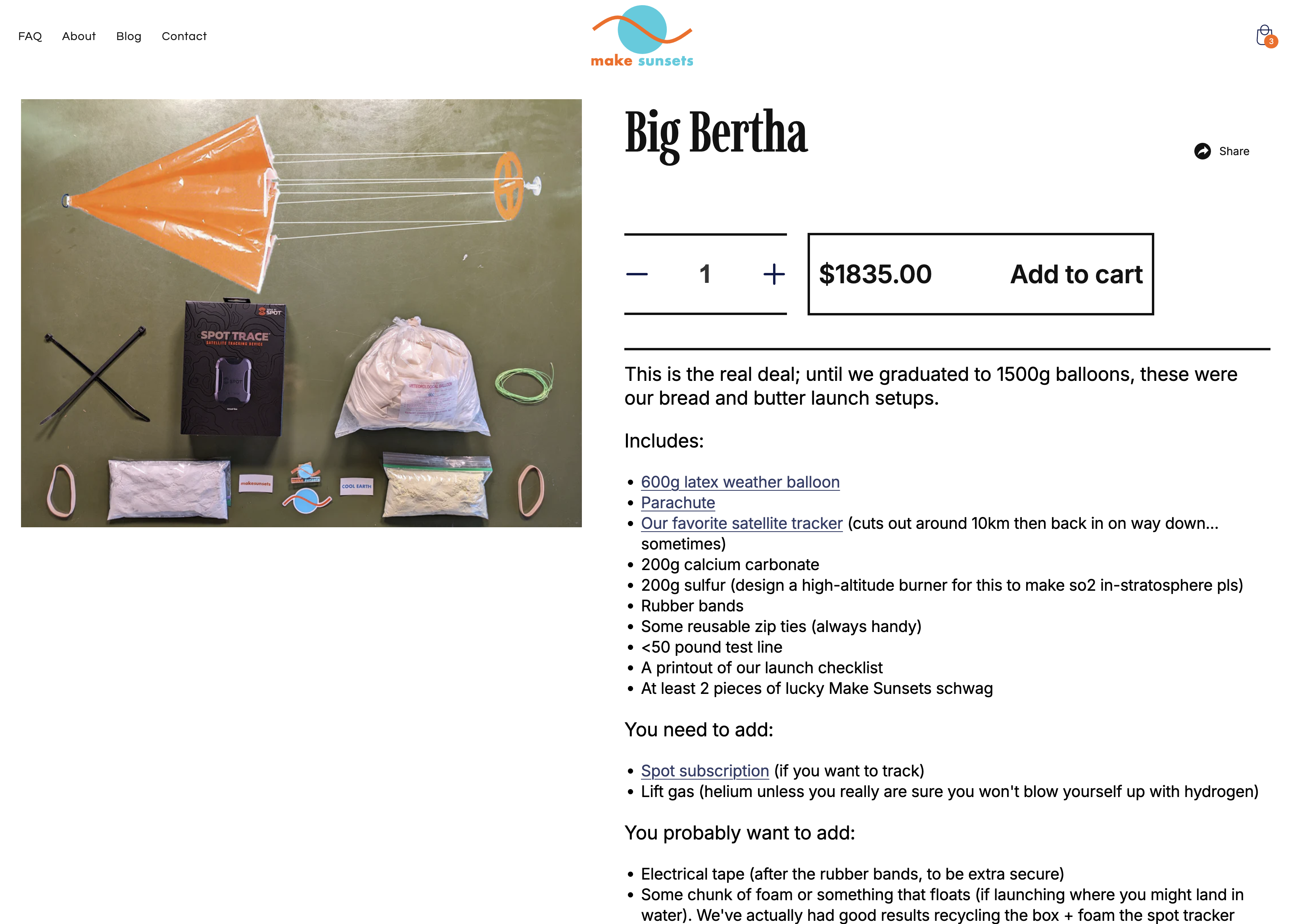
Make Sunsets generates revenue by selling “Cooling Credits”—units purchased by individuals or companies who want to fund solar geoengineering as a form of carbon offset. With a revenue of $9,414 in the last month (May) and expenses (“burn”) of $40,135, they are burning cash but still have a healthy runway of 20 months, supported by a reported cash balance of $969,009.
They’ve recently added a fiscal sponsor, allowing tax-deductible donations to the effort—another controversial move that may signal their intent to operate partly in the nonprofit space.
The company has ambitious plans:
$14K in sales for May
First paid “return-to-home” balloon flight
Signing a client for localized cooling—a move that could mark the beginning of geoengineering-as-a-service
Despite the scientific and regulatory uncertainty, Make Sunsets continues to scale what many consider a rogue climate experiment. Their ethos? Act now, ask forgiveness later.
Whether they represent a radical new frontier in climate action or a reckless gamble remains deeply contested. But one thing is clear—they’re not waiting for permission.