Mars found a way to store carbon. Can we?

Mars
What we can learn from Mars about climate change

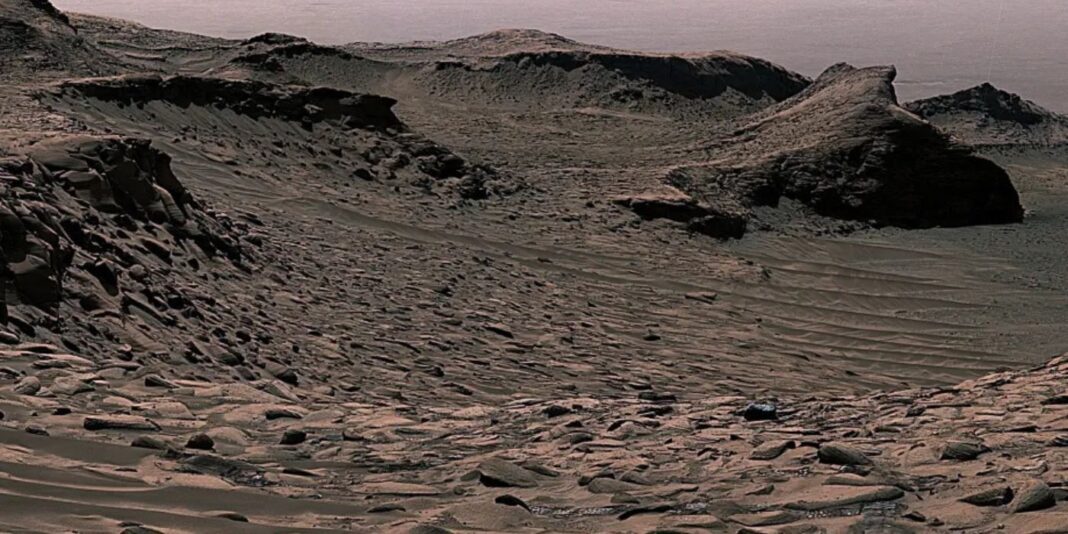
Mars, the dusty red planet that once held our wildest dreams of alien life, is revealing its past—and perhaps a glimpse of Earth’s future. Today it’s a frozen desert, with no breathable atmosphere and no surface water in sight. But new findings from NASA’s Curiosity Rover suggest Mars was once warm, wet, and much more Earth-like—possibly with rivers, rainfall, and lakes.

The key? A humble mineral called siderite, a type of iron carbonate that’s helping scientists piece together how Mars may have once locked away its carbon—and lost its atmosphere in the process.

Related: This Dune suit could keep us alive on Mars

In a recent SETI Live conversation, Dr. Ben Tutolo, a geochemist at the University of Calgary and a science team member on the Curiosity mission, shared the breakthrough. While analyzing rocks inside Gale Crater, Curiosity detected up to 10.5% siderite in some layers of Mount Sharp—far more than expected.

This wasn’t just a geochemical oddity. It was evidence that Mars once had abundant CO₂, likely released by volcanoes, which dissolved in ancient waters and was then mineralized into rock. That’s the same basic carbon capture strategy we’re exploring here on Earth today to combat climate change—except Mars figured it out a few billion years earlier.

Carbon Capture on a Planetary Scale—Then Collapse

On Earth, carbon gets locked up in limestone—made of calcium carbonate. On iron-rich Mars, siderite takes that role. Its presence, alongside evaporite minerals like magnesium sulfate, suggests a long phase of evaporation, meaning Mars had standing water. For that to happen, the atmosphere had to be thick—at least 1,000 times denser than it is today, rich in CO₂.

Related: rogue geo-engineers chased by the EPA for injecting sulphur into the atmosphere

But something happened: the atmosphere thinned, water disappeared, and the climate collapsed. Where did the CO₂ go? Some was lost to space, but this discovery shows that much of it was mineralized into the Martian crust.

The lesson is sobering. On Earth, we’re now injecting carbon into the atmosphere faster than the planet can absorb it. Mars shows us what can happen when a planet’s carbon cycle gets thrown off balance—even slightly—over geological timescales. A world once capable of supporting liquid water became uninhabitable. This is more than a Martian mystery; it’s a cautionary tale. If Mars could lose its habitability after capturing its carbon, what could happen to Earth if we fail to?

Related: dealing with gravity on Mars

The next steps will involve returning samples from these siderite-rich layers to Earth, possibly offering clues not just to climate, but to life. If Mars held onto water for long enough, it might have also given life a fighting chance. And if a “dead” planet like Mars once supported a warm, wet climate, then our definition of what makes a world habitable—whether in our solar system or beyond—may need a radical rethink. Maybe Elon Musk will get there soon with SpaceX and report back to earth before it’s too late. The United Arab Emirates plans on joining Musk on Mars.

Read More

TRENDING

Stardust’s solar geoengineered $10 billion plan to blot out the sun

Israeli-American startup Stardust Solutions has raised $75 million to develop technology that could cool the Earth by reflecting sunlight. Is solar geoengineering becoming a real industry? Or could it be a new threat?

Mongolia rangelands the center of climate change

Mongolia put the world’s overlooked rangelands on the climate agenda at UNCCD COP17, where governments and investors backed new financing for land restoration, drought resilience and pastoral communities.

Did China’s AI Boom Melt the Himalayas? Nepal’s Deadly Floods Raises Question About Data Centers and Climate

Nepal’s devastating floods reveal the growing risks of a warming Himalaya. As glaciers retreat and extreme events intensify, clean energy and climate action are increasingly urgent — and local organizations need support.

Jewish Climate Network founded so innovators don’t leave their identity at the door

Rather than retreating from climate change work, the Jewish Climate Trust organization has backed a new initiative designed to strengthen both climate action and Jewish community.

How a tick bite can lead to a life-threatening meat allergy AFG

Imagine developing a severe allergy to steak after a single tick bite. That's the reality for people with alpha-gal syndrome, a rapidly emerging condition linked to lone star ticks and other tick species. As researchers uncover how tick saliva rewires the immune system, health officials warn that hundreds of thousands of Americans may already be living with this unusual red meat allergy.

Scientists make lead-free perovskite solar cells that can weather the elements

Scientists have developed a “raincoat” for lead-free tin perovskite solar cells, helping them withstand air, moisture and heat while maintaining high efficiency.

The Essential Guide To Sustainability in Project Management

Sustainability is an approach where businesses and individuals balance the environmental, social, and economic aspects of a project such that current and future stakeholders are not overburdened with the impacts of the project in future.

Yerukim Forms a New Green Economy Where the Money is Really Green

The Yerukim members who pick up the recyclables get to keep the monetary reward, the public earns "green" bills that can be used in shops, and business owners get to be associated with environmentalism.

Choosing Riyadh over Dubai? What Investors Should Know

Saudi Arabia is deploying capital at unmatched scale to catalyze tourism and advanced industry while rewiring its power-and-water backbone. The investable frontier is widening—especially in renewables, grid storage, water efficiency/desal retrofits, and hospitality operating platforms. Prudent investors will insist on phased delivery, enforceable KPIs (energy, water, biodiversity), and RHQ/zone compliance—while pricing political-economy and reputational risks alongside growth upside.

Sell your cooking oil for biodiesel money

Want to make money on old french fry oil? Sell it.

Qatar Alternative Energy Summit Pairs Investors And Innovators

Alternative energy investors and innovators can meet n' greet in Doha, Qatar March 16 and 17.

Here’s How To Implement The Four Pillars Of Employee Engagement

If you throw a party for your work team and they are vegans, don't make it a barbecue. Know the sustainability values of your team to boost moral and retain good people.

Locals From Rishon Fight IKEA

Big Box stores are a pretty new concept in Israel, and thank God that not every Israeli city wants them in their backyard. A word from someone who has see the beautiful farmland around her hometown Newmarket, Ontario stripped and converted into vulgar strip malls of big box shops: they have no place in a healthy and sustainable town or city.

Popular Categories