War stressful for geckos and reptiles

Geckos don't like the Hamas Israel War
Geckos don’t like the Hamas Israel War.

What is the taste of honey from bees collecting pollen durin a war? Do snakes feel stress? A new study shows that war impacts the least expected creatures

Animals too feel the effects from the stress of war, finds a new study conducted at Tel Aviv University’s School of Zoology. Researchers reveal that the Israel-Hamas war has had a severe impact on animals.

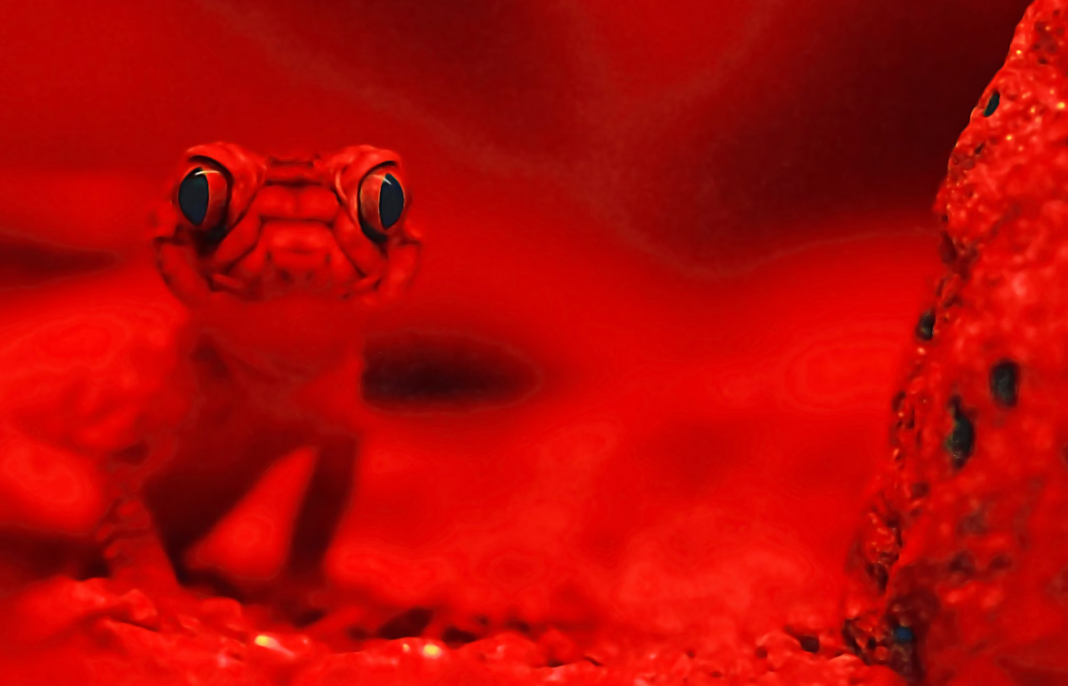
The study, which focused on geckos, found that the sound of explosions from fired rockets induces stress and anxiety in these creatures, leading to a sharp increase in their metabolic rates — an energy cost that, if chronic, may be life-threatening. The researchers hypothesize that these stress responses characterize many other animals, especially those who live in the conflict zones in northern and southern Israel.

Related: Field notes from a Sharjah summer trek

Shahar Dubiner, one of the researchers said: “Our research was conducted in a laboratory at Tel Aviv University and pertained to the reverberations of explosions from interceptions in the Tel Aviv area. However, given the unequivocal results showing symptoms of stress, we can infer that animals that are in the immediate conflict zones in the south and north of the country, where the intensity and frequency of fire are much higher, suffer from significantly more severe stress and anxiety symptoms that may endanger their lives.”

Left to right: Prof. Shai Meiri and Prof. Eran Levin.

The study was led by Shahar Dubiner, Prof. Shai Meiri and Prof. Eran Levin — in collaboration with Reut Vardi of the University of Oxford. The study was published in the journal Ecology.

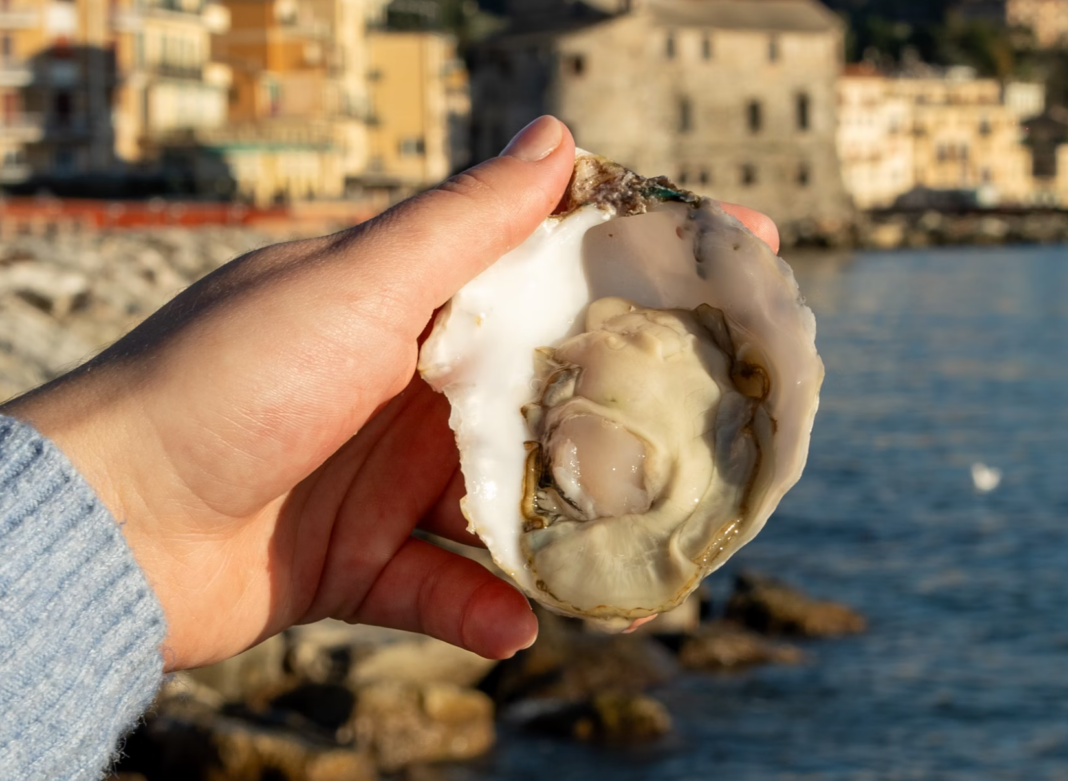
The sounds of war are a sort of sound pollution which probably also affect marine life like whales, coral, dolphins and baby oysters.

“The most tragic aspect of war is the loss of human life, among both soldiers and civilians. However, animals are also severely affected, both directly and indirectly, in ways that may threaten their survival. A few weeks before October 7, we began working on a long-term study to measure the rate of energy consumption of small ground geckos of the species Stenodactylus sthenodactylus.

“We obviously did not foresee the outbreak of the war, but unintentionally, we recorded the energy consumption of five geckos during the rocket barrages launched into Tel Aviv in the first month of the war,” says Prof. Shai Meiri. Recently, Meiri published a study on rain and biodiversity.

Shai Meiri
A photo of Shai Meiri

The study’s findings showed that at the sound of the bombings, the geckos’ metabolic rate jumped to double what it was when they were at rest. Their breathing became faster, and they clearly exhibited signs of stress.

The experiment lasted up to four hours after the barrages, yet even within this timeframe the geckos did not calm down and return to their resting levels. Moreover, even after a month of continuous fighting, the geckos did not acclimate to the sound of the explosions — their stress response remained unchanged.

Prof. Levin notes that “A state of stress is detrimental to both humans and animals. To compensate for the increase in oxygen consumption and depletion of energy reserves, animals need to eat more. Even if they manage to find food, in the process they expose themselves to predators and lose opportunities to reproduce.

“In a situation of ongoing conflict, such as the current reality in Gaza, the Gaza Envelope, and along the Israeli-Lebanese border, the metabolic cost can be significant and have a real impact on the energy reserves and activity periods of reptiles and other animals. This can exacerbate their conservation status, especially for species that are already endangered.”

The researchers note that the findings of this study are consistent with another experiment conducted during Operation Guardian of the Walls, in which they also observed a stress response in a small snake of the species Xerotyphlops syriacus.

Karin Kloosterman
Karin Kloostermanhttp://www.greenprophet.com
Karin Kloosterman is an award-winning journalist, innovation strategist, and founder of Green Prophet, one of the Middle East’s pioneering sustainability platforms. She has ranked in the Top 10 of Verizon innovation competitions, participated in NASA-linked challenges, and spoken worldwide on climate, food security, and future resilience. With an IoT technology patent, features in Canada’s National Post, and leadership inside teams building next-generation agricultural and planetary systems — including Mars-farming concepts — Karin operates at the intersection of storytelling, science, and systems change. She doesn’t report on the future – she helps design it. Reach out directly to [email protected]

Read More

TRENDING

Quintin Tarantino walks on a bike lane in Tel Aviv

Quentin Tarantino lives in Israel now, quietly blending into Tel Aviv life (which is pretty loud and late night!) — until Tel Aviv, of course, notices him.

How Israel’s Strikes Avert Iran’s Environmental Threat

The strikes on Iran have sparked fierce debate, but from Israel’s perspective, the choice was easy: either accept the risks of a nuclear Iran or act decisively to stop it.

EcoPeace gets peacebuilding award

The Environmental Peacebuilding Association gave its recent award –– the 2025 Al-Moumin Award and Distinguished Lecture on Environmental Peacebuilding –– to EcoPeace leaders Nada Majdalani, Yana Abu Taleb, Gidon Bromberg, and Tareq Abu Hamed. The award honors their work in addressing complex environmental challenges through trust-building, dialogue, cooperation, and joint action among communities in Palestine, Jordan, and Israel.

All 13 Tel Aviv Beaches Reawarded the Prestigious ‘Blue Flag’ for 2025

Reaffirming its leadership in sustainable coastal management, all 13 of Tel Aviv-Yafo’s public beaches have once again earned the prestigious Blue Flag certification for 2025. This honor, awarded by the International Blue Flag Committee and the Foundation for Environmental Education (FEE), recognizes beaches that meet exceptional standards in water quality, safety, accessibility, and environmental education.

Tel Aviv’s mayor Huldai is taking smart phones from schools – his irony in education

Waldorf schools, created by Austria's Rudolph Steiner, are the fastest-growing school system in Israel because of their focus on arts and crafts and their avoidance of technology in the classroom. It’s ironic that Huldai is being praised for pushing a tech-free school environment while his administration shattered a community that has been practicing this philosophy for over a decade.

Yerukim Forms a New Green Economy Where the Money is Really Green

The Yerukim members who pick up the recyclables get to keep the monetary reward, the public earns "green" bills that can be used in shops, and business owners get to be associated with environmentalism.

Choosing Riyadh over Dubai? What Investors Should Know

Saudi Arabia is deploying capital at unmatched scale to catalyze tourism and advanced industry while rewiring its power-and-water backbone. The investable frontier is widening—especially in renewables, grid storage, water efficiency/desal retrofits, and hospitality operating platforms. Prudent investors will insist on phased delivery, enforceable KPIs (energy, water, biodiversity), and RHQ/zone compliance—while pricing political-economy and reputational risks alongside growth upside.

Sell your cooking oil for biodiesel money

Want to make money on old french fry oil? Sell it.

Qatar Alternative Energy Summit Pairs Investors And Innovators

Alternative energy investors and innovators can meet n' greet in Doha, Qatar March 16 and 17.

Here’s How To Implement The Four Pillars Of Employee Engagement

If you throw a party for your work team and they are vegans, don't make it a barbecue. Know the sustainability values of your team to boost moral and retain good people.

Locals From Rishon Fight IKEA

Big Box stores are a pretty new concept in Israel, and thank God that not every Israeli city wants them in their backyard. A word from someone who has see the beautiful farmland around her hometown Newmarket, Ontario stripped and converted into vulgar strip malls of big box shops: they have no place in a healthy and sustainable town or city.

The Jewish National Fund Meets An Inconvenient Truth

According to the JNF, it has transformed thousands of acres of barren land into green forests in Israel. They state that each person emits about 23 tons of carbon per year, estimating that each tree planted can absorb one ton of carbon in its lifetime. That's a whole lot of trees you'd need to be planting. Could so many fit in Israel?

How to quiet noise from construction in your office

Streets need to be resurfaced in New York but the humming and grinding noise is unsettling. Noise is environmental pollution. 

Popular Categories