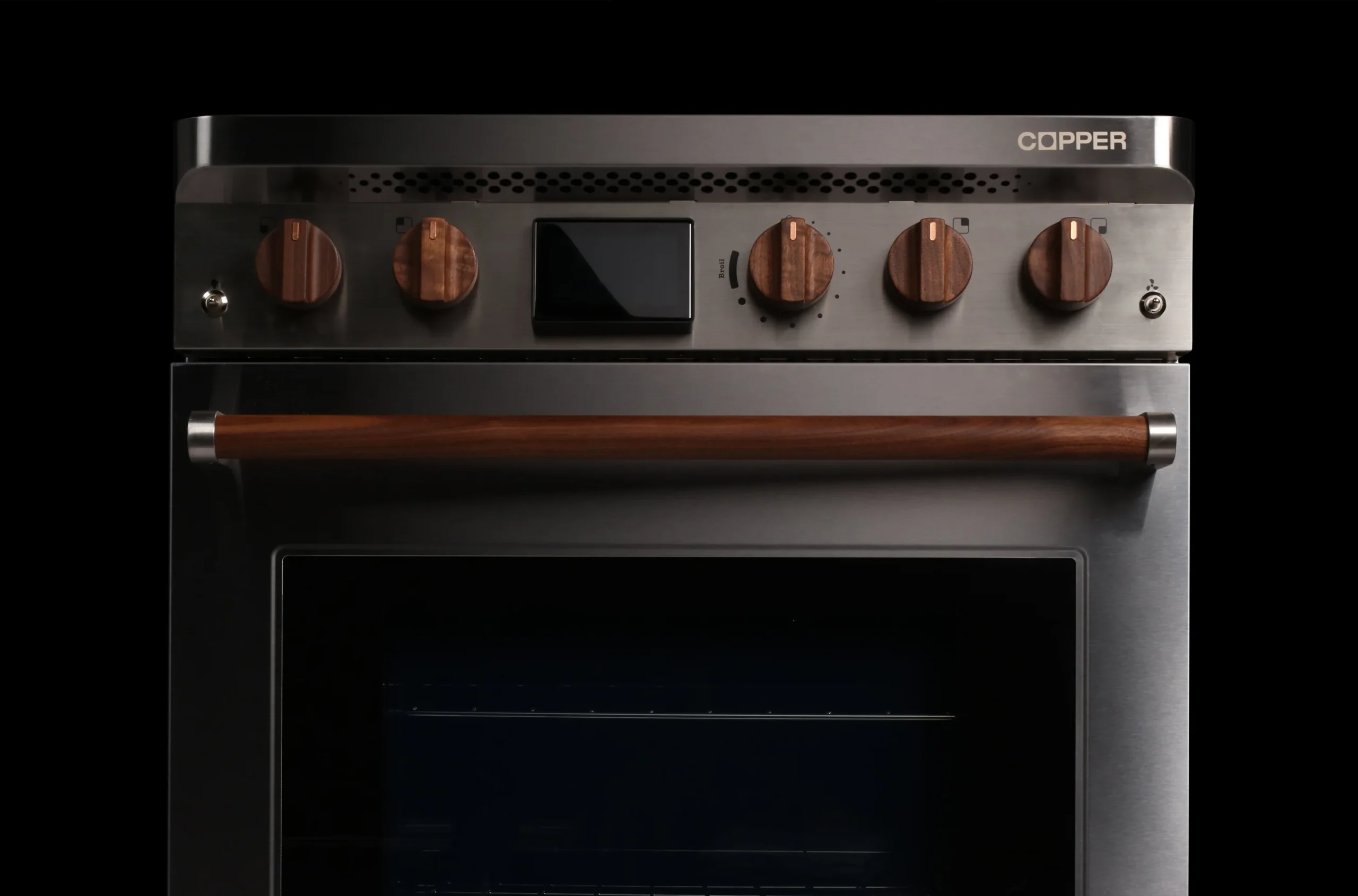
Replacing gas with Copper’s battery-equipped $6000 induction stove

Copper, battery induction oven

Berkeley startup Copper closes a Series A to scale a new class of “battery-in-appliance” induction ranges that plug into standard outlets, potentially reshaping kitchens, buildings, and the grid. 

Battery-equipped induction stoves just took a major step toward the mainstream. Copper—maker of a 120-volt, plug-in induction range with an internal battery—raised $28 million to expand production and enter new markets. As American consumers race to replace their polluting indoor gas stoves and ovens with solutions that work, Copper is a step in the right direction.

The financing was led by climate-focused investor Prelude Ventures with participation from Building Ventures and existing backers Voyager, Collaborative Fund, Climactic, Designer Fund, Necessary Ventures, Leap Forward Ventures, and Climate Capital.

The round comprises equity and venture debt. Prelude Ventures led the Series A; the company also confirmed venture debt in the capital stack. “Copper has built a category-defining company… we were particularly impressed with the team’s relentless execution and the strength of their patent portfolio covering batteries in appliances,” said Mark Cupta, Managing Director at Prelude Ventures.

Copper CEO and co-founder Sam Calisch added, “This new capital will enable Copper to scale into additional products, helping millions upgrade their homes, ditch gas, and support the clean grid.”

Americans have been wary of gas appliances since news came out that cookstoves leaking methane gas may be causing health problems like cancer in the US.

Why is Copper a game-changer?

copper induction stove, battery equipped range, plug in induction, sustainable kitchen appliances, electrification, clean cooking technology, zero emission cooking, virtual power plant appliances, green home upgrades, energy storage in appliances
Copper – only $6000 to replace your gas stovetop and oven

Most induction ranges require a 240-V circuit and an electrical panel upgrade—an expensive non-starter in older buildings. Copper’s range plugs into a standard 120-V outlet; its built-in battery supplies bursts of extra power when needed for searing or boiling. That design slashes installation cost and complexity for landlords and homeowners, accelerates gas-to-electric switching, and opens the door to using millions of small, distributed batteries as flexible grid resources.

The model is already landing fleet-scale deals. New York City’s Housing Authority (NYCHA) selected Copper for a $32 million program to install 10,000 stoves in public-housing apartments—part of a push to reduce indoor air pollution and electrify kitchens without rewiring buildings.
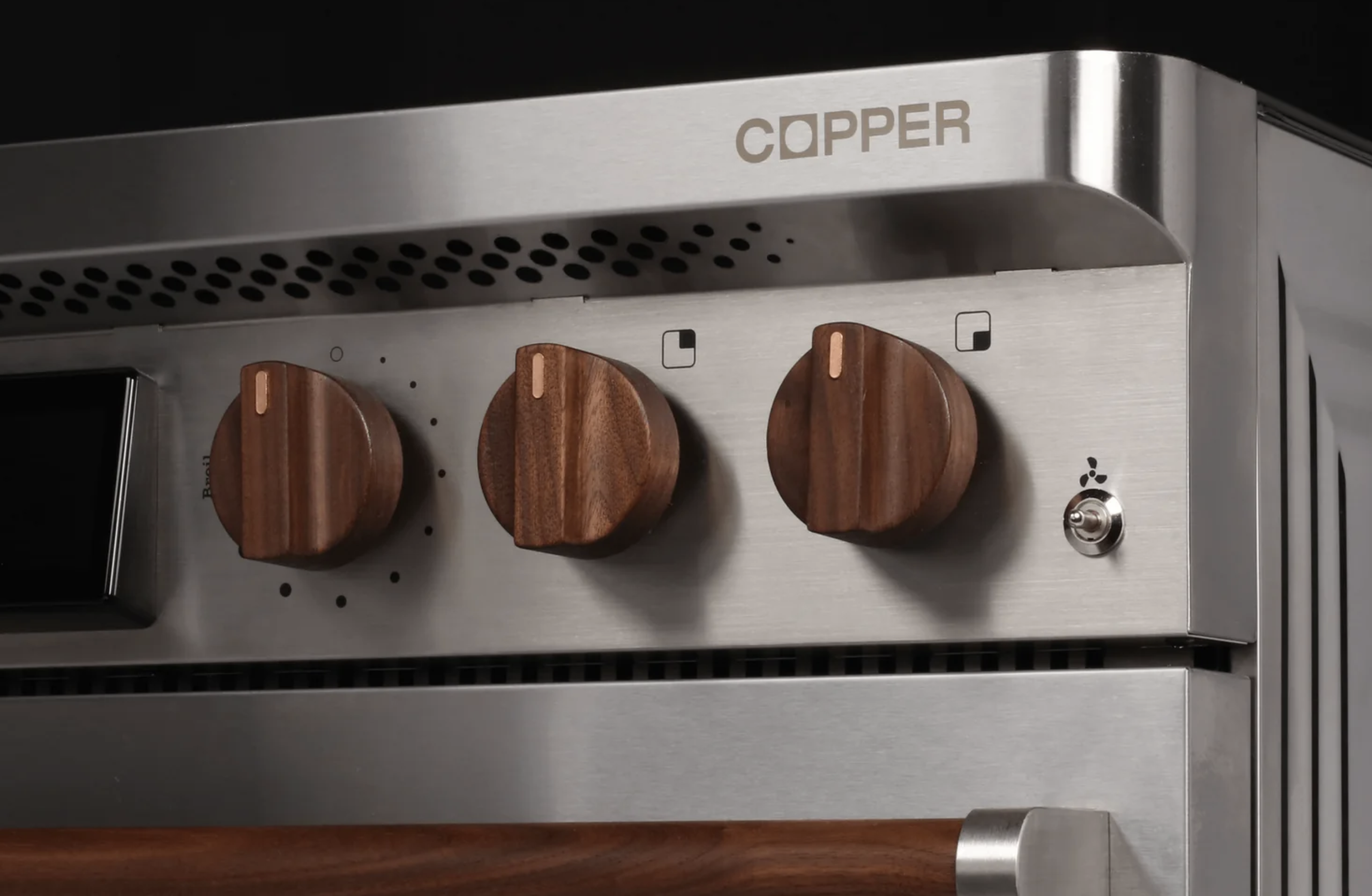
copper induction stove, battery equipped range, plug in induction, sustainable kitchen appliances, electrification, clean cooking technology, zero emission cooking, virtual power plant appliances, green home upgrades, energy storage in appliances

Beyond cooking, embedded batteries can form a virtual power plant (VPP)—so appliances help the grid ride through peaks and avoid gas peaker plants. Copper piloted a California VPP in 2024; broader analyses show VPPs can deliver substantial capacity and consumer savings if programs are funded and scaled.

The science and public-health case for switching from gas

Induction eliminates combustion indoors. Multiple studies from top universities find that gas and propane stoves raise indoor nitrogen dioxide (NO2) to unhealthy levels, contribute to childhood asthma, leak climate-warming methane, and can emit benzene during use. Key findings come from Stanford’s Doerr School of Sustainability and collaborators (NO2 exposures, methane leakage), Harvard T.H. Chan School of Public Health (health burden estimates), and peer-reviewed studies on benzene emissions.

For renters and homeowners, a plug-in induction range removes the need for an electrician and panel upgrade, delivering fast, precise heat and cooler kitchens. Early reviews have praised performance; press reports put retail pricing around $5,999 for Copper’s least-expensive model, with potential incentives available depending on location and policy. $6 grand for a stove is a luxury item that we believe will limit buy-ins, but which will accelerate copy-cat appliance makers, especially from China, to fill the void for lower income earners who want to get rid of gas appliances.

Copper’s financing signals investor appetite for electrification that solves retrofit pain points and unlocks grid value. Expect copycats and adjacent products (battery-equipped heat-pump appliances, water heating, and laundry) to follow.

The company says it will expand its platform into additional products—with patents covering batteries in appliances providing defensive moats.

Related reading on Green Prophet


Karin Kloosterman
Karin Kloostermanhttp://www.greenprophet.com
Karin Kloosterman is an award-winning journalist, innovation strategist, and founder of Green Prophet, one of the Middle East’s pioneering sustainability platforms. She has ranked in the Top 10 of Verizon innovation competitions, participated in NASA-linked challenges, and spoken worldwide on climate, food security, and future resilience. With an IoT technology patent, features in Canada’s National Post, and leadership inside teams building next-generation agricultural and planetary systems — including Mars-farming concepts — Karin operates at the intersection of storytelling, science, and systems change. She doesn’t report on the future – she helps design it. Reach out directly to [email protected]

Read More

TRENDING

Weston Higginbotham found dead in a Kyoto forest: is climate anxiety part of the story?

In some ways, Weston has become a symbol of a generation wrestling with environmental and technological anxiety. Friends and family described him as deeply concerned about environmental issues. Reports also noted that he questioned the growing role of artificial intelligence in daily life, even reportedly disagreeing with his mother about her use of AI.

Billie Eilish’s Mom Takes the Stage at Hollywood Climate Summit — But Does Hollywood Still Care About Climate Change?

Hollywood once promised to help save the planet. Leonardo DiCaprio warned of climate catastrophe from awards stages. Celebrities flew to climate conferences. Studios pledged greener productions. Streaming platforms rushed to commission environmental documentaries. But in 2026, with the aftermath of wildfires, heatwaves and floods becoming routine, a question lingers: Does Hollywood still care about climate change?

Can Scientists Predict Coral Bleaching Before It Happens?

Now researchers at the Woods Hole Oceanographic Institution (WHOI) in the US say they have developed a way to predict coral bleaching five to six months before it occurs, potentially giving reef managers enough time to intervene and save vulnerable corals.

10 Amazing Facts About the Sidr Tree

Most people in the West have never heard of the Sidr tree. That's strange when you think about it. This tough, thorny desert tree has fed people, bees, birds, and camels for thousands of years. It appears in Islamic tradition. Its honey sells for astonishing prices.

5 projects to help kickstart your company’s sustainability journey 

True progress happens when environmental ambition meets action. Decarbonizing efficiently is possible for any business in any sector, but actually getting started can sometimes feel daunting.   The trick? It’s to start small and build momentum. Here are five potential projects to help you get started.  

Locals From Rishon Fight IKEA

Big Box stores are a pretty new concept in Israel, and thank God that not every Israeli city wants them in their backyard. A word from someone who has see the beautiful farmland around her hometown Newmarket, Ontario stripped and converted into vulgar strip malls of big box shops: they have no place in a healthy and sustainable town or city.

The Jewish National Fund Meets An Inconvenient Truth

According to the JNF, it has transformed thousands of acres of barren land into green forests in Israel. They state that each person emits about 23 tons of carbon per year, estimating that each tree planted can absorb one ton of carbon in its lifetime. That's a whole lot of trees you'd need to be planting. Could so many fit in Israel?

How to quiet noise from construction in your office

Streets need to be resurfaced in New York but the humming and grinding noise is unsettling. Noise is environmental pollution. 

EarthX and a blueprint for sustainable investing

Trammell S. Crow, a Dallas-based businessman and father of four, is focusing his efforts on impact investing, and media that focuses on saving the planet through EarthX.

Mining Afghanistan’s Mineral Discoveries Similar to Avatar

Now that American forces in Afghanistan are commemorating the longest period of any war that America has been involved in, including the 1965-73 Vietnam War, the recent discoveries of large and extremely valuable mineral and metal deposits may finally bring to light a reason to continue the presence of US fighting forces in this war torn and backward country.

From Pilot Plant to Global Stage: How Aduro Clean Technologies’ 2026 Expansion Signals a Turning Point for Chemical Recycling Investors Like Yazan Al Homsi

The company's Next Generation Process (NGP) Pilot Plant in London, Ontario, has officially moved into initial operating campaigns, generating the kind of structured, repeatable data that separates laboratory promise from commercial viability.

Nobul’s Regan McGee on Shareholder Value: “Complacency Is the Silent Killer” 

Why the governance framework designed to protect shareholders so...

Should You Invest in the Private Market?

startustartup Unlike public stock exchanges, which offer daily trading, strict...

Popular Categories