Jordan turns to ancient fire and mines volcanic soil to solve water crisis

Jordan soil volcanic rock

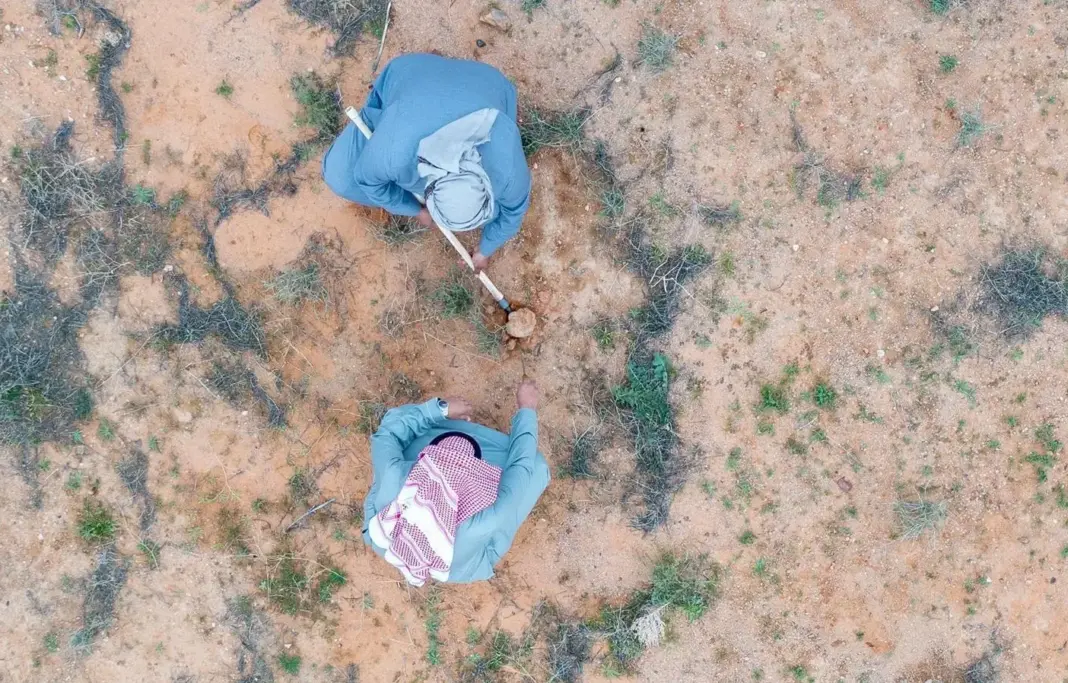
In the volcanic highlands of northern Jordan, north of Amman engineers are mining a natural resource not for energy, but for agriculture. The material: crushed volcanic rock, now also processed into a mineral-rich soil that may hold the key to reducing water and fertilizer demand in arid regions.

The project is led by Watad, a Jordanian company founded in 2019. The firm processes volcanic rocks such as zeolite, basalt, and pozzolana into what it calls “volcanic soil”—a porous, salt-resistant substrate that improves water retention and plant growth in dry climates.

“There’s zeolite, like the one we have in the mine here. There is zeolitic tuff in one of the other mines we have. There are basalt and pozzolana,” said Ibrahim al-Manaseer, a mine engineer at the site near Mafraq in an interview with Reuters. “All of them are volcanic rocks that formed thousands of years ago.”

Watad currently produces around one million tons of volcanic soil annually, and its CEO, Mohannad al-Manaseer, says the company could scale up rapidly. al-Manaseer said the goal is to replace conventional fertilizers and soil additives with a more durable and environmentally stable alternative.

Volcanic soil
Wated, volcanic soil

Early field reports suggest volcanic soil may reduce irrigation needs by up to 60% and cut fertilizer use by 80%. That could have significant implications for Jordan, which ranks as the second most water-scarce country in the world, with per capita water availability under 100 cubic meters per year, well below the UN’s threshold for extreme water stress.

When we visited Jordan we learned that hotels and homes get fresh water shipped to reservoirs weekly. Some people keep second hidden reservoirs to avoid running out.

Related: Jordan’s leading ecological organizations

While long-term studies are still needed to assess environmental and agronomic impacts across diverse ecosystems, the use of volcanic material in soil enhancement is not new. Zeolites, in particular, have been studied for decades due to their ion exchange and adsorption properties.

What’s novel is the scale—and the urgency. In a region where desertification, rising temperatures, and resource stress are converging, Jordan’s push to mine its volcanic past could represent a rare alignment of geology and necessity.

Jordan has been working with water cooperation with Israel and the Palestinian Authority over the last couple of decades through Friends of the Earth, Middle East – Ecopeace. They are working to broker small-scale local projects in education, but also are working on larger water for energy swaps. The October 7 terror attack changed the political outlook for Israel and Jordanian cooperation, two countries that have a signed peace treaty.

Time for water cooperation? 

The Wadi Araba Treaty established cooperation between Jordan and Israel on various matters, including water sharing. In November 2022, both Jordan and Israel signed a declaration of intent at the UN climate conference to rehabilitate and protect the Jordan River, aiming to reduce pollution and restore water flow.

A 2013 agreement involved developing a desalination plant in Aqaba, with potable water shared between Israel and Jordan, and increased water releases from Lake Tiberias to Jordan. But in November 2023, Jordan announced it would not sign a proposed water-for-energy deal with Israel, citing Israel’s actions in Gaza as the reason.

Jordan is currently advancing its own water security through the Aqaba–Amman Water Desalination and Conveyance Project, aiming to produce about 300 million cubic meters of clean drinking water annually. Jordan is landlocked except for a small strip of the Red Sea, where it is bordered by Israel and Saudi Arabia.

The Abraham Accords which is creating a peace treaty and regional cooperation between countries such as Saudi Arabia, and the United Arab Emirates, will likely lead to water cooperation for a very dry Jordan.

::Wated


Read More

TRENDING

Who Owns the Farm Robot? A State of Jefferson Startup Takes on Carbon Robotics

In California's self-proclaimed State of Jefferson, a small agricultural technology company is challenging the dominant laser-weeding business model. Laudando & Associates believes farmers should own and repair their AI-powered weeding tools rather than pay ongoing subscription fees. The approach has put the company on a collision course with industry leader Carbon Robotics, sparking a patent dispute that has pushed the Jefferson startup toward overseas markets while raising broader questions about ownership, right-to-repair, and the future of farm automation.

Regenerative Wool or Greenwashing? Zentera Responds to Critics

Zentera responds to questions about ZQ wool, animal welfare, regenerative farming, ethical fashion and the fallout from PETA's New Zealand investigation.

Tanner Winterhof on the Custom Harvesters Quietly Holding American Agriculture Together

In late January, in a Des Moines hotel ballroom that smelled faintly of diesel and convention coffee, Tanner Winterhof spent three days hosting the members and attendees of the  U.S. Custom Harvesters Inc. annual convention on his podcast as Farm4Profit’s official media partner for the show.

Hormuz 2026 Conflict Poses an Energy and Food Security Dilemma in a Warming World

As tensions rise in one of the world’s most critical maritime chokepoints, the ripple effects go far beyond oil—touching food systems, climate pressures, and regional stability

What are AWG air-water generators, and why they aren’t a golden-bullet solution (yet)

Atmospheric water generators (AWGs) sound like magic: machines that can pull drinking water out of air. The idea is mentioned in the Bible, where the elders would pray for water collected as dew on plants and the catch on turning this into a machine is in the physics. To turn invisible vapor into liquid, you must remove heat, especially the latent heat of condensation.

Yerukim Forms a New Green Economy Where the Money is Really Green

The Yerukim members who pick up the recyclables get to keep the monetary reward, the public earns "green" bills that can be used in shops, and business owners get to be associated with environmentalism.

Choosing Riyadh over Dubai? What Investors Should Know

Saudi Arabia is deploying capital at unmatched scale to catalyze tourism and advanced industry while rewiring its power-and-water backbone. The investable frontier is widening—especially in renewables, grid storage, water efficiency/desal retrofits, and hospitality operating platforms. Prudent investors will insist on phased delivery, enforceable KPIs (energy, water, biodiversity), and RHQ/zone compliance—while pricing political-economy and reputational risks alongside growth upside.

Sell your cooking oil for biodiesel money

Want to make money on old french fry oil? Sell it.

Qatar Alternative Energy Summit Pairs Investors And Innovators

Alternative energy investors and innovators can meet n' greet in Doha, Qatar March 16 and 17.

Here’s How To Implement The Four Pillars Of Employee Engagement

If you throw a party for your work team and they are vegans, don't make it a barbecue. Know the sustainability values of your team to boost moral and retain good people.

Locals From Rishon Fight IKEA

Big Box stores are a pretty new concept in Israel, and thank God that not every Israeli city wants them in their backyard. A word from someone who has see the beautiful farmland around her hometown Newmarket, Ontario stripped and converted into vulgar strip malls of big box shops: they have no place in a healthy and sustainable town or city.

The Jewish National Fund Meets An Inconvenient Truth

According to the JNF, it has transformed thousands of acres of barren land into green forests in Israel. They state that each person emits about 23 tons of carbon per year, estimating that each tree planted can absorb one ton of carbon in its lifetime. That's a whole lot of trees you'd need to be planting. Could so many fit in Israel?

How to quiet noise from construction in your office

Streets need to be resurfaced in New York but the humming and grinding noise is unsettling. Noise is environmental pollution. 

Popular Categories