American students build “bread-loaf sized” satellite they will send to space

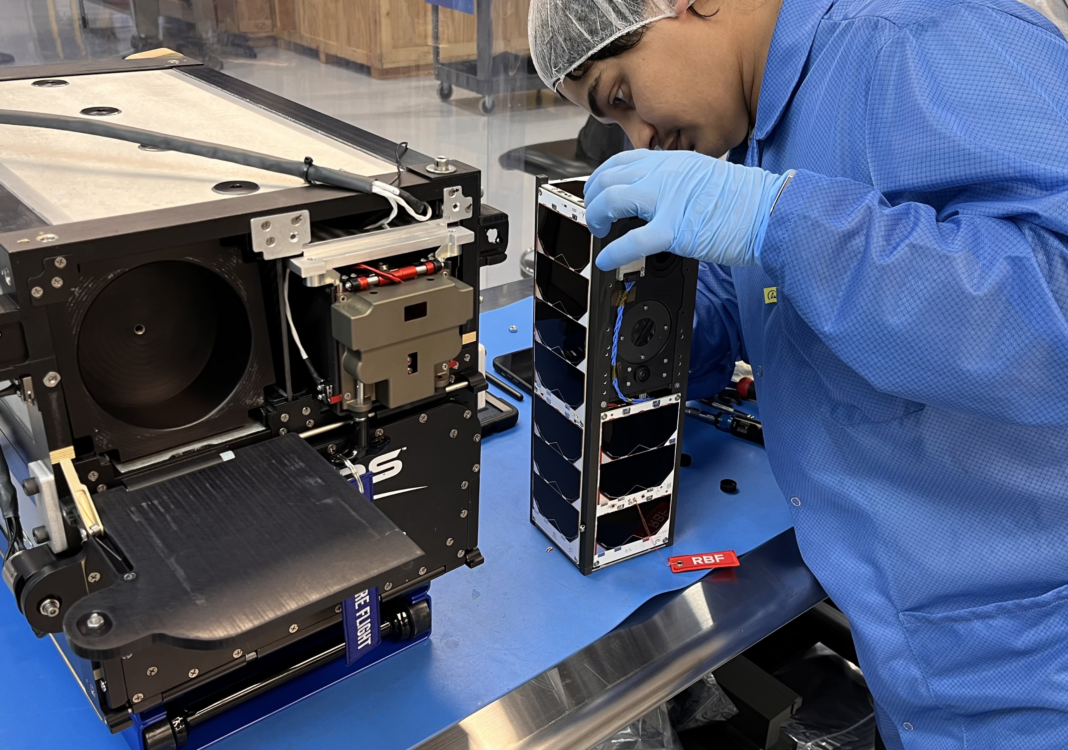
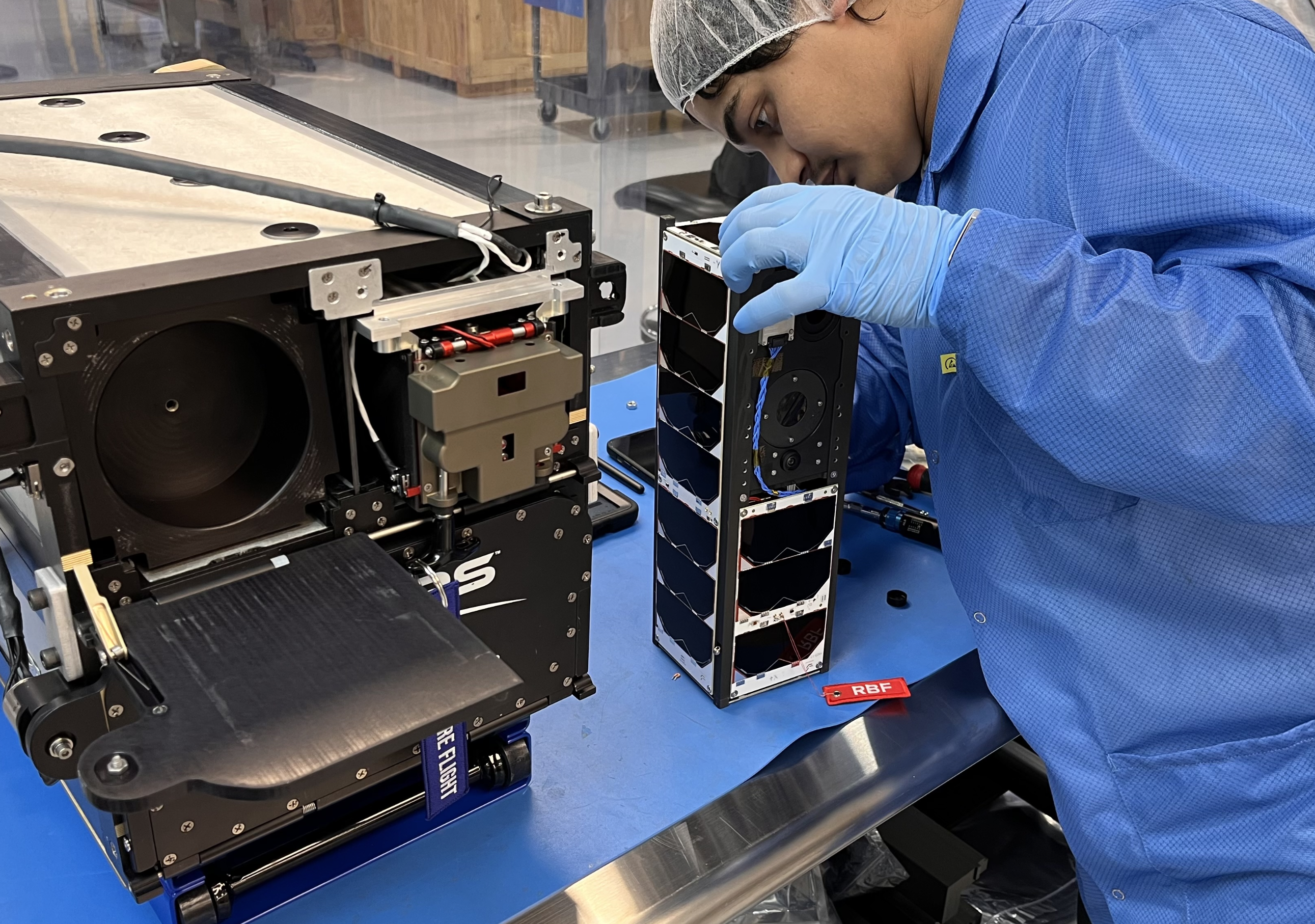
A multidisciplinary team of undergraduate students led by the University of New Hampshire designed and built a mini satellite, known as a CubeSat, that will launch into space to gather data in collaboration with NASA’s Interstellar Mapping and Acceleration Probe (IMAP) mission. The small-but-mighty satellite is set to launch on a SpaceX rocket from Vandenberg Space Force Base in California no earlier than Nov. 10, 2025 at 10:19 a.m. PST. It will head to the outer reaches of the atmosphere to study the solar wind which will help scientists in their quest to improve space weather forecasting and better protect technology in space and on Earth—such as communication networks, power grids and GPS—from potentially damaging large solar flare events. “This is an amazing opportunity for UNH students to not only get hands-on technical experience but to also collaborate with other undergraduates across the country to design and build an entire space mission from the instrument to the software that will operate it in space and the antenna and radio to command the satellite once there,” said Noé Lugaz, research professor in physics and astronomy at the University of New Hampshire. “The experience is invaluable and can open doors to future opportunities in space-related or other science and engineering careers.” A team of 70 undergraduate students from the University of New Hampshire (UNH), Sonoma State University (SSU) and Howard University (HU) designed, developed and built the satellite which was named 3UCubed—reflecting the overall concept of uplifting undergraduate students to study upwelling, and giving a nod to the three participating universities. Selected as part of NASA’s CubeSat Launch Initiative, once it is launched, the satellite will travel to the Earth’s upper atmosphere, known as thermosphere, which is the same region where many other satellites and the International Space Station orbit around Earth. It will take measurements of the atmosphere density (single oxygen at this altitude) and electron precipitation from space onto the upper atmosphere, which can cause disturbances in communication signals and lead to changes in the ozone. Data from the mission will be collected by the students and analyzed in combination with data from IMAP and will help advance the understanding of how the thermosphere in the auroral and cusp regions responds to particle precipitation and varying conditions associated with solar wind. CubeSats are a specific subset of satellites that are small and standardized and provide a cost-effective way to study space science. It is about the size of a loaf of bread and offers a simpler way to start building and operating than larger satellites, making it an ideal piece of equipment for students to hone their skills outside of the classroom. The 3UCubed satellite was fully assembled at UNH and the two payload instruments that are a part of its structure were built, tested and calibrated at UNH. The students worked for five years on the satellite, performing a variety of tasks ranging from creating the software code that controls the 3UCubed to soldering the wires during the physical build. Students with mentorship from professors and staff engineers, performed trade studies, orbit analyses, selected vendors for different subsystems, oversaw budgets for various mass, power, link and telemetry jobs and developed the framework for the flight software and operations. “At the time, I had a keen interest for the aerospace industry and saw this as a great opportunity to get valuable experience working with industry professionals,” said Alex Chesley ’22, who studied mechanical engineering at UNH and was a part of the 3UCubed mission team. “It was fascinating to learn about so many new subjects about space science and instrumentation that I had never studied before.” The hands-on experience is meant to introduce, inspire and prepare students for a successful career in a related field like space science, computer science, engineering or science education. Chesley designed the initial CAD model of the satellite and also helped create the detailed specification list for the CubeSat’s altitude control system. He now works as a configuration engineer at STS Aerospace in Laconia, N.H., where he helps develop fluid distribution systems for customers in the space, aeronautics and defense industries. “The experience with the 3UCubed mission helped with my professional growth, and it was definitely valuable to have, no matter what industry you end up working in,” said Chesley. Students from UNH also took the lead in developing the instrument software and worked with students from SSU on the flight software. SSU oversaw the development of the software for the ground station and will serve as the primary ground station for the mission, which will collect the data from the satellite and will send commands to the spacecraft so it can adjust once it is in orbit. UNH worked with HU to build the back up ground station. Students from Sonoma State University have also engaged with their region’s amateur radio operators and Scout members to construct a ground station for them to communicate with the satellite.
A bread-sized satellite developed by students

Talk about an amazing science fair opportunity! A multidisciplinary team of undergraduate students led by the University of New Hampshire designed and built a mini satellite, known as a CubeSat, that will launch into space to gather data in collaboration with NASA’s Interstellar Mapping and Acceleration Probe (IMAP) mission. Satellites, power grids, GPS, and communication systems can be ruined by solar storm damage. The orbiting “loaf” will help collect data for better predictions.

The small-but-mighty satellite is set to launch on a SpaceX rocket from Vandenberg Space Force Base in California no earlier than Nov. 10, 2025 at 10:19 a.m. PST. It will head to the outer reaches of the atmosphere to study the solar wind which will help scientists in their quest to improve space weather forecasting and better protect technology in space and on Earth—such as communication networks, power grids and GPS—from potentially damaging large solar flare events.

Selected as part of NASA’s CubeSat Launch Initiative, once it is launched, the satellite will travel to the Earth’s upper atmosphere, known as thermosphere, which is the same region where many other satellites and the International Space Station orbit around Earth. It will take measurements of the atmosphere density (single oxygen at this altitude) and electron precipitation from space onto the upper atmosphere, which can cause disturbances in communication signals and lead to changes in the ozone.

Data from the mission will be collected by the students and analyzed in combination with data from IMAP and will help advance the understanding of how the thermosphere in the auroral and cusp regions responds to particle precipitation and varying conditions associated with solar wind.

CubeSats are a specific subset of satellites that are small and standardized and provide a cost-effective way to study space science. It is about the size of a loaf of bread and offers a simpler way to start building and operating than larger satellites, making it an ideal piece of equipment for students to hone their skills outside of the classroom.

The 3UCubed satellite was fully assembled at UNH and the two payload instruments that are a part of its structure were built, tested and calibrated at UNH. The students worked for five years on the satellite, performing a variety of tasks ranging from creating the software code that controls the 3UCubed to soldering the wires during the physical build. Students with mentorship from professors and staff engineers, performed trade studies, orbit analyses, selected vendors for different subsystems, oversaw budgets for various mass, power, link and telemetry jobs and developed the framework for the flight software and operations.

“At the time, I had a keen interest for the aerospace industry and saw this as a great opportunity to get valuable experience working with industry professionals,” said Alex Chesley ’22, who studied mechanical engineering at UNH and was a part of the 3UCubed mission team. “It was fascinating to learn about so many new subjects about space science and instrumentation that I had never studied before.”

The hands-on experience is meant to introduce, inspire and prepare students for a successful career in a related field like space science, computer science, engineering or science education. Chesley designed the initial CAD model of the satellite and also helped create the detailed specification list for the CubeSat’s altitude control system. He now works as a configuration engineer at STS Aerospace in Laconia, N.H., where he helps develop fluid distribution systems for customers in the space, aeronautics and defense industries.

“The experience with the 3UCubed mission helped with my professional growth, and it was definitely valuable to have, no matter what industry you end up working in,” said Chesley.

Read More

TRENDING

HelloFresh’s pride prepping ad raises a bigger question: we are we still outsourcing dinner?

The backlash against HelloFresh's Pride Month marketing campaign has sparked a wider conversation about food, labor, sustainability, and whether consumers should reconnect with local farmers, butchers, and home gardens instead of relying on subscription meal kits.

Regenerative Wool or Greenwashing? Zentera Responds to Critics

Zentera responds to questions about ZQ wool, animal welfare, regenerative farming, ethical fashion and the fallout from PETA's New Zealand investigation.

The Ocean’s Hidden ‘Dark Web’ Is Being Fished Before Scientists Understand It

Deep below the ocean's surface, in a dimly lit region known as the twilight zone, millions of fish are being caught every year. Scientists say the consequences are largely unknown.

Barnacle glue could fix coral reefs, inspire new advances in building and medicine

Aalto University researchers create a protein-based adhesive inspired by barnacles and mussels that works underwater and could aid coral reef restoration.

Jaakko Torvinen finds that the next green building revolution is misfit trees

Crooked, forked and curved trees are often treated as second-class timber. They are considered less valuable, and not suitable for load bearing walls or support systems in building. If a tree trunk is not straight enough to become a saw log, it is frequently diverted into pulp production or burned for energy. Now, new research from Aalto University could help change that.

Locals From Rishon Fight IKEA

Big Box stores are a pretty new concept in Israel, and thank God that not every Israeli city wants them in their backyard. A word from someone who has see the beautiful farmland around her hometown Newmarket, Ontario stripped and converted into vulgar strip malls of big box shops: they have no place in a healthy and sustainable town or city.

The Jewish National Fund Meets An Inconvenient Truth

According to the JNF, it has transformed thousands of acres of barren land into green forests in Israel. They state that each person emits about 23 tons of carbon per year, estimating that each tree planted can absorb one ton of carbon in its lifetime. That's a whole lot of trees you'd need to be planting. Could so many fit in Israel?

How to quiet noise from construction in your office

Streets need to be resurfaced in New York but the humming and grinding noise is unsettling. Noise is environmental pollution. 

EarthX and a blueprint for sustainable investing

Trammell S. Crow, a Dallas-based businessman and father of four, is focusing his efforts on impact investing, and media that focuses on saving the planet through EarthX.

Mining Afghanistan’s Mineral Discoveries Similar to Avatar

Now that American forces in Afghanistan are commemorating the longest period of any war that America has been involved in, including the 1965-73 Vietnam War, the recent discoveries of large and extremely valuable mineral and metal deposits may finally bring to light a reason to continue the presence of US fighting forces in this war torn and backward country.

From Pilot Plant to Global Stage: How Aduro Clean Technologies’ 2026 Expansion Signals a Turning Point for Chemical Recycling Investors Like Yazan Al Homsi

The company's Next Generation Process (NGP) Pilot Plant in London, Ontario, has officially moved into initial operating campaigns, generating the kind of structured, repeatable data that separates laboratory promise from commercial viability.

Nobul’s Regan McGee on Shareholder Value: “Complacency Is the Silent Killer” 

Why the governance framework designed to protect shareholders so...

Should You Invest in the Private Market?

startustartup Unlike public stock exchanges, which offer daily trading, strict...

Popular Categories