Remilk makes cloned milk so cows don’t need to suffer and it’s hormone-free

This week, Israel’s precision-fermentation milk from Remilk is finally appearing on supermarket shelves. Staff members have been posting photos in Hebrew, smiling, tasting, and clearly enjoying the moment — not because it’s science fiction, but because it tastes like the real thing.Remilk doesn’t come from cows. It uses microorganisms programmed to produce the same milk proteins found in dairy. The result is real milk protein — without the animal. Why does that matter? Because traditional dairy is one of the most resource-intensive foods we produce. It requires land, water, feed, antibiotics, and creates methane emissions. Precision-fermented milk needs far less land, far less water, and produces dramatically lower greenhouse gas emissions. Why many scientists say cloned (fermented) milk is better: No cows → no methane emissions No antibiotics or hormones Much lower land and water use Identical proteins → same taste and texture Suitable for people with lactose intolerance (depending on formulation) Stable, scalable, and climate-resilient It doesn’t mean traditional dairy disappears tomorrow. But it offers a serious alternative in a world facing climate pressure, food security concerns, and ethical debates about industrial farming. Israel has become a global leader in this field, alongside companies working on cultivated meat, egg proteins, and cheese alternatives. What once sounded futuristic is now simply… food.
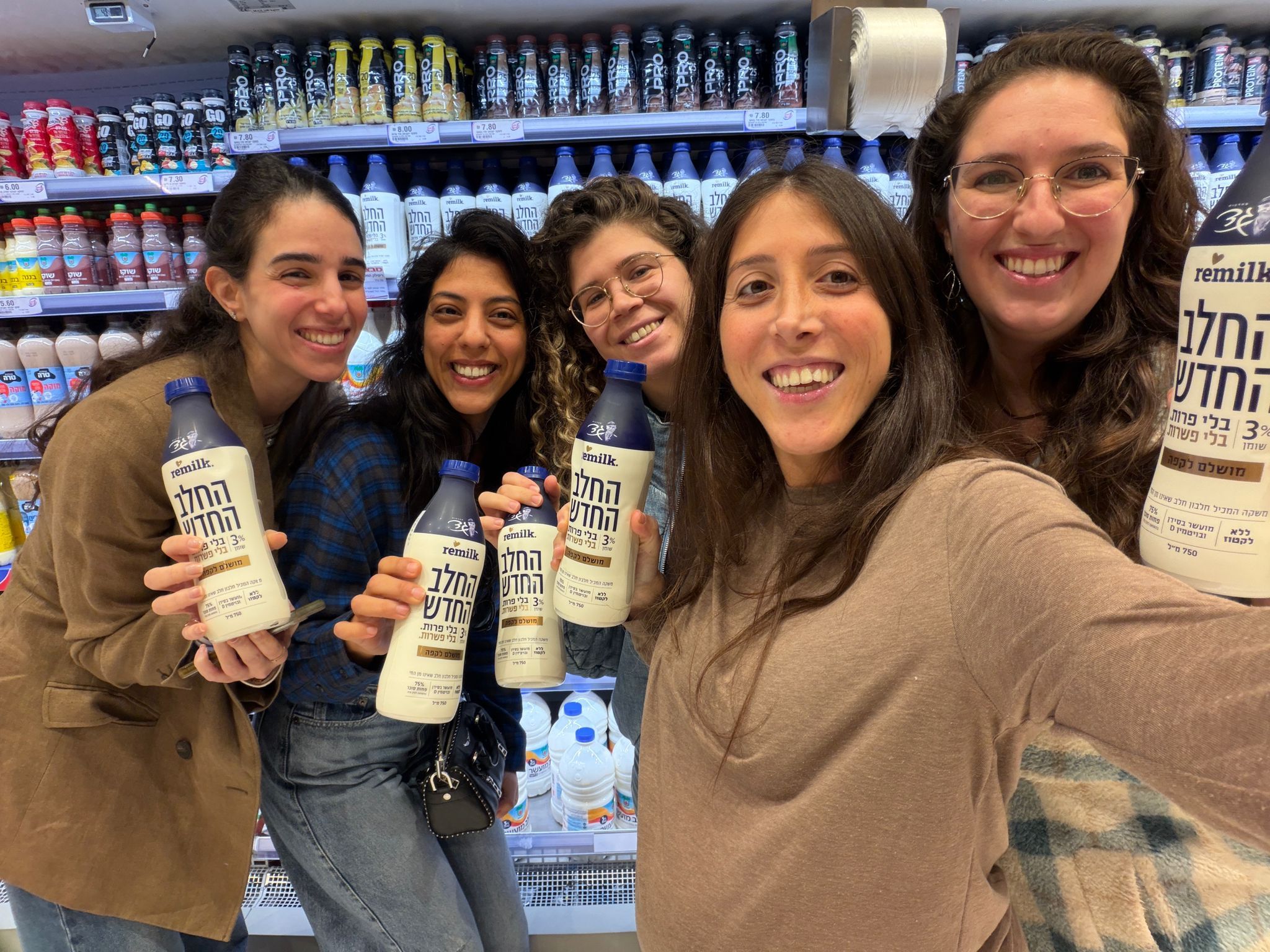
Remilk is now hitting the shelves in Israel. Courtesy Remilk.

This week, Israel’s precision-fermentation milk from Remilk is finally appearing on supermarket shelves. Staff members have been posting photos in Hebrew, smiling, tasting, and clearly enjoying the moment — not because it’s science fiction, but because it tastes like the real thing.

Remilk doesn’t come from cows. It uses microorganisms programmed to produce the same milk proteins found in dairy. The result is real milk protein — without the animal.

Having fun in the supermarket. Courtesy of Remilk.

Why does that matter? Because traditional dairy is one of the most resource-intensive foods we produce. It requires land, water, feed, antibiotics, and creates methane emissions. Precision-fermented milk needs far less land, far less water, and produces dramatically lower greenhouse gas emissions.

Why many scientists say cloned (fermented) milk is better:

  • No cows → no methane emissions that cause climate change
  • No antibiotics or hormones
  • Much lower land and water use
  • Identical proteins → same taste and texture
  • Suitable for people with lactose intolerance (depending on formulation)
  • Stable, scalable, and climate-resilient

It doesn’t mean traditional dairy and the taste of brie disappears tomorrow. But it offers a serious alternative in a world facing climate pressure, food security concerns, and ethical debates about industrial farming.

Israel has become a global leader in this field, alongside companies working on cultivated meat, egg proteins, and cheese alternatives. What once sounded futuristic is now simply… food. How do you say mooooo in Hebrew?




Karin Kloosterman
Karin Kloostermanhttp://www.greenprophet.com
Karin Kloosterman is an award-winning journalist, innovation strategist, and founder of Green Prophet, one of the Middle East’s pioneering sustainability platforms. She has ranked in the Top 10 of Verizon innovation competitions, participated in NASA-linked challenges, and spoken worldwide on climate, food security, and future resilience. With an IoT technology patent, features in Canada’s National Post, and leadership inside teams building next-generation agricultural and planetary systems — including Mars-farming concepts — Karin operates at the intersection of storytelling, science, and systems change. She doesn’t report on the future – she helps design it. Reach out directly to [email protected]

Read More

TRENDING

Hormuz 2026 Conflict Poses an Energy and Food Security Dilemma in a Warming World

As tensions rise in one of the world’s most critical maritime chokepoints, the ripple effects go far beyond oil—touching food systems, climate pressures, and regional stability

Climate change traced in sea turtle shells

It's sea turtles which may in the end save islands in the Seychelles. They may also better help us understand climate change. Like rings on a tree, scientists have found a way to read sea turtle shells and how they are impacted by climate change tells a story. 

We’ve lived through the past 11 of the hottest years on record

Have we forgotten about global warming when the world...

Eco organization offices destroyed by Iran missile

Tel Aviv's eco organization, the Heschel Center, was impacted by an Iranian missile.

What are AWG air-water generators, and why they aren’t a golden-bullet solution (yet)

Atmospheric water generators (AWGs) sound like magic: machines that can pull drinking water out of air. The idea is mentioned in the Bible, where the elders would pray for water collected as dew on plants and the catch on turning this into a machine is in the physics. To turn invisible vapor into liquid, you must remove heat, especially the latent heat of condensation.

Mining Afghanistan’s Mineral Discoveries Similar to Avatar

Now that American forces in Afghanistan are commemorating the longest period of any war that America has been involved in, including the 1965-73 Vietnam War, the recent discoveries of large and extremely valuable mineral and metal deposits may finally bring to light a reason to continue the presence of US fighting forces in this war torn and backward country.

From Pilot Plant to Global Stage: How Aduro Clean Technologies’ 2026 Expansion Signals a Turning Point for Chemical Recycling Investors Like Yazan Al Homsi

The company's Next Generation Process (NGP) Pilot Plant in London, Ontario, has officially moved into initial operating campaigns, generating the kind of structured, repeatable data that separates laboratory promise from commercial viability.

Nobul’s Regan McGee on Shareholder Value: “Complacency Is the Silent Killer” 

Why the governance framework designed to protect shareholders so...

Should You Invest in the Private Market?

startustartup Unlike public stock exchanges, which offer daily trading, strict...

How to build a 100-year-company

Kongō Gumi is a Japanese construction company, purportedly founded in 578 A.D., making it the world's oldest documented company. What can we learn about building sustainable businesses from them?

How AI Helps SaaS Companies Reduce Repetitive Customer Support Work

SaaS products are designed for large numbers of users with different levels of experience, and also in renewable energy.

Pulling Water from the Air

Faced with water shortage in Amman, Laurie digs up...

Turning Your Energy Consultancy into an LLC: 4 Legal Steps for Founders in Texas

If you are starting a renewable energy business in Texas, learn how to start an LLC by the books.

Popular Categories