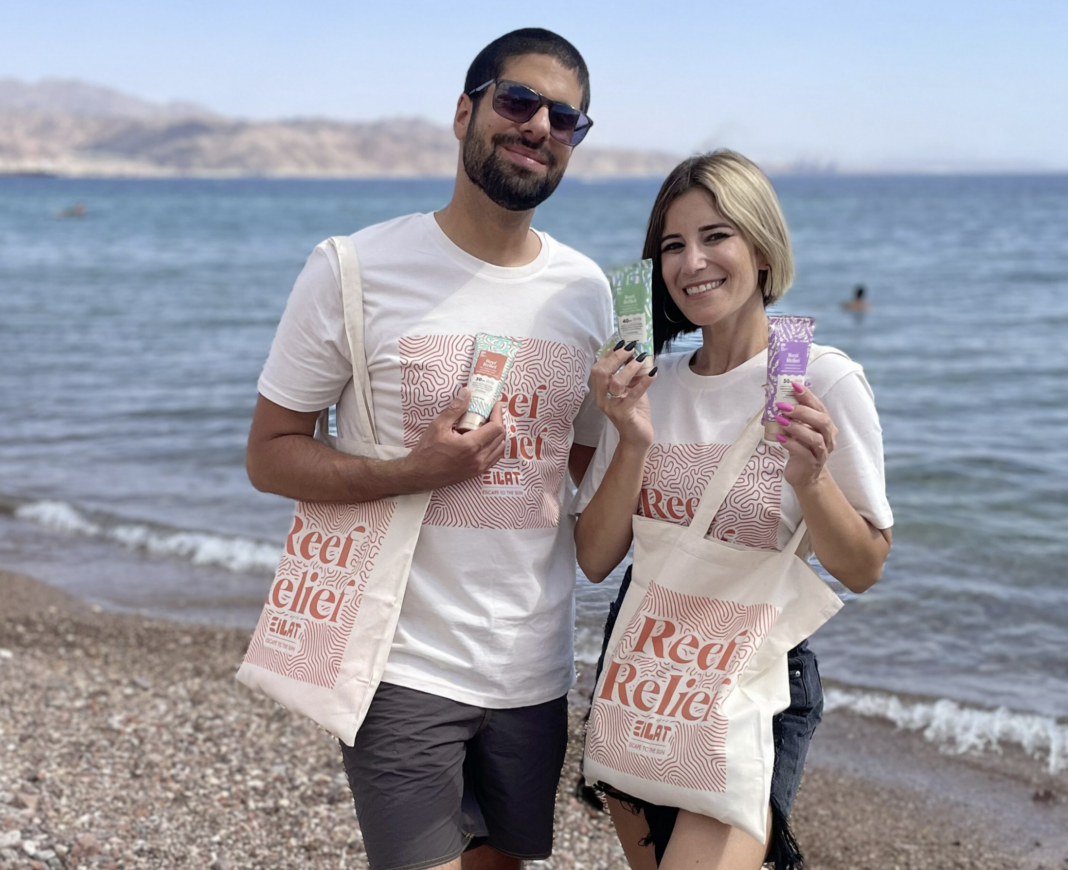
Feed coral reef while wearing this sunscreen by Reef Relief

Reef Relief sunscreen that doesn't harm coral reefs
Reef Relief produces a sunscreen with an RFP – for reef protection factor

Jump into a lake or sea covered in Neutrogena or Coppertone sunscreen and you feel a film of sunscreen wash into your eyes. That same sunscreen that’s meant to protect you is very damaging to lakes and ocean life, and especially life that’s sensitive to environmental disturbances. Of course you can make your own sunscreen – here’s our sunscreen DIY recipe here  – and while this might be less harmful to your body the elements may still harm sea life. But a company from Israel says that they have created a sunscreen that protects you from the sun and the reefs from harm. It’s called Reef Relief. 

The sunscreen was formulated in the Red Sea city of Eilat, home to dying coral reefs. The company announces developing the world’s first sunscreen that is scientifically formulated not only to protect the skin from UV rays but to feed and nourish endangered coral reefs. 

Eilat is home to the world’s most northernmost shallow-water reef and locals are passionate about protecting it and other coral reefs.

reef relief sunscreen
‘Reef Relief’ sunscreen to help turn the tide on coral bleaching. Courtesy.

Coral is facing serious threats from climate change, pollution, and other human activities, with an estimated 14,000 tons of sunscreen ending up in the world’s oceans every year. As many as 80% of ordinary sunscreens contain chemicals that contribute to coral bleaching and dying reefs.

While some manufacturers have begun to remove harmful chemicals like oxybenzone, Reef Relief goes further than any other sunscreen on the planet to protect coral reefs and help them thrive, the company says.

Marine and skincare specialists have developed a new formulation based on a non-nano, titanium-dioxide-based, mineral sunscreen. The base formula is Ecocert compliant and has undergone extensive aquatic safety testing, to include safety for freshwater fish, saltwater fish and coral larvae. The added reef nourishing formula is a bespoke blend of FDA-compliant trace minerals used by coral farmers to feed and support healthy growth in coral.

Giovanni Giallongo, a marine biologist from Ben Gurion University of the Negev said, “The development of a sunscreen that not only doesn’t harm coral, but has the potential to feed and nourish our reefs, is an important step towards protecting and preserving our oceans.

“Reef Relief could feed into the health of communities underwater and on land.”

Reef Relief sunscreen also presents to the world another first, a brand-new certification – not just against SPF, but also now RPF for Reef Protection Factor.

An increasing number of products claim to be ‘reef-friendly’ or ‘reef-safe’, but there is a lack of regulation in this area which means that consumers are easily being misled. It’s hoped that the new RPF marque will become an industry standard and spread beyond Israel, worldwide, helping consumers make responsible choices.

Giallongo added, “This is a way of identifying sunscreen that truly cares for coral. An RPF marque as an industry standard.”

How can you know if your sunscreen is reef safe?

Unfortunately the term “reef friendly” is not regulated, so you can’t always trust products with this description. It’s important to actually check the active ingredients label on the back of your sunscreen or personal care product to ensure that reef-harming chemicals are not included, says Save the Reef, an NGO set up to educate us about saving coral reefs. The size of minerals used in the sunscreen can also have an impact.

They say, be sure to use micro-sized (or non-nano) mineral sunscreens to avoid nanoparticles, as these smaller particles can be toxic in high concentrations. It’s also advised to stick with lotions and avoid spray or misting sunscreens, especially those that contain titanium dioxide as it can be harmful to your health if inhaled.

It’s always good to use products that cut back on single use plastic packaging, either by using containers that are reusable, have high recycled content or are made out of biodegradable plant-based materials like cardboard.

Make sure your sunscreen does not contain the following harmful substances:

  • Oxybenzone
  • Octinoxate
  • Octocrylene
  • Homosalate
  • 4-methylbenzylidene camphor
  • PABA
  • Parabens
  • Triclosan
  • Any nanoparticles or “nano-sized” zinc or titanium (if it doesn’t explicitly say “micro-sized” or “non-nano” and it can rub in, it’s probably nano-sized)
  • Any form of microplastic, such as “exfoliating beads”

::Reef Relief


Karin Kloosterman
Karin Kloostermanhttp://www.greenprophet.com
Karin Kloosterman is an award-winning journalist, innovation strategist, and founder of Green Prophet, one of the Middle East’s pioneering sustainability platforms. She has ranked in the Top 10 of Verizon innovation competitions, participated in NASA-linked challenges, and spoken worldwide on climate, food security, and future resilience. With an IoT technology patent, features in Canada’s National Post, and leadership inside teams building next-generation agricultural and planetary systems — including Mars-farming concepts — Karin operates at the intersection of storytelling, science, and systems change. She doesn’t report on the future – she helps design it. Reach out directly to [email protected]

Read More

TRENDING

Barnacle glue could fix coral reefs, inspire new advances in building and medicine

Aalto University researchers create a protein-based adhesive inspired by barnacles and mussels that works underwater and could aid coral reef restoration.

Dan Zaslavsky’s energy tower dream is rising again in Iran and China

The Energy Tower idea never made the leap from drawings and engineering studies to full-scale construction. But nearly two decades after most people stopped talking about it, the concept is quietly evolving in two unexpected places: China and Iran. The concept let dreamers dream and doers do - figuring out more pleasing designs and engineering.

A visit to Amirim, Israel’s first all-vegetarian village in the Galilee

Just 15 kilometers from Tzfat there is a moshav that was founded in the late 50s that was ideologically influenced by organic, vegetarian and vegan principles. My hostess at Ohn-Bar, the tzimmer where I stayed, explained that the people of Amirim were among the pioneers of Israel’s strong vegetarian movement.

Israeli Hydrogen Startup H2Pro Are Trying to Solve Clean Energy’s Hardest Problem

The company has attracted backing from major investors including Breakthrough Energy Ventures, the climate fund founded by Bill Gates, along with industrial partners such as Sumitomo, ArcelorMittal, and Temasek, a multi-billion dollar company that owns Singapore airlines. H2Pro has raised more than $100 million USD and is moving from pilot projects toward commercial-scale deployments.

Desalination experts debunk Aqua Solaire, the floating desalination barge

AI makes it easy to dream, develop, and create images of what could be world-changing ideas, until the reality sets in. A new project making the rounds is Aqua Solaire, an allged French concept for a solar-powered desalination vessel designed to bring drinking water to coastal communities facing drought, storms, and infrastructure failures.

Yerukim Forms a New Green Economy Where the Money is Really Green

The Yerukim members who pick up the recyclables get to keep the monetary reward, the public earns "green" bills that can be used in shops, and business owners get to be associated with environmentalism.

Choosing Riyadh over Dubai? What Investors Should Know

Saudi Arabia is deploying capital at unmatched scale to catalyze tourism and advanced industry while rewiring its power-and-water backbone. The investable frontier is widening—especially in renewables, grid storage, water efficiency/desal retrofits, and hospitality operating platforms. Prudent investors will insist on phased delivery, enforceable KPIs (energy, water, biodiversity), and RHQ/zone compliance—while pricing political-economy and reputational risks alongside growth upside.

Sell your cooking oil for biodiesel money

Want to make money on old french fry oil? Sell it.

Qatar Alternative Energy Summit Pairs Investors And Innovators

Alternative energy investors and innovators can meet n' greet in Doha, Qatar March 16 and 17.

Here’s How To Implement The Four Pillars Of Employee Engagement

If you throw a party for your work team and they are vegans, don't make it a barbecue. Know the sustainability values of your team to boost moral and retain good people.

Locals From Rishon Fight IKEA

Big Box stores are a pretty new concept in Israel, and thank God that not every Israeli city wants them in their backyard. A word from someone who has see the beautiful farmland around her hometown Newmarket, Ontario stripped and converted into vulgar strip malls of big box shops: they have no place in a healthy and sustainable town or city.

The Jewish National Fund Meets An Inconvenient Truth

According to the JNF, it has transformed thousands of acres of barren land into green forests in Israel. They state that each person emits about 23 tons of carbon per year, estimating that each tree planted can absorb one ton of carbon in its lifetime. That's a whole lot of trees you'd need to be planting. Could so many fit in Israel?

How to quiet noise from construction in your office

Streets need to be resurfaced in New York but the humming and grinding noise is unsettling. Noise is environmental pollution. 

Popular Categories