Slovenia’s Metal Cooling Tech Could Replace Toxic Refrigerants in Air Conditioning

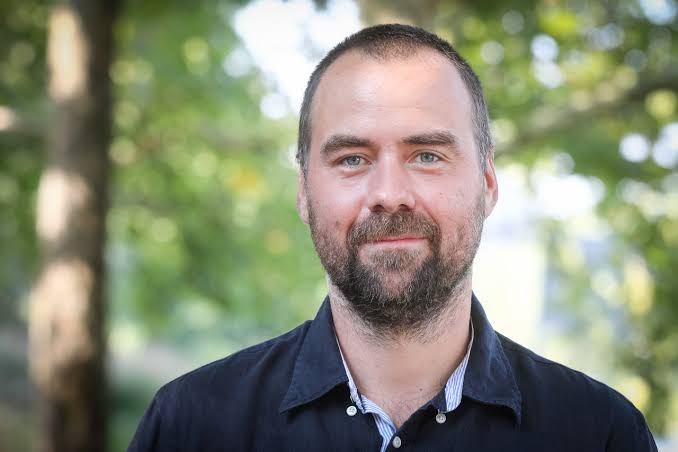
Jaka Tušek
Jaka Tušek

As the planet warms, the race for sustainable cooling technologies is heating up. In Slovenia, researchers are developing a revolutionary cooling system that skips toxic gases and instead uses recyclable nickel-titanium alloy to keep things chill. Their method?

It’s called elastocaloric cooling—and it could transform how we air-condition homes and buildings without harming the planet. Unlike traditional systems that use hydrofluorocarbons (HFCs)—greenhouse gases thousands of times more potent than CO₂—this method doesn’t rely on liquid-to-gas phase changes.  Instead, it leverages a solid-state material, nitinol, which heats up when mechanically stressed and cools down when the pressure is released.

dr. Jaka Tušek: Figure 1: Photo of an elastocaloric regenerator (left) as the basic element of an elastocaloric device and the operation of the elastocaloric regenerator in heating mode, taken with a thermographic camera (right)
Jaka Tušek: Photo of an elastocaloric regenerator (left) as the basic element of an elastocaloric device and the operation of the elastocaloric regenerator in heating mode, taken with a thermographic camera (right)

“A mass of only one kilogram of refrigerant with a GWP of 10,000 causes as much global warming as 10 tons of CO₂,” says Jaka Tušek, principal investigator of the project at the University of Ljubljana. “We want to replace them with solid refrigerants based on shape memory alloys.”

The project, E-CO-HEAT, is part of the European Union’s broader mission to decarbonize heating and cooling—a sector that accounts for 10% of global electricity use. This research could help phase out toxic coolants, reduce fire risk, and improve efficiency, especially as climate change accelerates.

“Our device has no moving parts in the cooling loop and uses less energy,” the team notes. “It can become a highly efficient alternative to vapor compression cooling.

“Ironically, the more we cool, the greater the demand for cooling.” he explains. “The International Energy Agency estimates that the number of air conditioners worldwide will rise from 1.6 billion today to 5.6 billion by the middle of the century.

“At this rate of increase in cooling demand, energy use for cooling will exceed total energy use for heating by 2060 and by the end of the century by more than 60%. Among the alternative technologies, elastocaloric cooling and heating technology, based on exploiting the elastocaloric effect during cyclic loading of shape memory materials, has shown great potential in recent years,” says Tušek.

Read more on Green Prophet about the hidden climate cost of air conditioners and efforts to design buildings that don’t need cooling at all.

Metal-Based Cooling Could Cut Carbon and Slash Energy Use

Tušek’s team is working with partners from Ireland, Germany, and Italy under the project SMACool, which aims to deliver a working prototype of a metal-based air conditioner by 2026. Though still at 15% efficiency, researchers expect to surpass that soon, potentially beating standard vapor compression units that max out at 30%.

The technology avoids the flammable or toxic properties of so-called “natural refrigerants” like isobutane or ammonia, which come with their own risks—especially in hot climates where performance drops.

“We are building an advanced elastocaloric device that can replace today’s harmful cooling systems and have a measurable impact on climate goals,” Tušek says.

But change won’t be instant. This kind of leap forward faces resistance from an industry heavily invested in HFC-based infrastructure. Still, the benefits—zero-emissions refrigerants, higher safety, and better performance—are hard to ignore.

As Tušek puts it: “We’re not only developing a device. We’re shaping a safer, cooler future.”

Check out Green Prophet’s coverage of other clean tech frontiers like solar cooling in deserts and AI-powered climate solutions.


Read More

TRENDING

Stardust’s solar geoengineered $10 billion plan to blot out the sun

Israeli-American startup Stardust Solutions has raised $75 million to develop technology that could cool the Earth by reflecting sunlight. Is solar geoengineering becoming a real industry? Or could it be a new threat?

Mongolia rangelands the center of climate change

Mongolia put the world’s overlooked rangelands on the climate agenda at UNCCD COP17, where governments and investors backed new financing for land restoration, drought resilience and pastoral communities.

Did China’s AI Boom Melt the Himalayas? Nepal’s Deadly Floods Raises Question About Data Centers and Climate

Nepal’s devastating floods reveal the growing risks of a warming Himalaya. As glaciers retreat and extreme events intensify, clean energy and climate action are increasingly urgent — and local organizations need support.

Lumana Brings AI Cameras Without Sending Everything to the Cloud: Fortune 500 are Buying

Lumana is bringing AI intelligence to more than 50,000 existing security cameras without sending every frame to the cloud. Its hybrid edge architecture offers a compelling lesson for the AI boom: smarter systems may also be more efficient.

Jewish Climate Network founded so innovators don’t leave their identity at the door

Rather than retreating from climate change work, the Jewish Climate Trust organization has backed a new initiative designed to strengthen both climate action and Jewish community.

Scientists make lead-free perovskite solar cells that can weather the elements

Scientists have developed a “raincoat” for lead-free tin perovskite solar cells, helping them withstand air, moisture and heat while maintaining high efficiency.

The Essential Guide To Sustainability in Project Management

Sustainability is an approach where businesses and individuals balance the environmental, social, and economic aspects of a project such that current and future stakeholders are not overburdened with the impacts of the project in future.

Yerukim Forms a New Green Economy Where the Money is Really Green

The Yerukim members who pick up the recyclables get to keep the monetary reward, the public earns "green" bills that can be used in shops, and business owners get to be associated with environmentalism.

Choosing Riyadh over Dubai? What Investors Should Know

Saudi Arabia is deploying capital at unmatched scale to catalyze tourism and advanced industry while rewiring its power-and-water backbone. The investable frontier is widening—especially in renewables, grid storage, water efficiency/desal retrofits, and hospitality operating platforms. Prudent investors will insist on phased delivery, enforceable KPIs (energy, water, biodiversity), and RHQ/zone compliance—while pricing political-economy and reputational risks alongside growth upside.

Sell your cooking oil for biodiesel money

Want to make money on old french fry oil? Sell it.

Qatar Alternative Energy Summit Pairs Investors And Innovators

Alternative energy investors and innovators can meet n' greet in Doha, Qatar March 16 and 17.

Here’s How To Implement The Four Pillars Of Employee Engagement

If you throw a party for your work team and they are vegans, don't make it a barbecue. Know the sustainability values of your team to boost moral and retain good people.

Locals From Rishon Fight IKEA

Big Box stores are a pretty new concept in Israel, and thank God that not every Israeli city wants them in their backyard. A word from someone who has see the beautiful farmland around her hometown Newmarket, Ontario stripped and converted into vulgar strip malls of big box shops: they have no place in a healthy and sustainable town or city.

Popular Categories