

I remember the day in 2007 as a young environment and cleantech reporter when I went to my first clean tech conference. I was expecting solar panels and robots, new wind turbines to turn wind into washing machines, and hightech greenhouses that grows food on water. The reality was different: most cleantech companies in the business and making money (not just promising dreams) are industrial builds, companies that pull in pipes, valves, software and cables, sometimes linked together by software. There weren’t any golden bullet solutions that could change the world but rather they were companies that assembled solutions like the telecom industry.
The cleantech industry in all areas of reuse, new fabrics and materials, and in energy are not glamorous companies with runway models. They are factories and tools that help us make the most from least. And that’s why the most exciting cleantech companies we are seeing today look like Torus (improves the grid with a wheelwheel); BioProcessH20 (cleans effluent from food waste) and Regenx (which pulls minerals from catalytic converters) are the ones to watch.
Recycling or upcycling, I learn from my dad (a scrapper and water witch) metals is like finding free money. He was an avid metals recycler and could make a few thousand dollars at the scrap yard with every haul –– much of the metals found on the side of the road. When you take metals recycling as an industry, it’s literally like free money from garbage, and this is the business model of an AI-powered Tennessee company that is recycling aluminum. The company just raised $45 million USD to expand its operations. The solution poltentially diverts millions of tons of metals waste to other countries and keeps it local to the US economy. The metals will be earmarked for the automotive industry.
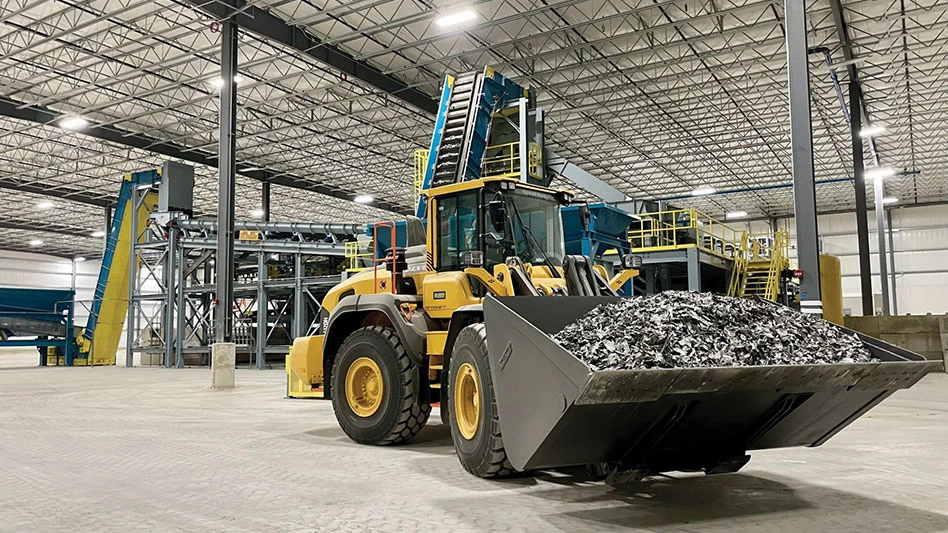
The deal was advised by by T. Rowe Price Associates and VXI Capital, with participation from Yamaha Motor Ventures and Overlay Capital; with an additional equipment funding from Trinity Capital. This funding fuels Sortera’s next phase of growth as a major domestic supplier of metals upcycled from waste.
In addition to the funding, Sortera is announcing plans for a second aluminum processing facility in Lebanon, Tennessee. This expansion—driven by overwhelming demand and success at the flagship Markle, Indiana facility—will bring Sortera’s innovative recycling solutions closer to its growing customer base.
Using artificial intelligence and advanced sensors, the company sorts mixed aluminum scrap into specific alloys that can replace imported primary aluminum. Sortera brings new life to old metal. Since launching operations at its 200,000 sq. ft. Markle facility in Q1 2023, Sortera has experienced significant customer demand for its high-quality recycled aluminum alloys.
For those in the metals business Sortera is now the only company producing end-of-life recycled aluminum products, including 380, 356, 319, and wrought (3105 and others) aluminum. Each product is specifically designed to match the chemistry of common casting and rolling alloys.
The Markle facility demonstrates Sortera’s technological success at transforming mixed alloy scrap—historically downgraded or shipped overseas—into high-value materials for critical applications in the automotive, construction, and aerospace industries.
“The performance of our Markle facility and the enthusiastic response from our customers have made it clear: the domestic market is hungry for sustainable, high-quality recycled aluminum,” said Michael Siemer, CEO of Sortera Technologies. This expansion allows us to significantly increase our capacity and establish a presence closer to many of our key customers—particularly in the automotive sector—further streamlining supply chains and enhancing our service capabilities.”
Their process diverts billions of pounds of material from going overseas and dramatically reduces the energy required for aluminum production by approximately 95% compared to manufacturing from virgin materials. This translates into a substantial reduction in CO2 footprint for Sortera’s customers, supporting their ambitious sustainability and circular production goals.
When we interviewed a company in this space called Regenx, they called themselves “urban miners.”
The investment in Sortera is to create a new facility to increase the company’s annual production capacity to ~240 million pounds. This will ultimately help manufacturers lower costs and pollution while strengthening the domestic supply chain.
Sortera expects that the new facility will be operational by the summer of 2026, and further details regarding the specifics will be communicated in the coming months.
Notable investors include RA Capital Management-Planetary Health, certain funds and accounts advised by T. Rowe Price Associates, Inc., the Mineral Resources Group, a part of Mitsubishi Corporation’s Business Incubation Unit, Macquarie GIG Energy Transition Solutions (“MGETS”), Assembly Ventures, Breakthrough Energy Ventures, and Chrysalix.
Sortera was founded in 2020 by Nalin Kumar (listed as Founder & Chief Innovation Officer) and Manuel Garcia (listed as Co-Founder & Vice President of Applied Science). Michael Siemer is the President and Chief Executive Officer.
::Sortera