Wastewater plants are a hidden climate issue, and we’re measuring it all wrong

wastewater treatment climate impact, fossil CO2 emissions, methane from wastewater, nitrous oxide WWTP emissions, greenhouse gas emissions wastewater, carbon footprint sewage plants, wastewater and climate change, WWTP GHG monitoring, climate-smart wastewater systems, Jacobs wastewater projects, AECOM wastewater treatment, Black & Veatch water infrastructure, HDR wastewater solutions, wastewater carbon accounting, IPCC wastewater emissions, sludge incineration emissions, fossil carbon in sewage, wastewater methane hotspots, WWTP emission factors, environmental footprint of WWTPs
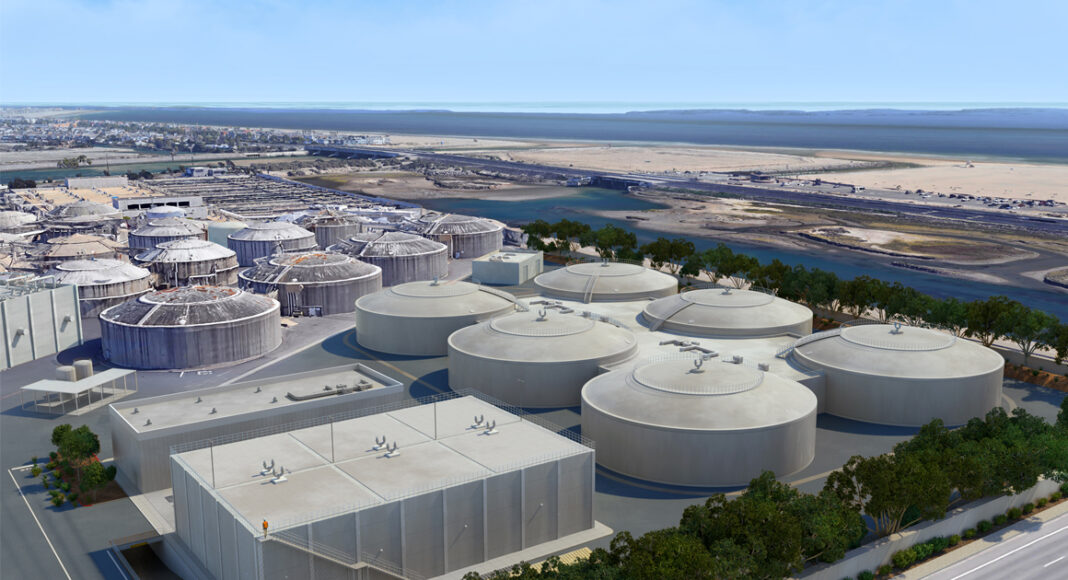
A Black & Veatch-engineered wastewater treatment plant integrates advanced emission controls and energy recovery systems—part of a growing push to make urban sanitation climate-smart.

Wastewater treatment plants (WWTPs) are critical to modern cities, safeguarding public health by managing billions of liters of sewage and industrial discharge every day. But as the world races to reduce greenhouse gas emissions, a key source is slipping under the radar: the wastewater sector itself.

In a new review published in Environmental Science and Ecotechnology (July 2025), researchers from the Harbin Institute of Technology and international collaborators challenge current greenhouse gas accounting methods for WWTPs, warning that conventional approaches significantly underestimate the sector’s climate footprint—particularly when it comes to fossil carbon dioxide (CO₂).

It’s well known that WWTPs emit methane (CH₄) and nitrous oxide (N₂O)—two potent greenhouse gases—during biological treatment and sludge handling. What’s less understood is the role of fossil CO₂, released from synthetic chemicals like detergents and industrial effluents. Because this carbon originates from fossil sources, not organic decay, it adds to atmospheric CO₂ but remains unaccounted for in most emission inventories.

Using radiocarbon analysis, the study’s authors found that fossil carbon makes up 4–28% of the total carbon in incoming wastewater. That fossil carbon is mostly converted to CO₂ and vented during treatment—yet this invisible flow of emissions is ignored in most official climate reports.

Related: BioprocessH2O works with food and beverage wastewater

BioProcessH2O cleans Coca Cola plants

“Wastewater is not just a sanitation issue—it’s a climate issue,” said Dr. Haiyan Li, corresponding author of the study. “By overlooking fossil CO₂ and relying on outdated estimation methods, we’re underreporting a major source of greenhouse gases.”

Current greenhouse gas estimates from WWTPs largely depend on broad default emission factors provided by the Intergovernmental Panel on Climate Change (IPCC). These factors are often too generic, failing to reflect the variation in plant design, local climate, and wastewater composition—especially in urban areas with a mix of domestic and industrial sources.

To address this, the researchers analyzed two main approaches to monitoring emissions:

Unit-based methods (e.g., flux chambers, optical gas imaging) are good at pinpointing emission hotspots like aeration tanks but can miss the big picture. Plant-integrated methods (e.g., drone surveys, mobile labs, and aircraft) offer facility-wide data, often capturing higher methane emissions. However, they vary widely in accuracy and cost.

The review also calls for customized, technology-specific emission factors—especially for plants with advanced processes like sludge incineration or energy recovery, where fossil carbon emissions can increase total reported GHGs by more than 20%.

Toward Smarter, Climate-Responsive Treatment

To help cities transition to low-carbon wastewater treatment, the authors advocate for real-time, multi-gas monitoring systems and the inclusion of fossil CO₂ in national climate inventories. Doing so would empower local governments and plant operators to align their emission reduction strategies with actual site conditions—not assumptions.

“We need better data to drive better policies,” said the research team. “Smarter monitoring tools can bridge the gap between science and action.”

This research underscores a broader shift in thinking: that wastewater infrastructure—long seen as a hygiene utility—must also be recognized as a critical node in the fight against climate change.

American Industry’s Role

Some of the world’s largest wastewater treatment projects are spearheaded by U.S.-based engineering firms, including:

Jacobs Solutions Inc., a leader in global water infrastructure, which has delivered WWTP designs in cities from Los Angeles to Abu Dhabi.

AECOM, involved in large-scale wastewater upgrades across the U.S. and internationally.

Black & Veatch, which has helped develop climate-resilient treatment facilities with energy recovery systems.

HDR, known for advanced water quality treatment and smart monitoring solutions.

As climate regulations tighten and emissions tracking becomes more rigorous, these companies are well-positioned to innovate—if they adapt their designs and monitoring practices to reflect the new science.

Wastewater treatment plants are quietly contributing to the climate crisis—and our current accounting methods aren’t telling the full story. Recognizing the role of fossil carbon and deploying smarter monitoring tools may be the key to transforming this essential service into a truly climate-smart sector.


Karin Kloosterman
Karin Kloostermanhttp://www.greenprophet.com
Karin Kloosterman is an award-winning journalist, innovation strategist, and founder of Green Prophet, one of the Middle East’s pioneering sustainability platforms. She has ranked in the Top 10 of Verizon innovation competitions, participated in NASA-linked challenges, and spoken worldwide on climate, food security, and future resilience. With an IoT technology patent, features in Canada’s National Post, and leadership inside teams building next-generation agricultural and planetary systems — including Mars-farming concepts — Karin operates at the intersection of storytelling, science, and systems change. She doesn’t report on the future – she helps design it. Reach out directly to [email protected]

Read More

LEAVE A REPLY

Please enter your comment!
Please enter your name here

TRENDING

5 projects to help kickstart your company’s sustainability journey 

True progress happens when environmental ambition meets action. Decarbonizing efficiently is possible for any business in any sector, but actually getting started can sometimes feel daunting.   The trick? It’s to start small and build momentum. Here are five potential projects to help you get started.  

Hormuz 2026 Conflict Poses an Energy and Food Security Dilemma in a Warming World

As tensions rise in one of the world’s most critical maritime chokepoints, the ripple effects go far beyond oil—touching food systems, climate pressures, and regional stability

Climate change traced in sea turtle shells

It's sea turtles which may in the end save islands in the Seychelles. They may also better help us understand climate change. Like rings on a tree, scientists have found a way to read sea turtle shells and how they are impacted by climate change tells a story. 

Most of the world’s marine protected areas are polluted by sewage

Research from the Wildlife Conservation Society (WCS) and the University of Queensland, published in Ocean & Coastal Management, found that nearly three out of four marine protected areas (MPAs) worldwide are exposed to sewage pollution.

We’ve lived through the past 11 of the hottest years on record

Have we forgotten about global warming when the world...

How to quiet noise from construction in your office

Streets need to be resurfaced in New York but the humming and grinding noise is unsettling. Noise is environmental pollution. 

EarthX and a blueprint for sustainable investing

Trammell S. Crow, a Dallas-based businessman and father of four, is focusing his efforts on impact investing, and media that focuses on saving the planet through EarthX.

Mining Afghanistan’s Mineral Discoveries Similar to Avatar

Now that American forces in Afghanistan are commemorating the longest period of any war that America has been involved in, including the 1965-73 Vietnam War, the recent discoveries of large and extremely valuable mineral and metal deposits may finally bring to light a reason to continue the presence of US fighting forces in this war torn and backward country.

From Pilot Plant to Global Stage: How Aduro Clean Technologies’ 2026 Expansion Signals a Turning Point for Chemical Recycling Investors Like Yazan Al Homsi

The company's Next Generation Process (NGP) Pilot Plant in London, Ontario, has officially moved into initial operating campaigns, generating the kind of structured, repeatable data that separates laboratory promise from commercial viability.

Nobul’s Regan McGee on Shareholder Value: “Complacency Is the Silent Killer” 

Why the governance framework designed to protect shareholders so...

Should You Invest in the Private Market?

startustartup Unlike public stock exchanges, which offer daily trading, strict...

How to build a 100-year-company

Kongō Gumi is a Japanese construction company, purportedly founded in 578 A.D., making it the world's oldest documented company. What can we learn about building sustainable businesses from them?

How AI Helps SaaS Companies Reduce Repetitive Customer Support Work

SaaS products are designed for large numbers of users with different levels of experience, and also in renewable energy.

Popular Categories