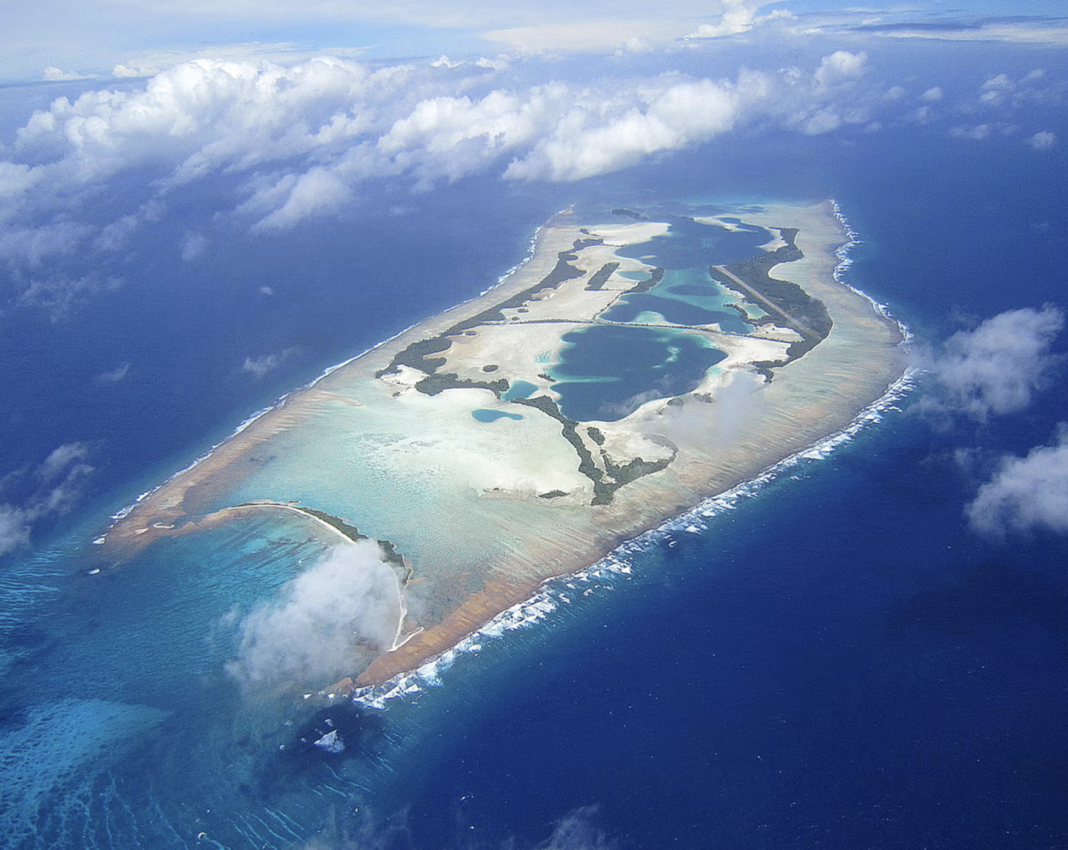


This lushly photographed island is in an isolated patch of the North Pacific. The atoll of Palmyra is actually home to some of the most pristine coral reefs in the world but the land around it has been ravaged by invasive coconut-palm trees and wrecked by a former US military base.
Now a nature preserve, Palmyra has become a natural laboratory for studying whether networks of fungi below ground can help to revive damaged habitats: “If we can get restoration right on islands, we have this great capacity to have an outsized impact on reversing the world’s biodiversity crisis,” says ecologist Holly Jones.
The project is run by Toby Kiers from Holland and she is also the director of the Society for the Protection of Underground Networks.

Researchers believe that mycorrhizal networks of fungi may have evolved a unique ability to cycle nutrients between seabirds, rainforest trees, and coral reefs in the atoll. Led by Kiers, the Society for the Protection of Underground Networks (SPUN) travelled to this remote atoll – a place so untouched that researchers had to freeze their clothes each night to prevent the introduction of non-native species to the protected islands – for a recent research expedition.
In partnership with The Nature Conservancy Climate Adaptation Lab, SPUN is mapping the diversity of mycorrhizal fungi across Palmyra Atoll, 1,000 miles south of Hawai’i. This atoll, the Earth’s most remote, is the site of much lore, including a double murder, sunken treasure, and disappearing aircrafts. It is also home to a million seabirds, untouched coral reefs, and a fish population that is 44% sharks.
“Never could I have imaged sampling fungi while small sharks swam around my feet. As we hiked in the ocean between forested islands, we could hardly hear ourselves talk because the birds were so loud,” says Kiers. “Visiting Palmyra allows you to go back in time when other organisms – not humans – dominated the landscape.”
The scientists sampling Palmyra hope to understand how mycorrhizal fungi facilitate nutrient movement between the sea and the rainforest – and how remote island ecosystems are coping with climate change, invasive species, and rising sea levels.
During the course of a recent expedition, SPUN scientists collected samples from across 27 islands. These have been sent off for DNA sequencing so that the fungal players can be identified.
Strange trees that eat birds
Among the island’s species is the towering Pisonia tree. Pisonia is a native rainforest species that has been reported to digest seabirds that get trapped by the sticky substance secreted by its seeds. Kiers and her team conducted extensive sampling of the symbiotic fungi that colonize Pisonia roots to test how nutrients from birds and their guano (the bird poo) are captured and fed back to the rainforest trees.
Scientists believe that these mycorrhizal fungi create nutrient feedback loops that not only support the island’s rainforests, but also the plankton communities and coral reefs offshore: “On these remote islands – out of reach of human interference – we see an extreme form of interdependence among organisms on land and sea,” says Kiers. Lose any of these organisms – fungi, crab, birds, tree, corals – and we may witness a devastating cascade effect.
Giant crabs at Palmyra
The waters surrounding the atoll host some of the most pristine coral populations in the world. The Palmyra Atoll is also home to the largest crab species in the world. Coconut crabs grow up to a meter wide and are prolific hunters and tree climbers. The science team has hypothesised that these land crabs are helping to distribute the symbiotic fungi to new roots through their digging, re-enforcing the cycling of nutrient among birds, crabs, coral reefs and native rainforest.
Until now, the fungal communities of the atoll had never been studied, and researchers anticipate the discovery of new species able to withstand extreme heat, salinity and low nutrient conditions. Despite being so remote, the islands have been threatened by invasive species. The Nature Conservancy has removed over 1 million non-native coconut palms and eradicated large populations of introduced brown rats. And, as sea levels around the islands rise, erosion is beginning to eat away at Palmyra. So researching here can be a lab for climate change and rolling back human influence, if it is at all possible.
It’s definitely a site worth watching as Middle East capitalists for Neom in Saudi Arabia start building billions of dollars worth of so-called eco-hotels on islands in the Red Sea never inhabited by humans.