Bedouin Traditions to bring back a sustainable community with Project Wadi Attir

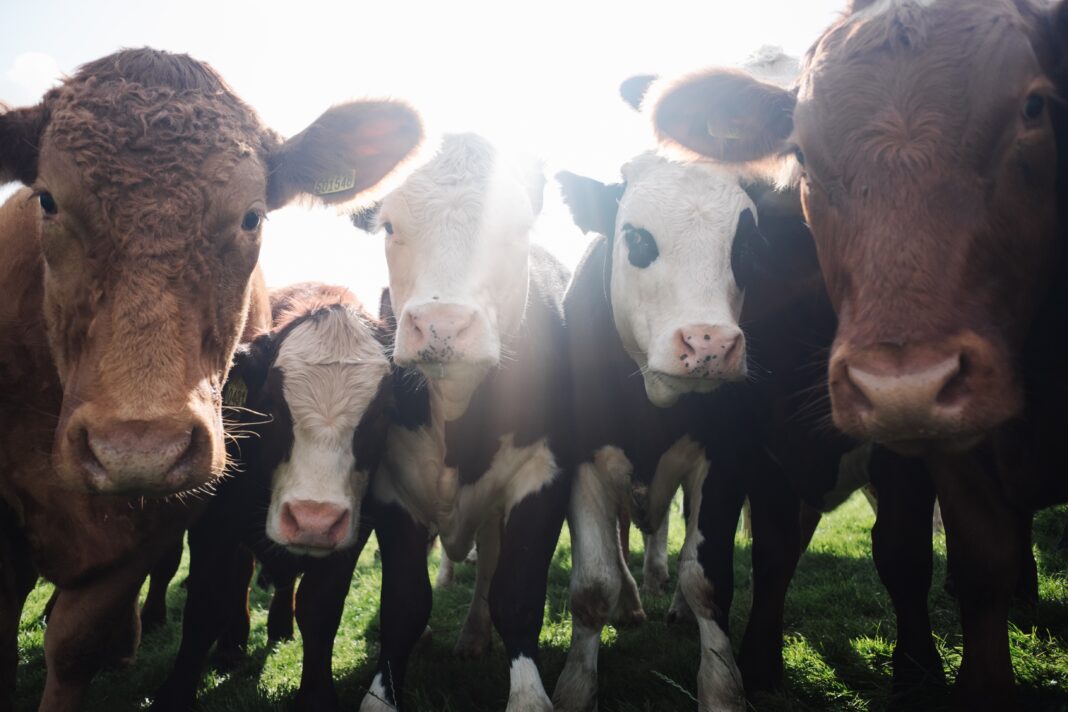
picture of the grounds at Project Wadi Attir

We pulled up into a barren plot of land that stretched for miles. I, and the rest of my Onward friends in my Israel internship program were utterly confused. Where were we? I remember thinking. We were quite literally in the middle of nowhere, just miles of open, dry land, the land of Israel.

Once we got off the bus we were brought into a room with tables and a board where we learned what we were here for. Project Wadi Attir, is a sustainable development organization that aims to farm through Bedouin traditions in an eco way. Fostered by The Sustainability Laboratory, the goal of this project and the other projects is to integrate sustainable practices of agriculture.

The property is located in the north Negev desert and it desires to bring back original Bedouin traditions like folk medicine that have been long forgotten from the past. Traditional Bedouin culture were nomad Arabs who farmed the land in a sustainable way. This project brings back this method of farming so that farmland is better preserved and taken care of, and this was very clear as we were taken on our tour of the property.

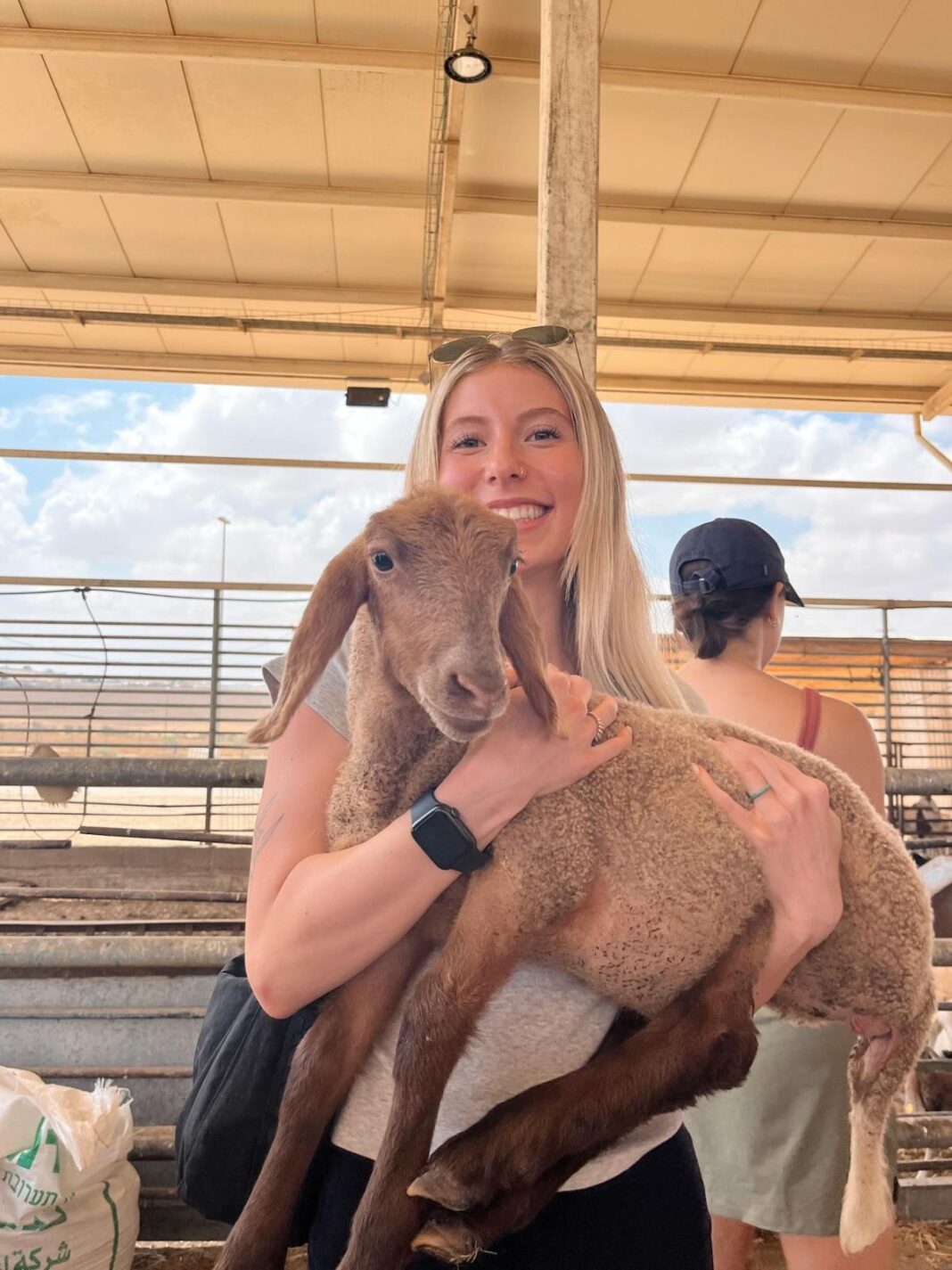
They showed us around the 100-acre land and showed us some of the goats and sheep. The goats are milked by hand only and we even were able to hold one of the goats. They also served us some labneh, which was goat cheese they made on-site. You can make your own labneh with our recipe here.

Hold a goat

picture of friend in program holding one of the goats

“This whole project is to take all the tradition and knowledge the Bedouins had for thousands of years in the desert and try to use it and bring it back with the most advanced technique and technology,” said Mohammed Alnabari, one of the founders of the project.

This project was also inspired to achieve a holistic approach back to a natural way of healing. Similarly to Tavlinsky and Cafe Levinsky crafting their ingredients on site, the project produces its own herbs, dairy products, and vegetables all made sustainably through an ancient Bedouin method of cultivation, and is supposed to provide a more natural way of living.

It is also hopeful to inspire other farmland to adopt this agricultural style in order to preserve the planet and support the Bedouin community and lifestyle. You can also buy their herbs and medicinal plants in the store they have on site.

Although it may seem like this place is all designed to be ancient and hand produced, there are solar fields on site that they use to generate electricity. In addition, the goat milking facility is one of the most advanced in Israel. Each goat has an ID bracelet, which tells them a lot of information like how much milk it yielded, how much time it milked, how old she is, and information on the milk cycle. “It can milk 48 items, goats or sheep at one time,” said Alnabari on the milking process. There are 100 goats and 100 sheep being milked right now on-site, giving about 3 liters of milk and being used to produce traditional Bedouin cheese.

What was so unique about my experience at Project Wadi Attir was that there were little kids there, learning, playing, and just experiencing the culture. When we arrived, the kids were staring at us like deer in the headlights. A group of modern, flashy young adults from America standing in front of tiny children that knew nothing of our lifestyles. I wasn’t able to speak to any of these children (mostly because they didn’t speak English), but it would be so interesting to know what they are thinking and get the perspective from their side.

picture of the site and some children that were there

The children that were at Project Wadi Attir

This Project not only builds a more sustainable Bedouin farm life, but also reestablishes a Bedouin tribe that brings people together from all over the world. As international relations is a complicated subject that is so heavily discussed in the Middle East, these projects are crucial in creating stronger bonds between people because it allows us to look each other in the eye and see different perspectives.

Seeing how other people live is the first step in forming peaceful relations and also grows our intellect just to see how other people live.

Danielle Meyers
Danielle Meyershttp://www.greenprophet.com
Danielle Meyers is an Environmental Science major at the University of Massachusetts Amherst interested in environmental law and policy. She took an interest in studying the environment once she learned about the worsening effects of climate change. Danielle enjoys going on adventures, the beach, shopping, and seeing friends and family. She is reporting from Tel Aviv in the Summer of 2023 to to learn, discover, and inspire change in the community and throughout the Middle East.

Read More

TRENDING

Monitoring farmers’ tillage patterns from space

Tillage is one of the clearest signals of how a farm treats its soil. Intensive plowing can degrade structure, release carbon, and increase erosion. Conservation practices—no-till, cover cropping, minimal disturbance—do the opposite. They build soil, retain water, and support biodiversity. But until now, measuring these practices at scale has been slow, expensive, and often self-reported.

Tony Cho’s model for regenerative cities

Tony Cho is a regenerative developer and community builder focused on designing cities as living ecosystems that support human connection and ecological balance. A key figure in Miami’s urban transformation, he helped shape the Wynwood Arts District and founded the Magic City Innovation District. Influenced by an unconventional upbringing that included time in an ashram, Cho brings a spiritual lens to real estate, blending culture, community, and capital into what he calls regenerative placemaking.

Ancient Chinese medicine might heal spinal cord injuries

In the study, the scientists didn’t just test one plant compound at a time. They tested two traditional Chinese medicine compounds together — luteolin (from flowers like honeysuckle and chrysanthemum) and astragaloside IV (from astragalus root, Huang Qi). These plants have been combined in Chinese herbal formulas for centuries to help the body recover from injury and inflammation.

The holy sidr tree can stop desertification

Al-Rumaydh describes the Sidr less as a single organism and more as a working ecological unit. Its deep roots reach down toward groundwater, while lateral roots spread wide to catch surface moisture. Its dense canopy slows wind instead of blocking it abruptly, reducing erosion.

The Air Tea Kettle creates a new way to meet plants and herbalism

Air Tea is a new technology. Instead of drinking tea, you inhale herbal vapor through warm air extraction. There is no water and no combustion. The warm air releases essential oils that are often lost in hot water and digestion.

How to quiet noise from construction in your office

Streets need to be resurfaced in New York but the humming and grinding noise is unsettling. Noise is environmental pollution. 

EarthX and a blueprint for sustainable investing

Trammell S. Crow, a Dallas-based businessman and father of four, is focusing his efforts on impact investing, and media that focuses on saving the planet through EarthX.

Mining Afghanistan’s Mineral Discoveries Similar to Avatar

Now that American forces in Afghanistan are commemorating the longest period of any war that America has been involved in, including the 1965-73 Vietnam War, the recent discoveries of large and extremely valuable mineral and metal deposits may finally bring to light a reason to continue the presence of US fighting forces in this war torn and backward country.

From Pilot Plant to Global Stage: How Aduro Clean Technologies’ 2026 Expansion Signals a Turning Point for Chemical Recycling Investors Like Yazan Al Homsi

The company's Next Generation Process (NGP) Pilot Plant in London, Ontario, has officially moved into initial operating campaigns, generating the kind of structured, repeatable data that separates laboratory promise from commercial viability.

Nobul’s Regan McGee on Shareholder Value: “Complacency Is the Silent Killer” 

Why the governance framework designed to protect shareholders so...

Should You Invest in the Private Market?

startustartup Unlike public stock exchanges, which offer daily trading, strict...

How to build a 100-year-company

Kongō Gumi is a Japanese construction company, purportedly founded in 578 A.D., making it the world's oldest documented company. What can we learn about building sustainable businesses from them?

How AI Helps SaaS Companies Reduce Repetitive Customer Support Work

SaaS products are designed for large numbers of users with different levels of experience, and also in renewable energy.

Popular Categories