

We’ve started making our own simple cheeses at home. Ones that use natural fermentation to take shape and flavor. An easy way to start is by making labane, a sour and tangy cheese perfected by the Bedouins, from a yoghurt base. But even if you don’t have yoghurt or access to kefir or a kefir starter, you can make labane and then shanklish cheese, a Levant favorite with the help of a little lemon. Fermentation and cheese is a world of its own. And you can do it in your fridge over the course of a month.

How to make shanklish
Shanklish, also known as chancliche, shinklish, shankleesh, sorke, or sürke, is a type of cow or sheep milk cheese found in Levantine cuisine. Shanklish is a Lebanese cheese made by curdling yogurt, straining it, and fermenting it. But if you have access to labane, you can start at that point too.
Ingredients for shanklish
500 grams labane cheese (click here to make your own easily with salt and milk)
Cup of zaatar
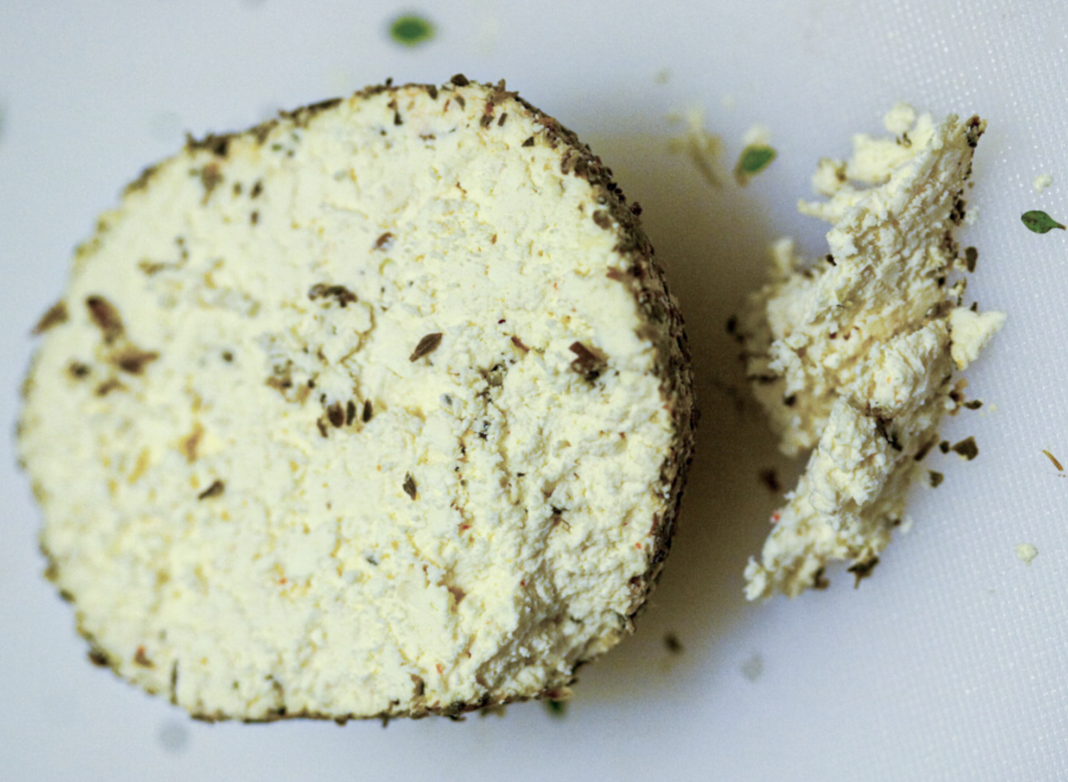
Take a ball of labane the size of a ping pong and roll it into zaatar. Put it in the fridge uncovered for a month, turning occasionally and voila you have a beautiful slow cheese from the Levant area of the Middle East. It can be grated over meals for an extra zing. Some variations inlcude rolling it in hot chilli peppers or anise seed.

While the Levant is known for simple, raw cheeses that don’t take long to ferment, we need to look to Europe for inspiration on how to make and eat the best cheeses in the world. The Slow Food organization has its annual awards, and like good olive oil and wine, cheese has its world of winners.
This year marks the 14th edition of Cheese, the largest international event dedicated to raw milk, natural cheeses and artisanal dairy products organized by the Slow Food movement and Città di Bra. The event brings together herders, cheesemakers and enthusiasts, united under the claim The Taste of the Meadows, emphasizing how raw milk from pasture-raised animals is crucial to sustainable food systems.
The Slow Cheese Awards pay tribute to the herders and artisan cheesemakers who work with respect for naturalness, tradition and animal welfare. These are small-scale producers who, despite all the hard work, risks and isolation involved, continue to resist. The winners were selected on the basis of their commitment not only to making natural raw-milk cheeses, but especially to fair and animal-friendly farming.
The winners of this year’s Slow Cheese Awards are:
David Nedelkovski, Kozi Mleko Planina, North Macedonia

David is just over 30, but already ten years ago left Skopje and moved to the small village of Rastak, at the foot of the Karadak mountains, where he created the Kozi Mleko Planina farm together with his family. Here David raises alpine and domestic Balkan goats, calling himself a “Cossack,” or “free man”.

David produces several types of fresh or aged cheese, all hard or semi-hard. Together with his neighbors, they started some important projects to restore biodiversity and the mountains they live in. When they decided to move to the mountains, the project was to produce milk and cheese and go back to town, but the life in nature captured their hearts: “I go more and more infrequently to Skopje, I love living here surrounded by family and my animals,” Nedelkovski says. Looking at the future he would like to raise awareness on the importance of raw milk products and animal welfare, or on the relationship between farmers and veterinarians.
But his main priority is that his“goats are happy”.
Tetyana Stramnova from the Amalthea Goat Farm, Ukraine

Tetyana Stramnova started as interior designer in Donetsk and opened her first farm when she got her first child, starting to raise quails. When Russians arrived in the region, she and her family had to leave, finally arriving in Muzikyvka, in the Kherson region. There, they tried to restore the poultry farming but the business failed. “Actually my children chose Muzikyvka as our place to be as they felt it was home at first sight,” she says.
In the end, Tatiana decided to do something new: she raised goats, learned how to make cheese, created the Amalthea Goat farm, on the name of her first goat, and started conducting excursions for children with disabilities, such as autism, at the same time working to protect the local Ukrainian short-eared goats breed.
On the eve of the full-scale invasion, the village council allocated her a plot of land for the construction of a cheese factory. The woman would have to find money for premises and equipment. Instead, all these months she tried to protect from the Russians what she managed to create. And after the de-occupation of Muzikyvka, everything starts again almost anew: “My main motivation is children. I have to leave something for them, that’s why I started again and again. We want to get it all back on track. We have to move on with our life”.
Giampaolo Gaiarin, Italy

Teaching food technology, Giampaolo born in Switzerland and now in Italy, makes his skills available to young people and advances a precise idea of cheese. According to him, cheese made with raw milk without the addition of selected ferments is the most respectful and authentic form of cheesemaking: the only one capable of restoring the aromas and specificities of each milk, each barn, each pasture.
And he doesn’t just explain it in the classroom, but makes daily efforts to demonstrate in the field that it is possible to produce natural cheese, doing cheesemaking trials together with producers, helping interested cheesemakers to switch from purchased ferments to grafted milk, even inventing a small home fermenter to facilitate their work. In his life, he has put his experience and expertise at the service of the cause of natural cheese: made from raw milk and without the addition of selected ferments, working alongside small-scale producers, in Italy and around the world, training generations of cheesemakers through teaching.
Marco Villa, Italy

A veterinarian, he has been able to create a supportive community of breeders, motivated young people and given an opportunity for redemption to a difficult Ligurian mountain area at risk of depopulation as young people move to the cities.

Thanks to his passion and great ability to share, he has helped save and protect the Cabannina breed of cows, an ancient breed, seemingly unsuitable for modern animal husbandry because it is less productive than commercial breeds. But the Cabannina is actually a key element in guaranteeing new opportunities for the highlands and a hope for those who want to breed with respect and in harmony with nature.