Europe’s Clean-Tech Pivot: Germany Leads Supply Chain Shift Amid €390B Investment Surge

Germany wind power, offshore wind Germany, German energy transition, wind turbine supply chain, permanent magnets wind turbines, rare earths Germany, China wind supply, German renewable energy, clean tech Europe, wind energy Europe, Net-Zero Industry Act, EU wind manufacturing, German wind targets, Habeck wind policy, resilient energy infrastructure, wind power news 2025, EU clean tech investment, Germany energy security, European wind turbine strategy, wind energy diversification
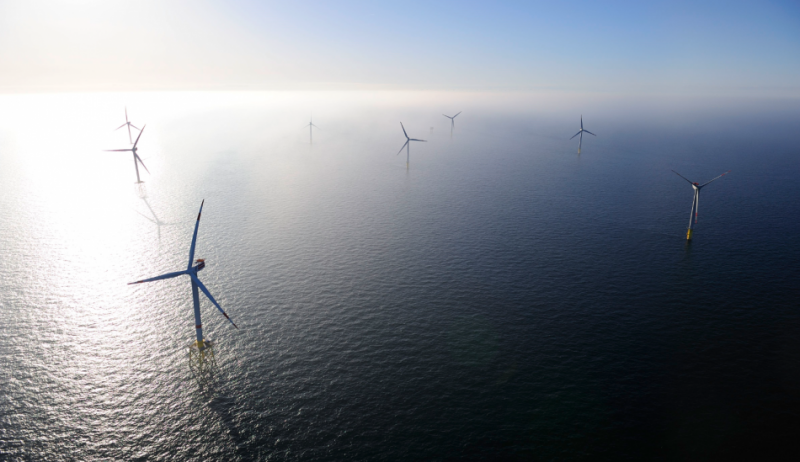
German offshore wind

Germany has announced a landmark strategy to break its near-total dependence on Chinese-made components for offshore wind turbines, particularly the permanent magnets essential to the industry. This move, unveiled by the Economy Ministry, forms part of a broader plan to build a more resilient and geopolitically secure renewable energy infrastructure. The Resilience Roadmap aims for 30 percent of permanent magnet supply to come from alternative sources by 2030, increasing to 50 percent by 2035. China currently supplies about 90 percent of these components globally, mostly through its dominance in the rare earth metals market.

Related: China and Russia building a nuclear power plant and base on the moon

To meet its ambitious climate and energy goals, Germany is targeting an offshore wind capacity of 30 gigawatts by 2030—triple its current levels. Offshore wind already contributes around 5 percent of Germany’s electricity supply, and the government hopes renewables will account for 80 percent of national electricity production by the end of the decade. The shift away from China is not merely about energy diversification; it represents a strategic reshoring of the energy transition and a rejection of supply chains vulnerable to geopolitical risk.

This German announcement fits into a broader European trend. Across the continent, governments are accelerating investment in clean technology, aiming to secure domestic manufacturing capacity and reduce exposure to international bottlenecks. The global cleantech market, valued at approximately $916 billion in 2024, is projected to double to $1.84 trillion by 2030, with an annual growth rate of nearly 13 percent. In the European Union alone, clean energy investments are expected to reach nearly $390 billion in 2025.

Related: Chinese submarine finds rare life in deepest ocean trench

Venture capital trends in the EU’s cleantech sector reflect the momentum. After a slow start to the year, venture funding rebounded in the second quarter of 2025, reaching €2.5 billion—the strongest quarterly performance since early 2024. The average deal size has also grown, reflecting increasing investor confidence in scale-up technologies and manufacturing. While early-stage funding remains cautious, the appetite for industrial decarbonization and infrastructure-linked technologies is clearly rising.

Policymakers are backing this momentum with sweeping industrial legislation. Under the EU’s Net-Zero Industry Act, passed in June 2024, the bloc aims to produce at least 40 percent of its annual net-zero technology needs domestically by 2030. The act also sets a target for Europe to produce 15 percent of the world’s clean-tech equipment by 2040. However, this ambition comes in response to a stark reality: Europe’s share of global wind turbine manufacturing fell from 58 percent in 2017 to just 30 percent in 2022. Solar panel manufacturing remains even more concentrated outside the continent, despite EU efforts to reshore production.

In terms of deployment, Europe is making strong progress. In 2024, renewables supplied nearly half of the EU’s electricity, with wind and solar leading the charge. Solar photovoltaic capacity alone reached around 269 gigawatts by the end of 2023, and the EU is targeting 600 gigawatts by 2030. The Clean Industrial Deal, launched earlier this year, promises to push 100 gigawatts of new renewable energy capacity annually through 2030, while also funding green innovation and supporting the transition of energy-intensive industries.

Germany’s strategy to secure its wind industry against supply shocks highlights a key shift in clean-tech policy. While markets once favored the cheapest global supplier—often China—the future is likely to reward regional resilience, strategic partnerships, and closed-loop value chains. Germany is already in talks with Japan and Australia to source rare earths more sustainably and with less environmental and political risk.

As the EU mobilizes hundreds of billions of euros to decarbonize its economy, challenges remain. Permitting delays, rising material costs, and global competition for critical minerals could still slow the pace of change. Yet Germany’s move to de-risk its offshore wind supply chain is an unmistakable signal: in the energy transition, security and sustainability must go hand in hand.

Karin Kloosterman
Karin Kloostermanhttp://www.greenprophet.com
Karin Kloosterman is an award-winning journalist, innovation strategist, and founder of Green Prophet, one of the Middle East’s pioneering sustainability platforms. She has ranked in the Top 10 of Verizon innovation competitions, participated in NASA-linked challenges, and spoken worldwide on climate, food security, and future resilience. With an IoT technology patent, features in Canada’s National Post, and leadership inside teams building next-generation agricultural and planetary systems — including Mars-farming concepts — Karin operates at the intersection of storytelling, science, and systems change. She doesn’t report on the future – she helps design it. Reach out directly to [email protected]

Read More

TRENDING

Dan Zaslavsky’s energy tower dream is rising again in Iran and China

The Energy Tower idea never made the leap from drawings and engineering studies to full-scale construction. But nearly two decades after most people stopped talking about it, the concept is quietly evolving in two unexpected places: China and Iran. The concept let dreamers dream and doers do - figuring out more pleasing designs and engineering.

AI data centers are triggering panic, instead of cleantech opportunities

AI may unintentionally become the economic engine that finally modernizes America’s aging grid. California is experiencing a massive AI data center boom, ranking 3rd in the U.S. with 227 operating centers and 54 more in development as of April 2026, according to Stanford.

Ancient Chinese medicine might heal spinal cord injuries

In the study, the scientists didn’t just test one plant compound at a time. They tested two traditional Chinese medicine compounds together — luteolin (from flowers like honeysuckle and chrysanthemum) and astragaloside IV (from astragalus root, Huang Qi). These plants have been combined in Chinese herbal formulas for centuries to help the body recover from injury and inflammation.

Leading Through a Dual-Energy Transition: Balancing Decarbonisation with Energy Security

Experience in one area of the energy industry isn't enough to guarantee readiness across all the others. That's where a structured program like an MBA in energy can come in. Today's advanced curricula explore energy economics, finance, policy, and strategic management alongside the technical subjects. And when pursuing an energy MBA online, professionals can skill up and retrain without having to step out of the labor market -- an important perk at a time when skilled professionals are already in short supply.

China is one step closer to making artificial sun

Nuclear fusion is often described as the holy grail of clean energy: a process that could one day provide abundant power without carbon emissions or long-lived radioactive waste. It has so much promise, but it's difficult. This article on fusion explains why. But turning fusion into a practical energy source depends on solving a set of extremely difficult physics problems. One of the most important is how to keep plasma — a super-hot, electrically charged gas — dense, stable, and confined long enough to produce useful energy.

Yerukim Forms a New Green Economy Where the Money is Really Green

The Yerukim members who pick up the recyclables get to keep the monetary reward, the public earns "green" bills that can be used in shops, and business owners get to be associated with environmentalism.

Choosing Riyadh over Dubai? What Investors Should Know

Saudi Arabia is deploying capital at unmatched scale to catalyze tourism and advanced industry while rewiring its power-and-water backbone. The investable frontier is widening—especially in renewables, grid storage, water efficiency/desal retrofits, and hospitality operating platforms. Prudent investors will insist on phased delivery, enforceable KPIs (energy, water, biodiversity), and RHQ/zone compliance—while pricing political-economy and reputational risks alongside growth upside.

Sell your cooking oil for biodiesel money

Want to make money on old french fry oil? Sell it.

Qatar Alternative Energy Summit Pairs Investors And Innovators

Alternative energy investors and innovators can meet n' greet in Doha, Qatar March 16 and 17.

Here’s How To Implement The Four Pillars Of Employee Engagement

If you throw a party for your work team and they are vegans, don't make it a barbecue. Know the sustainability values of your team to boost moral and retain good people.

Locals From Rishon Fight IKEA

Big Box stores are a pretty new concept in Israel, and thank God that not every Israeli city wants them in their backyard. A word from someone who has see the beautiful farmland around her hometown Newmarket, Ontario stripped and converted into vulgar strip malls of big box shops: they have no place in a healthy and sustainable town or city.

The Jewish National Fund Meets An Inconvenient Truth

According to the JNF, it has transformed thousands of acres of barren land into green forests in Israel. They state that each person emits about 23 tons of carbon per year, estimating that each tree planted can absorb one ton of carbon in its lifetime. That's a whole lot of trees you'd need to be planting. Could so many fit in Israel?

How to quiet noise from construction in your office

Streets need to be resurfaced in New York but the humming and grinding noise is unsettling. Noise is environmental pollution. 

Popular Categories