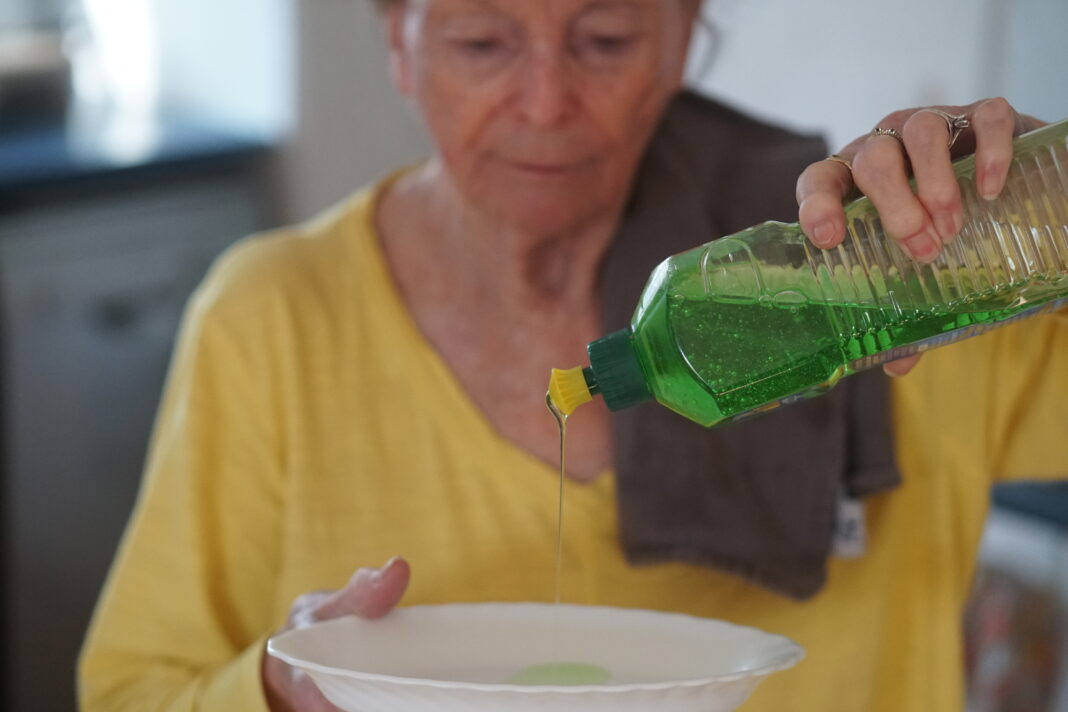

If you’ve ever wondered why modern dish soaps feel thicker and more gel-like than they used to, you’re not alone. Twenty years ago, dish soap was simpler—effective, easy to rinse, and often available in smaller bottles. Today, however, many brands have adopted a thicker, gel-based formula. While this may seem like a minor change, it has significant environmental consequences that are worth considering.
I bought an old pioneer home owned by hoarders and discovered gallons of Palmolive dish soap from 30 years ago. One drop can clean a greasy pot. Now, with new soap, one drop can’t even clean a glass cup. What has happened? Why are all our dishwashing soaps and hair shampoos full of gel? What is this gel made of, and why are we agreeing to this?
What Are These Gels Made Of?

The thickening agents in modern dish soaps are typically synthetic polymers, petroleum-based compounds, or plant-derived cellulose. Common ingredients include:
Sodium Chloride (Salt): Used to thicken surfactant mixtures, but primarily a cheap filler.
Xanthan Gum & Cellulose Gum: Plant-derived thickeners that create a gel-like consistency.
Carbomer & Acrylates Copolymer: Synthetic polymers that help stabilize the formula and create a thick texture.
PEG (Polyethylene Glycol): A petroleum-based compound used to emulsify and thicken soap.
While some of these ingredients are harmless, others contribute to unnecessary waste and pollution. Many are simply cheap replacements for higher-quality, concentrated formulas that once existed.
The Environmental Downsides of Thicker Dish Soaps
Excessive Packaging Waste
With gels taking up more space in a bottle, manufacturers need larger plastic containers to hold the same amount of active cleaning agents. This leads to more plastic waste, contributing to pollution and landfill overflow. A truly concentrated dish soap in a smaller bottle would drastically reduce plastic consumption.
Increased Transportation Emissions
Bulkier, heavier bottles require more energy to produce and transport. More packaging and unnecessary weight mean higher carbon emissions from shipping and distribution. A more compact, concentrated formula would be more efficient and sustainable.
Unnecessary Water Usage
Many modern dish soaps contain fillers that do little more than add bulk. This means consumers are paying for diluted products that use more water during manufacturing. If companies focused on ultra-concentrated formulas, they could significantly reduce their water footprint.
More Chemical Additives
To maintain their thick consistency, many modern dish soaps contain synthetic thickeners and stabilizers. These chemicals don’t always break down easily in wastewater treatment systems and can contribute to water pollution, harming aquatic ecosystems.
Alternatives: Dish Soaps Without Gelling Agents

If you’re looking for effective dishwashing soaps that skip the unnecessary gelling agents, here are some great options available in the U.S.:
Seventh Generation Free & Clear Liquid Dish Soap – A plant-based, fragrance-free soap that’s biodegradable and free from dyes and synthetic fragrances.
ECOS Hypoallergenic Dish Soap – Biodegradable, hypoallergenic, and gentle on hands, while remaining tough on grease.
ATTITUDE Dishwashing Liquid – EWG Verified and vegan, made with naturally derived ingredients and free from dyes and synthetic fragrances.
Sonett Organic Dishwashing Liquid – A concentrated, organic, biodegradable formula that’s gentle on skin and the environment.
A Call for Smarter Dish Soap Design
The shift toward gel-based dish soaps may have been driven by marketing rather than necessity. Thicker soaps create the illusion of being more concentrated, but in reality, they often contain unnecessary fillers that don’t enhance cleaning power. Consumers who care about sustainability should push for more concentrated formulas that require less packaging, use fewer resources, and reduce waste. There are some companies that make dry soap bars for shampoo. Can that work with dishwashing soap for washing dishes manually?
Would you switch to a truly concentrated dish soap in a smaller bottle if it were available? Or maybe we need to demand the value we once had in a larger bottle? The solution to this problem starts with consumer demand. By choosing brands that prioritize sustainability over gimmicky formulations, we can encourage the industry to rethink its approach and reduce its environmental impact.