Climate, Not Just People, Is Driving Central Asia’s Desertification, Study Finds

Mongolian tents in a desert in Asia

In a sweeping analysis of drylands across Central Asia, scientists have found that natural environmental forces—particularly declining snow levels and rising temperatures—are more responsible for desertification than human activity. The study, published in the journal Catena, was led by Professor Tao Hui of the Xinjiang Institute of Ecology and Geography at the Chinese Academy of Sciences.

Using nearly 40 years of satellite data, meteorological records, and socio-economic indicators, the research team mapped how desertification has unfolded between 1982 and 2020. They applied a nonlinear Granger causality model to disentangle the impacts of climate change and human activity.

The findings are stark: “Natural factors accounted for nearly 70% of all newly desertified areas,” said Prof. Tao Hui. “In many dryland systems, snow water equivalent—the amount of water stored in snow—was the dominant ecological driver.”
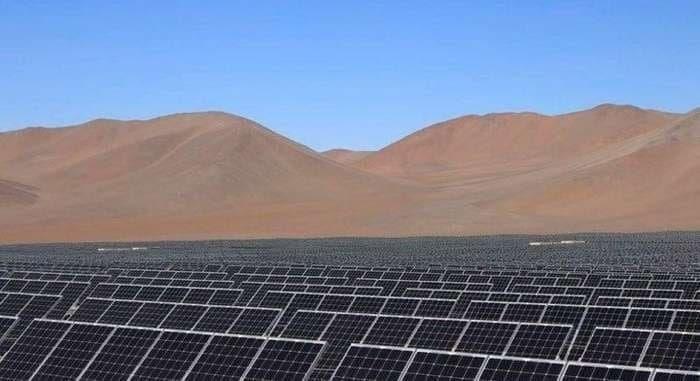
Uzbekistan to get Central Asia’s first renewable energy facility with utility-scale battery storage
Uzbekistan to get Central Asia’s first renewable energy facility with utility-scale battery storage.

Overall, 14.81% of Central Asia’s drylands showed signs of desertification during the study period. While unsustainable agriculture and overgrazing continue to degrade grasslands and arable areas, it is the shifting climate—particularly warmer winters and reduced snowmelt—that is playing the lead role in this transformation. Forests, the study notes, were primarily affected by rising temperatures rather than human encroachment.

The study is misleading by “blaming” the effect on natural processes since climate change is largely assumed to be caused by human development.

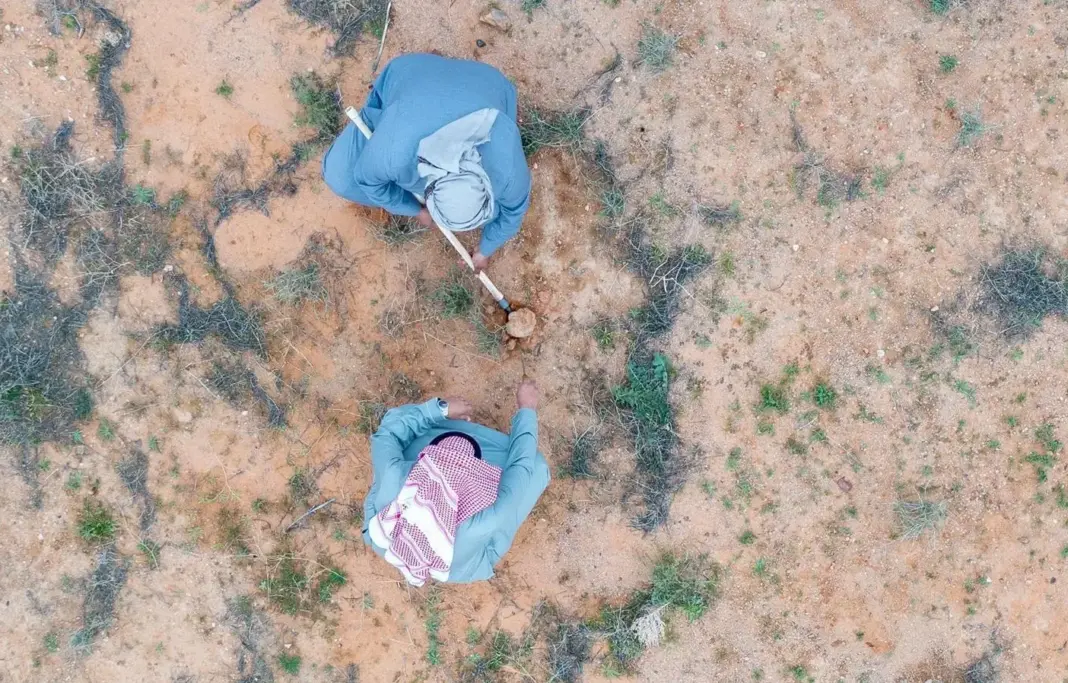
Saudi Arabia is home to desert truffles.
Truffle hunting in the deserts of Saudi Arabia

The revelation that climate is the leading culprit challenges the long-standing assumption that desertification is mainly a result of poor land use. It also complicates regional efforts to halt desert advance, which have typically focused on managing grazing and cultivation.

For countries in the Middle East, including Jordan—one of the most water-scarce nations in the world—the study serves as a climate cautionary tale. With less than 100 cubic meters of renewable water per person annually, Jordan is already facing extreme pressure on its agricultural systems. Sustainable innovations like volcanic soil enrichment may offer hope (as explored in recent efforts near Mafraq), but they must now be scaled in ways that anticipate a rapidly changing climate.
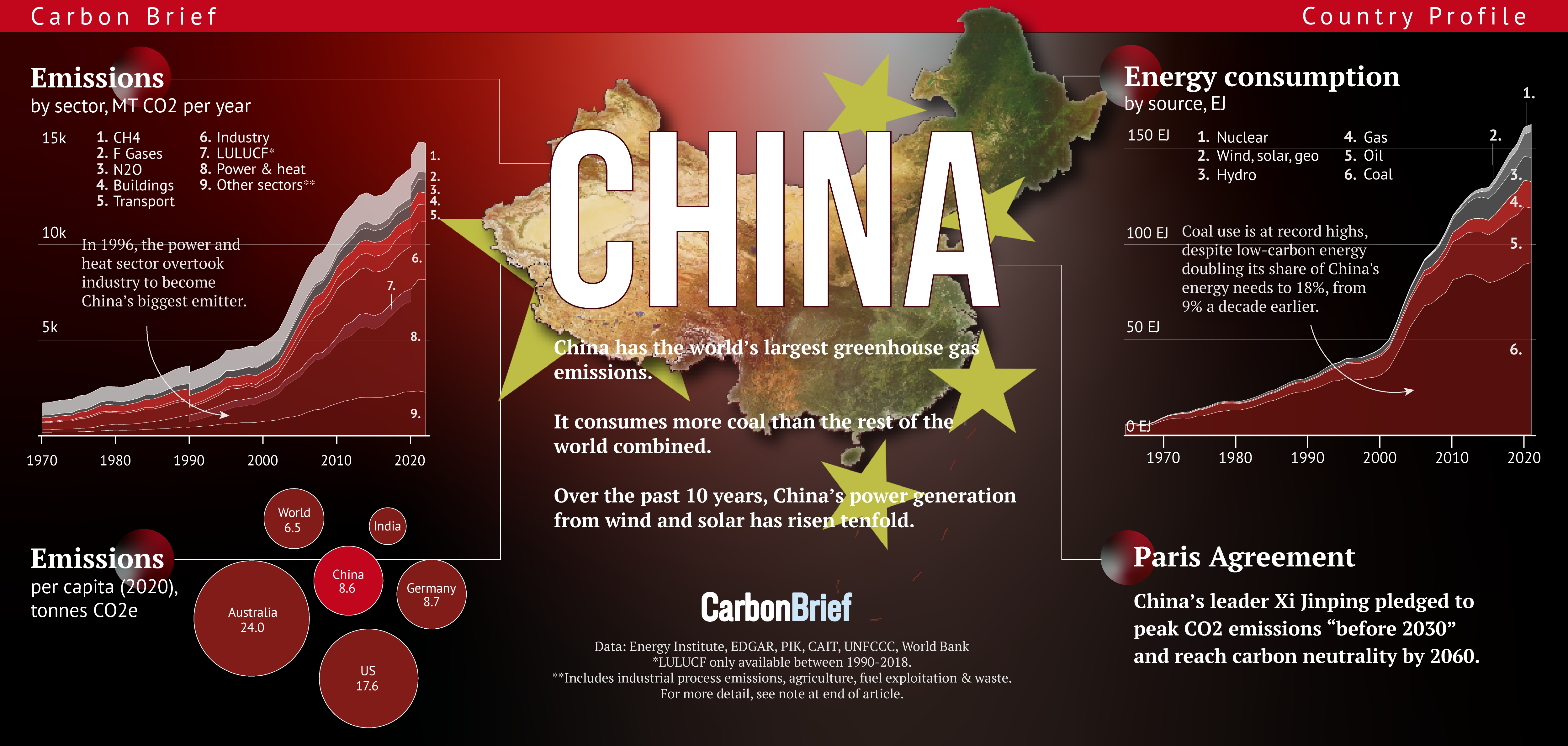
China carbon emissions
Breaking down China’s carbon emissions by Carbon Brief.

China, the factory of the world, is the world’s largest emitter of greenhouse gases, producing about 30% of global CO₂ emissions from fossil fuels and industry. By comparison, the United States emits roughly 13–14%, and the European Union around 8–9% of global emissions. Worth noting that the carbon emissions of China per capita is less than that of Americans and Europeans.

Bhok Thompson
Bhok Thompsonhttp://www.greenprophet.com
Bhok Thompson is an “eco-tinkerer” who thrives at the intersection of sustainability, business, and cutting-edge technology. With a background in mechanical engineering and a deep fascination with renewable energy, Bhok has dedicated his career to developing innovative solutions that bridge environmental consciousness with profitability. A frequent contributor to Green Prophet, Bhok writes about futuristic green tech, urban sustainability, and the latest trends in eco-friendly startups. His passion for engineering meets his love for business as he mentors young entrepreneurs looking to create scalable, impact-driven companies. Beyond his work, Bhok is an avid collector of vintage mechanical watches, believing they represent an era of precision and craftsmanship that modern technology often overlooks. Reach out: [email protected]

Read More

LEAVE A REPLY

Please enter your comment!
Please enter your name here

TRENDING

5 projects to help kickstart your company’s sustainability journey 

True progress happens when environmental ambition meets action. Decarbonizing efficiently is possible for any business in any sector, but actually getting started can sometimes feel daunting.   The trick? It’s to start small and build momentum. Here are five potential projects to help you get started.  

Hormuz 2026 Conflict Poses an Energy and Food Security Dilemma in a Warming World

As tensions rise in one of the world’s most critical maritime chokepoints, the ripple effects go far beyond oil—touching food systems, climate pressures, and regional stability

Baby teeth read like tree rings paint a picture of toxins in early life

A new study from the Icahn School of Medicine at Mount Sinai in New York offers a striking insight into how the environments we are born into can quietly shape our brains years later. By analyzing naturally shed baby teeth, the ones tucked under pillows for the tooth fairy, researchers have reconstructed a detailed timeline of exposure to environmental metals during pregnancy and early infancy.

Poop in the East River shows the city’s rat problem and what people like to eat

New York ecology and health can be monitored by a jug of water a week.

Climate change traced in sea turtle shells

It's sea turtles which may in the end save islands in the Seychelles. They may also better help us understand climate change. Like rings on a tree, scientists have found a way to read sea turtle shells and how they are impacted by climate change tells a story. 

How to quiet noise from construction in your office

Streets need to be resurfaced in New York but the humming and grinding noise is unsettling. Noise is environmental pollution. 

EarthX and a blueprint for sustainable investing

Trammell S. Crow, a Dallas-based businessman and father of four, is focusing his efforts on impact investing, and media that focuses on saving the planet through EarthX.

Mining Afghanistan’s Mineral Discoveries Similar to Avatar

Now that American forces in Afghanistan are commemorating the longest period of any war that America has been involved in, including the 1965-73 Vietnam War, the recent discoveries of large and extremely valuable mineral and metal deposits may finally bring to light a reason to continue the presence of US fighting forces in this war torn and backward country.

From Pilot Plant to Global Stage: How Aduro Clean Technologies’ 2026 Expansion Signals a Turning Point for Chemical Recycling Investors Like Yazan Al Homsi

The company's Next Generation Process (NGP) Pilot Plant in London, Ontario, has officially moved into initial operating campaigns, generating the kind of structured, repeatable data that separates laboratory promise from commercial viability.

Nobul’s Regan McGee on Shareholder Value: “Complacency Is the Silent Killer” 

Why the governance framework designed to protect shareholders so...

Should You Invest in the Private Market?

startustartup Unlike public stock exchanges, which offer daily trading, strict...

How to build a 100-year-company

Kongō Gumi is a Japanese construction company, purportedly founded in 578 A.D., making it the world's oldest documented company. What can we learn about building sustainable businesses from them?

How AI Helps SaaS Companies Reduce Repetitive Customer Support Work

SaaS products are designed for large numbers of users with different levels of experience, and also in renewable energy.

Popular Categories