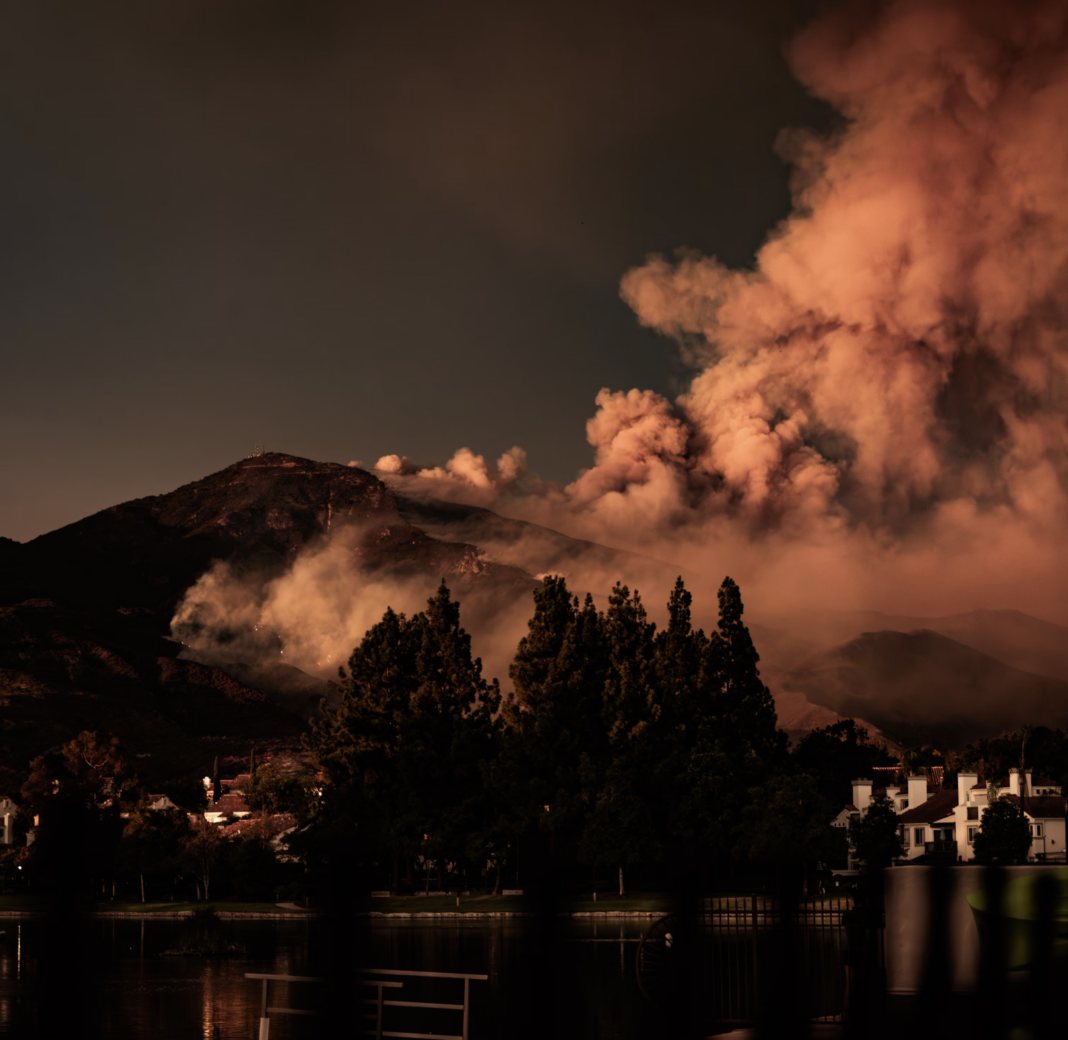
California wildfires will hurt your lungs as toxic burnt building pollution drifts

“The problem is bigger than just the smoke we’re inhaling.”
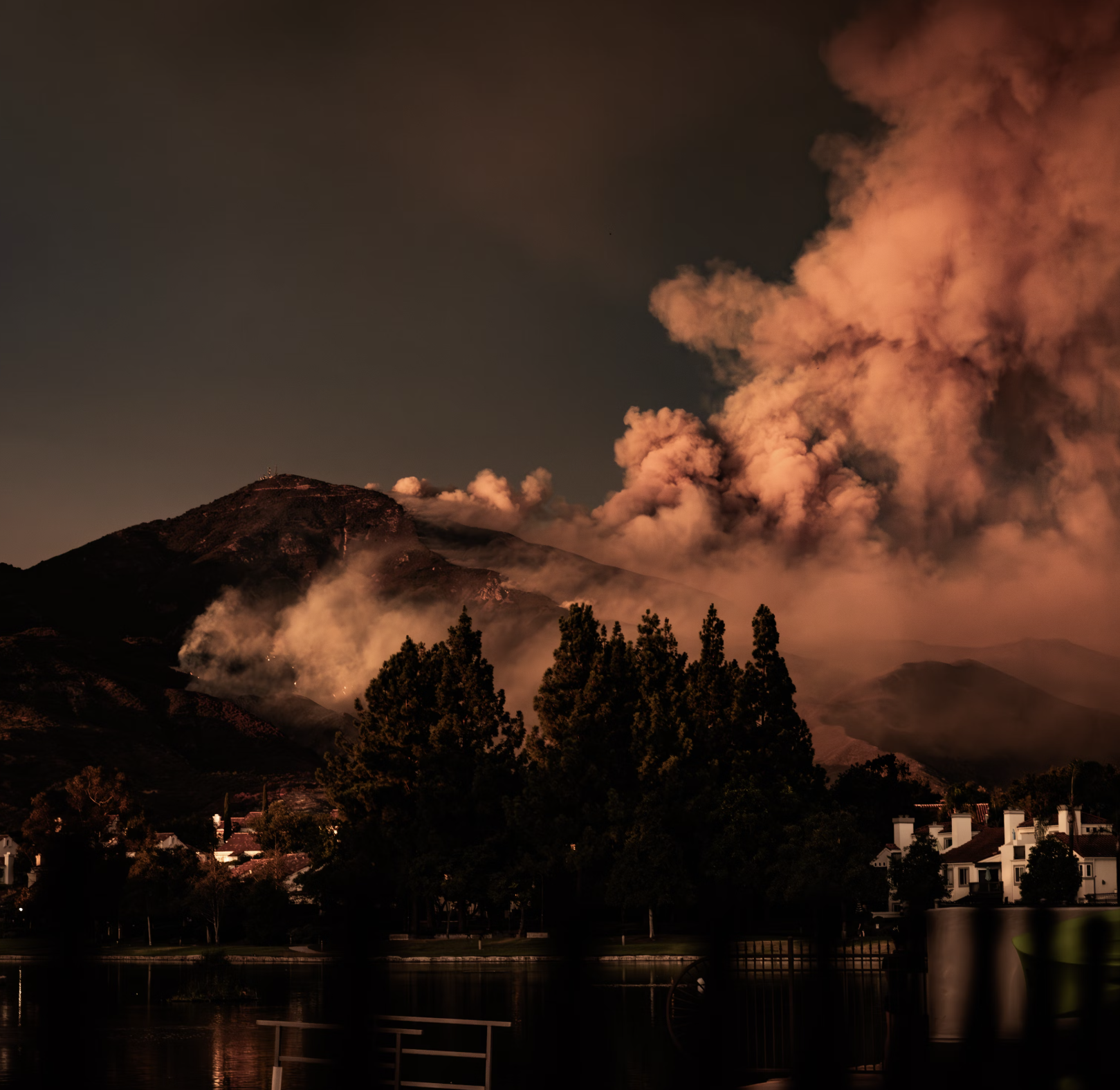
WVU toxicologist Timothy Nurkiewicz said the January fires burning in the Los Angeles area will create air pollution that can reach hundreds of miles in distance.

As the deadly California fires persisted into a second week, a West Virginia University air quality expert said people within hundreds of miles may experience the effects.

Timothy Nurkiewicz, professor of the physiology, pharmacology and toxicology in the WVU School of Medicine, said he also believes that — beyond any immediate health concerns — a swift, thorough cleanup must occur to prevent lingering effects in the environment.

“The folks within a 10-mile radius are in the greatest peril. With extremely high air pollution resulting from the fires, even a healthy person may have irritation of the eyes and complications breathing. What we’re seeing in hospitals are people with asthmatic events and bronchitis.

Timothy Nurkiewicz, professor, Department of Physiology, Pharmacology and Toxicology, WVU School of Medicine

“For those with pre-existing conditions, cardiovascular diseases can be exacerbated after inhalation exposure to this smoke. That could mean symptoms such as elevated blood pressure and chest pain.

“What we’re seeing in Los Angeles is called a ‘wildland urban interface fire.’ This is different from a typical wildfire. In a wildland urban interface fire, you have housing and urban environments built up against and in the wildlands.

“Now we’re getting two different profiles of toxicants — one from the wildlands and one from the urban environment and its building materials. The frequency and intensity of these fires will continue to increase with ongoing development and building into the wildlands.

Nurkiewicz directs the Center for Inhalation Toxicology, a research hub for investigators to measure, identify and discover how air particles affect human health.

“It’s fair to estimate that the smoke will travel hundreds of miles away. But the smoke will be diluted down by the time it reaches mid-America,” he warns.

How can authorities and people help slow the damage?

“While everyone’s focused on the immediate effects, as they should be, there must be cleanup after the fire, says Nurkiewicz. “A smoke plume is going to cover a tremendous area and that smoke will settle into the environment we’re interacting with. It’s like cigarette smoke. If someone’s sitting in a room smoking cigarettes, it will settle onto surfaces. It’s the same thing with these fires. You can’t just leave all these ashes around and not have some sort of exposure.

“The problem is bigger than just the smoke we’re inhaling.”

Karin Kloosterman
Karin Kloostermanhttp://www.greenprophet.com
Karin Kloosterman is an award-winning journalist, innovation strategist, and founder of Green Prophet, one of the Middle East’s pioneering sustainability platforms. She has ranked in the Top 10 of Verizon innovation competitions, participated in NASA-linked challenges, and spoken worldwide on climate, food security, and future resilience. With an IoT technology patent, features in Canada’s National Post, and leadership inside teams building next-generation agricultural and planetary systems — including Mars-farming concepts — Karin operates at the intersection of storytelling, science, and systems change. She doesn’t report on the future – she helps design it. Reach out directly to [email protected]

Read More

TRENDING

AI data centers are triggering panic, instead of cleantech opportunities

AI may unintentionally become the economic engine that finally modernizes America’s aging grid. California is experiencing a massive AI data center boom, ranking 3rd in the U.S. with 227 operating centers and 54 more in development as of April 2026, according to Stanford.

Rent a living Christmas tree in California

You can go to a site or go online, order the tree and pick it up or if if possible have it delivered. A live tree doesn't shed needles after a few weeks and it's obviously the ecological choice to cutting down millions of 7 to 15 year old trees every year.

Inflatable concrete homes: a California and Ontario case study

Across Ontario and California, builders are rethinking concrete housing through inflatable-shell design—an approach that replaces wooden formwork with air and innovation. A 1,000-square-foot low-carbon concrete shell, insulated with hempcrete, can be erected in a day and cost far less than conventional construction. Over time, the savings in energy, materials, and mortgage costs make this model a realistic response to rising living expenses and climate stress. With low-carbon cement, hempcrete walls, and renewable energy, inflatable concrete homes show how even the world’s most carbon-heavy material can become part of a sustainable future—if built smartly, and within local building codes.

Soccer star Hakan Çalhanoğlu kicks off massive reforestation project in Turkey with gamers from My Lovely Planet

International football star Hakan Çalhanoğlu and his wife Sinem are turning gameplay into real-world reforestation. In partnership with the Web3 app My Lovely Planet, the couple launched the Çalhanoğlu Forest in Kuşadası, Turkey—an area scarred by wildfires. With 10,000 saplings already planned and millions of fans invited to join through gaming, the project blends sport, tech, and ecology into a new model of climate action.

Mediterranean Mega Fires Burn Record Land as Climate Change Fuels Extreme Heat and Drought

At the start of August, wildfires exploded across the...

Yerukim Forms a New Green Economy Where the Money is Really Green

The Yerukim members who pick up the recyclables get to keep the monetary reward, the public earns "green" bills that can be used in shops, and business owners get to be associated with environmentalism.

Choosing Riyadh over Dubai? What Investors Should Know

Saudi Arabia is deploying capital at unmatched scale to catalyze tourism and advanced industry while rewiring its power-and-water backbone. The investable frontier is widening—especially in renewables, grid storage, water efficiency/desal retrofits, and hospitality operating platforms. Prudent investors will insist on phased delivery, enforceable KPIs (energy, water, biodiversity), and RHQ/zone compliance—while pricing political-economy and reputational risks alongside growth upside.

Sell your cooking oil for biodiesel money

Want to make money on old french fry oil? Sell it.

Qatar Alternative Energy Summit Pairs Investors And Innovators

Alternative energy investors and innovators can meet n' greet in Doha, Qatar March 16 and 17.

Here’s How To Implement The Four Pillars Of Employee Engagement

If you throw a party for your work team and they are vegans, don't make it a barbecue. Know the sustainability values of your team to boost moral and retain good people.

Locals From Rishon Fight IKEA

Big Box stores are a pretty new concept in Israel, and thank God that not every Israeli city wants them in their backyard. A word from someone who has see the beautiful farmland around her hometown Newmarket, Ontario stripped and converted into vulgar strip malls of big box shops: they have no place in a healthy and sustainable town or city.

The Jewish National Fund Meets An Inconvenient Truth

According to the JNF, it has transformed thousands of acres of barren land into green forests in Israel. They state that each person emits about 23 tons of carbon per year, estimating that each tree planted can absorb one ton of carbon in its lifetime. That's a whole lot of trees you'd need to be planting. Could so many fit in Israel?

How to quiet noise from construction in your office

Streets need to be resurfaced in New York but the humming and grinding noise is unsettling. Noise is environmental pollution. 

Popular Categories