When Israel launched a surprise, precision strike wave against Iran’s nuclear and other essential infrastructure on June 13, 2025, the world’s attention turned not only to the military, political, and human fallout but also to the environmental risks. Iran and its leaders immediately accused Israel of committing environmental war crimes. The supporting evidence for this claim was fires at oil depots, fuel deposits being damaged, and the targeting of nuclear research and development facilities.
From Israel’s perspective, these accusations are just distractions and diversions to ignore a larger truth: Iran’s pursuit of nuclear weapons poses a larger and longer-lasting environmental threat to the Middle East than Israel’s defensive measures ever will.
Israel has long believed and employed the practice of stopping existential threats before they come to fruition. This doctrine led Israel to conduct strikes, similar to its 2025 attack, on nuclear facilities in Iraq in 1981 and Syria in 2007. While both operations were controversial at the same time, which seems to be the trend with Israel’s attacks, they are now acknowledged to have prevented potentially worse, specifically environmental, outcomes.
In June 2025, Israel used the same logic when it attacked Iran. Nuclear facilities in Natanz, Fordow, and Arak, among other infrastructure, where uranium enrichment along with other nuclear activities were targeted. Israel’s goal was clear: cripple Iran’s nuclear program before it had operational weapons. For Israeli leaders, the alternative to not attacking was unthinkable. An Iran with nuclear capabilities would not only destabilize regional politics but also risk a major humanitarian and environmental disaster.
See Related Article: Experts at US-Arab Policy Conference debate Mideast’s future as global energy supplier
Critics of the attack warned and cited instances of radioactive leaks. However, agencies like the International Atomic Energy Agency (IAEA) confirmed the lack of leaks and are also continuing to measure sites to ensure no radioactive increase. Chemical exposure is the real environmental danger. Chemicals used in enrichment that are not cared for and stored properly can become toxic and can potentially be inhaled or contaminate groundwater. The underground nature of Iran’s nuclear development facilities helped decrease the chance of air exposure. Additionally, Israeli military planners deliberately designed strikes to maximize damage to infrastructure and minimize environmental fallout. Israel’s precision proves that Israel recognizes environmental safety even amid war.
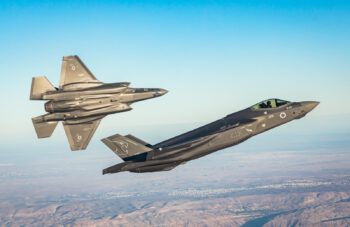
Iran’s environmental department has accused Israel of targeting fossil-fuel storage, oil depots, industrial plants, and nuclear facilities with the intention of causing environmental destruction. Tehran’s state media highlighted fires at oil depots and refineries, claiming that the attacks and subsequent destruction created toxic air and soil contamination. Israel rejects these accusations. Its view is that the strikes were carefully planned and carried out with precision to undermine Iran’s economic, military, and nuclear programs.
By crippling key infrastructure, Israel seeks to cut off financial and physical resources as well as the support they provide for Iran’s proxies. From Israel’s perspective, Iran is attempting to weaponize environmental justice as propaganda while ignoring the larger risks that they are creating by their national ambitions.
See Related Article: Iran is sinking in sinkholes from overwatering
While Iran points towards oil fires and chemical leaks, Israel argues that the long-term environmental risks of a nuclear Iran far outweigh the immediate impact of its targeted strikes. Consider the following situations:
- Nuclear accident: Poorly secured and contained enrichment facilities could leak uranium into soil, water, and other resources
- Regional proliferation: If Iran secures nuclear weapons, other nations in the region may pursue their programs in response, exponentially increasing the risk of accident and sabotage
- Terrorist access: With Iranian proxies active across the Middle East, material or weapons could fall into the hands of groups with no regard for environmental or human safety
- Regional instability: A nuclear Iran would increase the likelihood of war, where nuclear attacks would devastate the environment
For Israel, these risks make preventative action not only the way to save human life but also to save the environment from potential destruction.
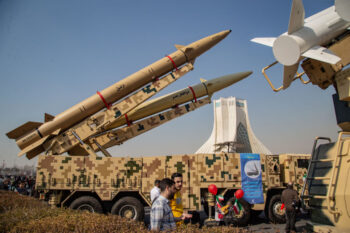
Iran’s accusations of environmental war crimes fit into a broader narrative attempting to portray Israel as reckless and destructive. But Israel points out key hypocrisies. Iran’s secrecy, blocking inspectors from accessing facilities, Iran’s industrial pollution, and their weaponization of outrage shift their malpractice onto Israel.
Israel frames its strategy around an ethical argument: to allow Iran to continue unchecked would not only be a gamble in terms of Israeli lives but also with the environmental health of the Middle East as a whole.
The strikes on Iran have sparked fierce debate, but from Israel’s perspective, the choice was easy: either accept the risks of a nuclear Iran or act decisively to stop it.
Israel chose action, not out of disregard for the environment, but because it views preventive strikes as the lesser of two ecological evils. The immediate damage pales in comparison to the devastation a nuclearized Iran could unleash.
For Israel, protecting the land, air, and water of the Middle East means ensuring that a nuclear catastrophe never becomes part of the region’s future.