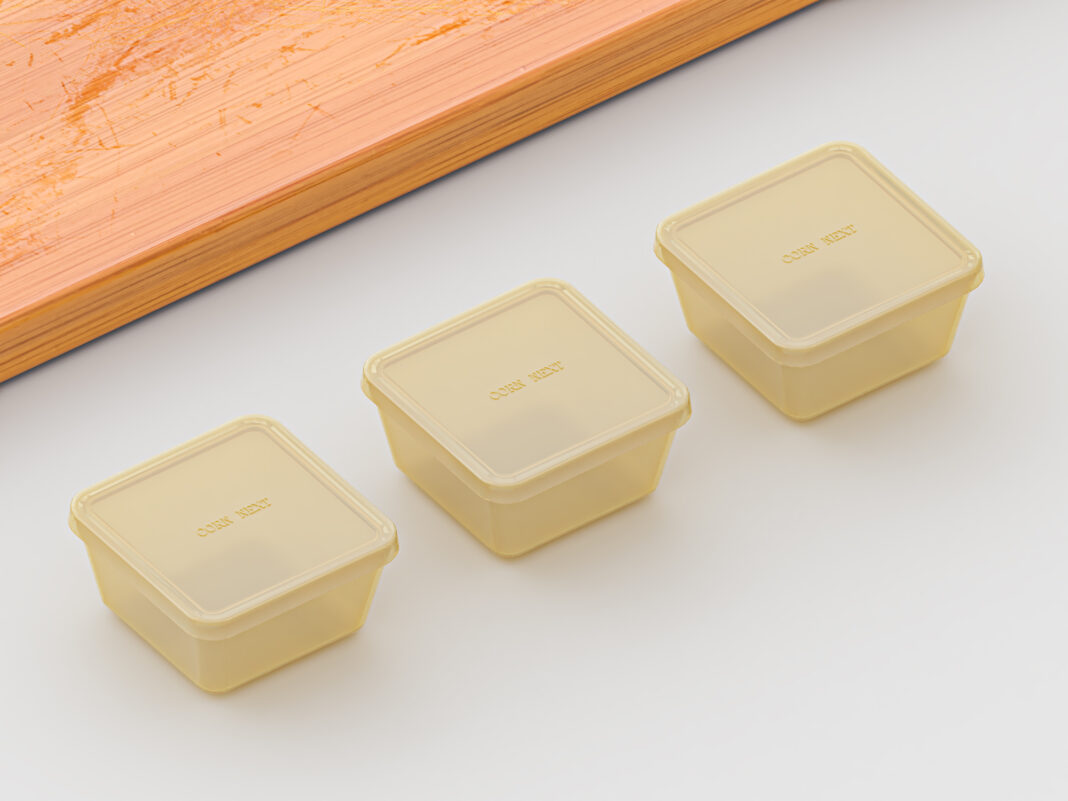


Michael Pollan, in Defence of Food, once called Americans “corn people” for the amount of corn products in their diet. As the world fights to find viable alternatives to plastics, the people may have found the best bio-polymer, made from… corn.

Corn Next has officially launched CornNext-17, a game-changing bio-based material designed to combat the global plastic pollution crisis. CornNext-17 says it can replace traditional plastics. Derived from renewable corn starch, CornNext-17 utilizes a patented fermentation-based process to create a fully biodegradable material with superior versatility and performance.
Related: this edibles company uses Tipa’s biodegradable plastics
Unlike traditional plastics and bio-plastics such as PLA and PHA, CornNext-17 retains its natural polysaccharide structure, enabling rapid decomposition within 30 days in natural environments while maintaining the mechanical properties necessary for diverse applications. We all know that most plastics are never really recycled and when they are the process is toxic. The only solution to the plastic problem is a bio-based plastic. One that can fully decompose and degrade, not just break down into littler bits of plastic.
“CornNext-17 represents a significant leap forward in sustainable materials,” said Randy Yongzhong Zhang, Founder and CEO of Corn Next. “We are proud to offer a solution that addresses the urgent need for environmentally friendly alternatives to conventional plastics. The development of CornNext-17 is guided by our vision to revolutionize how materials are used and discarded. As a fully natural biodegradable innovation, it marks not just a breakthrough in material science, but a significant milestone in humanity’s pursuit of a greener, more sustainable future.”
Key Features of CornNext-17
- Fully Biodegradable: Decomposes naturally within 30 days, leaving no harmful residues.
- Versatile: Suitable for a wide range of applications, including packaging, consumer goods, and industrial components.
- Cost-Effective: Produced through an efficient manufacturing process, offering competitive pricing.
- High Performance: Exhibits excellent mechanical properties, including strength, flexibility, and heat resistance.
- Eco-Friendly: Derived from renewable corn starch and produced without harmful chemicals.
Market Potential and Industrial Applications
CornNext-17 has the potential to transform multiple industries by replacing traditional plastics with a sustainable alternative:
- Consumer Goods: CornNext-17 is ideal for creating compostable tableware, single-use products, food containers, and eco-friendly packaging solutions that cater to environmentally conscious consumers.
- Packaging Industry: The material’s strength, flexibility, and resistance to heat and moisture make it a superior choice for biodegradable packaging, including retail, food, and industrial applications.
- Agriculture: CornNext-17 can be used to manufacture biodegradable mulch films, seedling trays, and irrigation components, reducing waste and enhancing soil health.
- Medical and Healthcare: With its ability to decompose fully, CornNext-17 is well-suited for disposable medical supplies such as gloves, syringes, and packaging, ensuring environmental safety.
- Automotive: Lightweight and durable, CornNext-17 can be utilized in creating automotive components such as panels, trim, and interior parts, contributing to vehicle sustainability and fuel efficiency.
- Electronics: As a biodegradable alternative, CornNext-17 can replace certain plastic components in electronics, helping reduce electronic waste.
The global push for environmentally sustainable materials positions CornNext-17 to capitalize on increasing regulatory support and consumer demand for green products. Its adaptability, cost-effectiveness, and eco-friendly properties provide a competitive edge in addressing the growing plastic pollution crisis.
Corn Next (or Y & J World Inc.) is a biotech company based in Irvine, California and is dedicated to eliminating plastic pollution. Their bio-based material CornNext-17 is a patented, 100% natural, biodegradable material derived from renewable corn starch.
Unlike traditional plastics, CornNext-17 fully decomposes within 30 days without leaving toxins or requiring costly recycling. After eight years of R&D, the company transformed CornNext-17 into a granular form, securing our proprietary technology and expanding its applications. This innovation led to the world’s first corn-based drinking straw, protein spoon, dinner knife, and forks, with future uses in utensils, dental floss, packaging and more
Corn-based plastics for packaging is a market which reached a market size valued at USD 0.56 Billion in 2022 and is projected to reach USD 1.20 Billion by 2030.

Bioplastics are derived from renewable biomass sources such as vegetable fats and oils, corn starch, straw, woodchips, sawdust, algae and recycled food waste. Fashion designers like Stella McCartney use bioplastics in fashion, thanks to companies like Balena, which develop a bio-based raw material that looks and acts like rubber but which decomposes at the end of its life.