
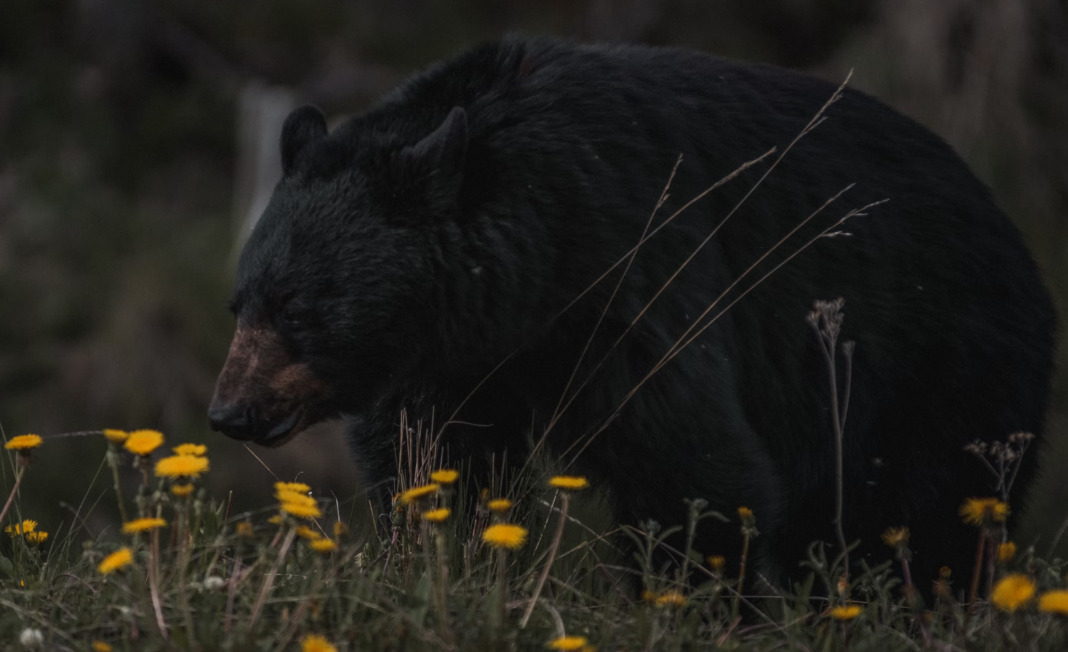
Is bear meat safe to eat?

black bear
A black bear steak?

It may not be a question you ask yourself every day in the city, but if you venture north in countries like Canada where wild bears are a mythical creature to be revered and feared, it just may happen that you will be offered bear meat. My friend hunted a bear on my land in Northern Ontario and a number of my friends spoke about eating the wild meat. It was turned into a well-cooked roast and this was probably a good thing.

According to local media sources in Canada wild game, including bear and deer may be harboring a parasite in its muscle called trichinellosis. If the meat is not cooked well this parasite can spread to your muscles. There are some reported cases documented by the CDC, The Centers for Disease Control.

Human trichinellosis cases in the United States are rare and are usually acquired through consumption of wild game according to the CDC.

Black Bear meat parasites
The Centers for Disease Control presented microscopic evidence of ‘encapsulated larvae in a black bear meat muscle.’ (Centers for Disease Control and Prevention)

Related: Caged bear in Saudi Arabia needs rescuing

They commented on cases of people in the US who had eaten wild black beat from Canada. Among eight people who shared a meal that included the meat of a black bear harvested in Canada and frozen for 45 days, 6 trichinellosis cases were identified. The meat was grilled with vegetables and served rare; two cases occurred in persons who ate only the vegetables. Freeze-resistant Trichinella nativa larvae were identified in remaining meat frozen for less than 15 weeks.

It is possible to eat wild game but it is important to know how to cook it. Cooking meat to an internal temperature of greater than 165°F (74°C) is necessary to kill Trichinella spp. parasites. Trichinella-infected meat can cross-contaminate other foods, and raw meat should be kept and prepared separate from other foods to prevent cross-contamination.

Emily Jenkins, a professor of veterinary microbiology who has done extensive research on zoonotic parasites including trichinella, said the disease “pops up every couple years associated with bear meat” and as recently as 2021, she told the CBC, a state-funded media source from Canada.

She says it often comes up with tourists because Indigenous people who harvest wild animals are aware the meat must  be well cooked: “It’s often tourists, hunters coming from away who will take a souvenir home with them … so it’s fairly common that people who don’t have that protective knowledge are the ones who unfortunately become infected and that they’ve also shared the meat widely because it’s a delicacy, a gourmet thing,” Jenkins said.

“We’ve had massive outbreaks in France, for example, associated with bear meat from Canada, just because people didn’t necessarily have that protective knowledge.”

So if you are offered wild meat from beer, deer, moose or any other animal – make sure it is well done. Eating meat from the wild is essential for many people who live in Northern Ontario, where I have a home. A young buck harvested after a road kill a few days ago gave someone in my family about 40 pounds of meat. That helps take the pressure off of rising bills and is a natural way to live with the wild.

Karin Kloosterman
Karin Kloostermanhttp://www.greenprophet.com
Karin Kloosterman is an award-winning journalist, innovation strategist, and founder of Green Prophet, one of the Middle East’s pioneering sustainability platforms. She has ranked in the Top 10 of Verizon innovation competitions, participated in NASA-linked challenges, and spoken worldwide on climate, food security, and future resilience. With an IoT technology patent, features in Canada’s National Post, and leadership inside teams building next-generation agricultural and planetary systems — including Mars-farming concepts — Karin operates at the intersection of storytelling, science, and systems change. She doesn’t report on the future – she helps design it. Reach out directly to [email protected]

Read More

TRENDING

Idols of Ganesh in Canadian lakes are causing local environmental concerns

Immersing religious idols in Canada's lakes, rivers and coastal waters remains a contentious issue. While the practice is an important tradition for many Hindu communities during festivals such as Ganesh Chaturthi, environmental regulations in many jurisdictions prohibit the disposal of foreign materials into natural waterways, even when the objects are intended as religious offerings.

Are the Great Lakes polluted?

The Great Lakes may look pristine, but a new cleanup report reveals a growing tide of plastic pollution beneath the surface. From cigarette butts and food wrappers to tiny plastic fragments and discarded nicotine pouches, researchers are finding evidence that everyday consumer waste is making its way into North America's largest freshwater ecosystem. New technologies, including Canada's first BeBot beach-cleaning robot, are helping scientists understand how plastic travels through lakes, shorelines and stormwater systems before breaking down into microplastics.

A visit to Amirim, Israel’s first all-vegetarian village in the Galilee

Just 15 kilometers from Tzfat there is a moshav that was founded in the late 50s that was ideologically influenced by organic, vegetarian and vegan principles. My hostess at Ohn-Bar, the tzimmer where I stayed, explained that the people of Amirim were among the pioneers of Israel’s strong vegetarian movement.

What’s in season in June – plus recipes and forager’s notes

Middle Eastern markets are bursting with the color and aromas of summer's soft fruits. This is the guide to getting the most out of June. 

Yerukim Forms a New Green Economy Where the Money is Really Green

The Yerukim members who pick up the recyclables get to keep the monetary reward, the public earns "green" bills that can be used in shops, and business owners get to be associated with environmentalism.

Choosing Riyadh over Dubai? What Investors Should Know

Saudi Arabia is deploying capital at unmatched scale to catalyze tourism and advanced industry while rewiring its power-and-water backbone. The investable frontier is widening—especially in renewables, grid storage, water efficiency/desal retrofits, and hospitality operating platforms. Prudent investors will insist on phased delivery, enforceable KPIs (energy, water, biodiversity), and RHQ/zone compliance—while pricing political-economy and reputational risks alongside growth upside.

Sell your cooking oil for biodiesel money

Want to make money on old french fry oil? Sell it.

Qatar Alternative Energy Summit Pairs Investors And Innovators

Alternative energy investors and innovators can meet n' greet in Doha, Qatar March 16 and 17.

Here’s How To Implement The Four Pillars Of Employee Engagement

If you throw a party for your work team and they are vegans, don't make it a barbecue. Know the sustainability values of your team to boost moral and retain good people.

Locals From Rishon Fight IKEA

Big Box stores are a pretty new concept in Israel, and thank God that not every Israeli city wants them in their backyard. A word from someone who has see the beautiful farmland around her hometown Newmarket, Ontario stripped and converted into vulgar strip malls of big box shops: they have no place in a healthy and sustainable town or city.

The Jewish National Fund Meets An Inconvenient Truth

According to the JNF, it has transformed thousands of acres of barren land into green forests in Israel. They state that each person emits about 23 tons of carbon per year, estimating that each tree planted can absorb one ton of carbon in its lifetime. That's a whole lot of trees you'd need to be planting. Could so many fit in Israel?

How to quiet noise from construction in your office

Streets need to be resurfaced in New York but the humming and grinding noise is unsettling. Noise is environmental pollution. 

Popular Categories