Space travel sunscreen found in new fungus experiment

She invented a new space age sunscreen

Moving to Mars? He’s a new fungus-based sunscreen to protect you from gamma radiation

Planning on traveling aboard SpaceX on a trip to Mars? An American lab just found a new potential sunscreen that creates protective melanin, a low-cost alternative to squid ink. It can be grown on space labs and used on Mars.

Here is the story!

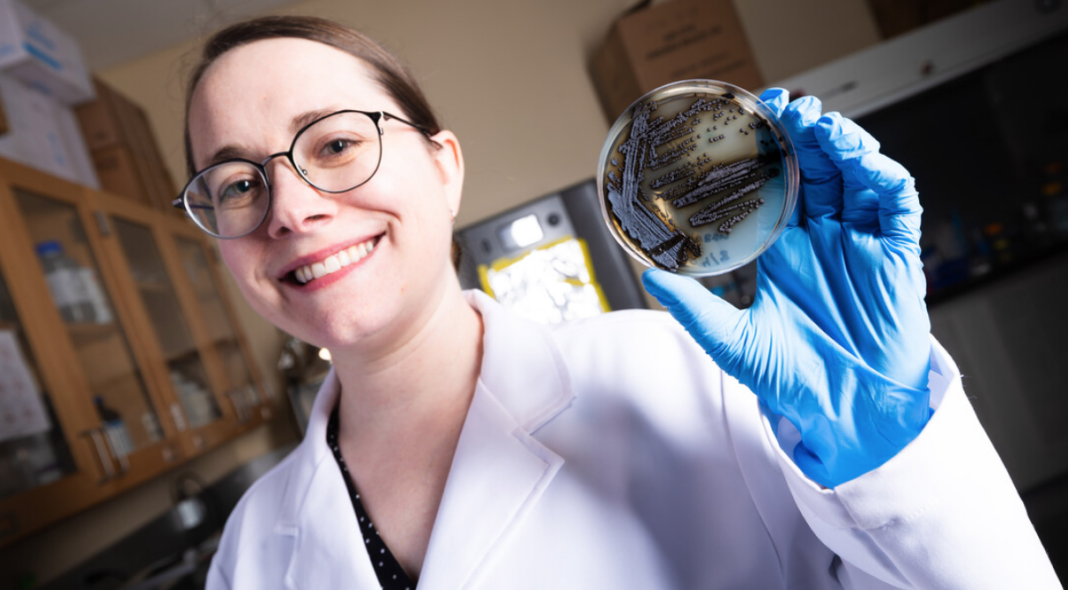
Several years ago, Erin Carr’s doctoral adviser Steven Harris handed her bags of soil collected from the soil crust of a cold British Columbian desert. She went to work on it, suspending it in liquid, plating it onto a growth medium and treating it with antibiotics and antifungals. Then, she replated the tiny black dots that emerged.

Those dots turned out to be a novel fungus — Exophiala viscosa, though Carr dubbed it Goopy — that may just be a resource for large-scale, cost-effective production of melanin, with applications in ultraviolet-protective products and advanced materials for aerospace and other industries.

Related: Mars found a way to store carbon, can we?

Melanin is a natural pigment that determines the color of human skin, hair and eyes. Humans produce it with specialized cells called melanocytes and its concentration directly impacts skin tone, with more melanin resulting in darker skin. Melanin also plays a crucial role in a number of human health concerns: It protects the skin from harmful UV radiation, helping prevent skin cancer and other cancers and reducing inflammation associated with diseases such as diabetes and fatty liver disease.

Acquiring large quantities of melanin is problematic. Its primary source is squid ink, which requires a squid’s death to obtain small amounts, at a cost of about $300 per gram, said Carr, a postdoctoral research associate at Rajib Saha’s Systems and Synthetic Biology Lab in the Department of Chemical and Biomolecular Engineering.

Related: she’s growing food on Mars 

Certain fungi in cold deserts also naturally produce melanin, incorporating it into cell walls and releasing it under certain conditions. That is where Goopy comes in, said Rajib Saha, Richard L. and Carol S. McNeel Associate Professor of Chemical and Biomolecular Engineering and the principal investigator on a three-year, $1,032,070 grant from the National Science Foundation to study the fungi’s potential in melanin production.

The difference between E. viscosa’s production of melanin and other fungi’s is that it “not only produces melanin and not only stores melanin in the membrane, it transports it out,” Saha said.

It is an unusual behavior that could make E. viscosa useful in large-scale melanin production.

Other fungi produce and store melanin but do not excrete it.

One hypothesis is that E. viscosa is partnering with photosynthetic organisms also found in that cold desert crust environment, such as algae and cyanobacteria, and within that relationship, melanin is being exchanged for essential nutrients, Carr said.

Because melanin may be an essential biomolecule for the survival of E. viscosa, its production of the substance may function more as a primary metabolite rather than a secondary, non-essential metabolite, she added.

Saha said the research aims to investigate this symbiosis to uncover the triggers regulating melanin production.

Carr is growing the fungus in a triculture that includes algae and cyanobacteria. Saha and his grad students will run computer metabolic modeling to help optimize and manipulate melanin pathways in the fungus and identify transcription factors used to regulate melanin production.

“We want to figure out how to optimize and increase the melanin secreted out of the cell so that we can use that melanin to do a wide variety of beneficial things for humanity,” Carr said.

That could mean adding it to sunscreen or textiles for UV radiation protection. It could be useful for space travel since melanin has been known to protect against gamma radiation. Melanin also might be useful in bioremediation of so-called “forever chemicals” and toxic metals that linger in the environment.

Read More

TRENDING

Data centers in Space? Sophia Space and Apex plan on busing them in

Can data centers really be built in space? Pasadena-based Sophia Space is partnering with Apex to test the idea by launching modular AI computing systems into low Earth orbit in 2027. Using radiation-hardened compute TILEs cooled by passive radiative systems and mounted on scalable satellite buses, the companies aim to prove that edge computing can operate reliably in space. While challenges remain, the project represents an important step toward distributed orbital computing networks that could support everything from climate monitoring and pollution tracking to autonomous spacecraft navigation in an increasingly crowded orbital environment.

Can a one trillion-Dollar SpaceX IPO change life on earth?

A SpaceX IPO could become one of the most consequential financial events of the century, creating thousands of millionaires and fueling investment across the New Space economy. From orbital robotics and African space programs to launch infrastructure and satellite networks, the ripple effects may extend far beyond Earth—while forcing investors to reconsider whether generative AI remains the most compelling technology bet of the decade.

Do aliens exist? Maybe under new rules set for contact in the age of AI and deepfakes

While we have no evidence of intelligent aliens, astronomers have discovered more than 5,000 planets orbiting other stars. Many lie within regions where liquid water could potentially exist.

Why we might be missing messages from aliens

Alien signals might be getting scrambled near their own stars before they reach Earth, so scientists searching for perfectly clear signals could be missing them.

EU startup aiming to generate energy on moon villages

Stepping up to democratize the moon is an EU-funded company, Deep Space Energy, which has just raised more than $1 million USD as a seed fund to help it create energy generators on the moon.

Yerukim Forms a New Green Economy Where the Money is Really Green

The Yerukim members who pick up the recyclables get to keep the monetary reward, the public earns "green" bills that can be used in shops, and business owners get to be associated with environmentalism.

Choosing Riyadh over Dubai? What Investors Should Know

Saudi Arabia is deploying capital at unmatched scale to catalyze tourism and advanced industry while rewiring its power-and-water backbone. The investable frontier is widening—especially in renewables, grid storage, water efficiency/desal retrofits, and hospitality operating platforms. Prudent investors will insist on phased delivery, enforceable KPIs (energy, water, biodiversity), and RHQ/zone compliance—while pricing political-economy and reputational risks alongside growth upside.

Sell your cooking oil for biodiesel money

Want to make money on old french fry oil? Sell it.

Qatar Alternative Energy Summit Pairs Investors And Innovators

Alternative energy investors and innovators can meet n' greet in Doha, Qatar March 16 and 17.

Here’s How To Implement The Four Pillars Of Employee Engagement

If you throw a party for your work team and they are vegans, don't make it a barbecue. Know the sustainability values of your team to boost moral and retain good people.

Locals From Rishon Fight IKEA

Big Box stores are a pretty new concept in Israel, and thank God that not every Israeli city wants them in their backyard. A word from someone who has see the beautiful farmland around her hometown Newmarket, Ontario stripped and converted into vulgar strip malls of big box shops: they have no place in a healthy and sustainable town or city.

The Jewish National Fund Meets An Inconvenient Truth

According to the JNF, it has transformed thousands of acres of barren land into green forests in Israel. They state that each person emits about 23 tons of carbon per year, estimating that each tree planted can absorb one ton of carbon in its lifetime. That's a whole lot of trees you'd need to be planting. Could so many fit in Israel?

How to quiet noise from construction in your office

Streets need to be resurfaced in New York but the humming and grinding noise is unsettling. Noise is environmental pollution. 

Popular Categories