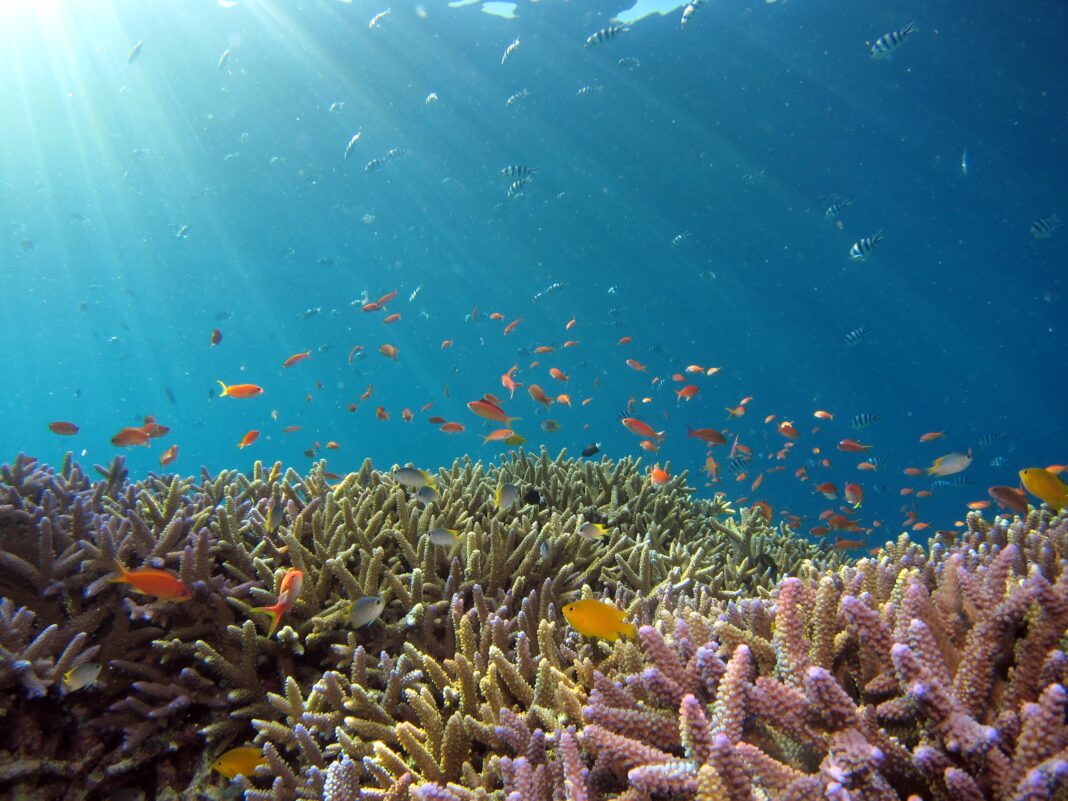


Earth’s oceans cover over 70 percent of the planet’s surface and hold more than 1.3 billion cubic kilometers of water. Inside these vast waters inhabitants over 236,878 marine species, but likely way more as we have only explored 20 percent of the oceans. Today, we estimate that the ocean is roughly 11,000 meters at its deepest point.
Just like any other ecosystem, it is imperative to protect the numerous species that inhabit the deep sea. Deep sea mining is now threatening these species due to the discovery of rich minerals such as cobalt and lithium that can be found in seabeds.
The International Sea Bed Council has already put in approval of plans for work as early as September. Luckily, the DSCC is working amongst other NGOs to stop companies from committing these devastating ocean effects.
There are three types of mining that are in the plans to take place. Polymetallic nodules from the abyssal plains, cobalt crusts from seamounts, and polymetallic sulphides from hydrothermal vents. These underwater areas are rich in biodiversity and threatened to be destroyed if the mining takes place. Since much of the ocean has not been explored, we don’t know the severity of the mining, and can be more destructive than we expect.
This is why it is so important to get on board with the DSCC, fisheries, and law and policy enforcement to ensure that permits do not go out to allow this mining. According to the DSCC, scientists have warned us that the impacts of deep-sea mining are inevitable and most likely irreversible.
“The last thing we need is deep sea mining digging ourselves into a deeper hole,” says Louisa Casson at GreenPeace on a conference call Green Prophet joined recently.
The risks that deep sea mining imposes are numerous: The disturbance of natural seabeds and ecosystems creates plumes of sediment that can threaten species’ habitats and threaten extinction. Plumes can also be created through the deposit of wastewater in the mining process that can spread hundreds of square kilometers. It also generates a lot of noise pollution which greatly disturbs species.
According to a study released by Green Peace, the noise pollution that deep sea mining creates can disrupt whales’ ability for frequency navigation, communication between breeding partners, and communication between mothers and calves. And with these frequencies operating 24 hours a day, there is significant detrimental harm to species of whales for the long haul.

“Seabed mining is not a climate solution, it’s a potential climate disaster,” said Bobbi-Jo of The Ocean Foundation on the same call we jumped in on meant to bring journalists up to date with the latest research. With the goal of seabed mining being to provide cobalt and nickel to the EV electric vehicle industry, seabed mining is not going to help these industries much because lithium is most important to this industry for its batteries and is not found in large quantities in the polymetallic nodules of ocean beds. For this reason, seabed mining would be disturbing the sea floor and the marine ecosystems unnecessarily.
Seabed mining can not be marketed as a climate solution because it does not make mining on Earth any less. Although seabed mining may take away from mining on land, it shifts it to mining underwater and further disrupts the earth’s surface, just now underwater.
This makes people think that we are finding solutions to climate issues on land, but they are just moving it underwater where people can not visibly see the damage.
The Canadian company The Metals Company or TMC is a leading proponent of seabed mining. TMC has been called out numerous times because they have put out misleading statements to investors. The company has had two class action cases after failing to disclose information and downplaying reality. They make themselves look like they are doing good work for the metals industry, when in actuality they are heading towards massive blocks from moratorium and difficulties financing their commissions.
Fortunately, countries all over the world are coming together to address and moratorium deep sea mining. “We are seeing a coalition of countries from the Pacific, Latin America, and Europe all making statements,” said Casson from GreenPeace. There is cross-regional support for a moratorium on deep sea mining as statements are being released and a silent majority were against deep sea mining. Governmental and NGO officers showed overwhelming support for the moratorium. Specifically in France and Germany, governments were for deep-sea mining, but as evidence was released that proved the destructive effects of deep-sea mining, these countries turned around and decided there was no future for deep-sea mining.
It is in the hands of activists, NGOs, and others to speak up against deep-sea mining and continue to push for a moratorium on deep-sea mining. As long as we continue to push these scientific facts globally, we can convince nations all over the world to a global moratorium. Deep sea mining is destructive to marine ecosystems and cannot be allowed in any way, shape, or form.