
How Islamic-era agriculture points way to sustainable farming methods

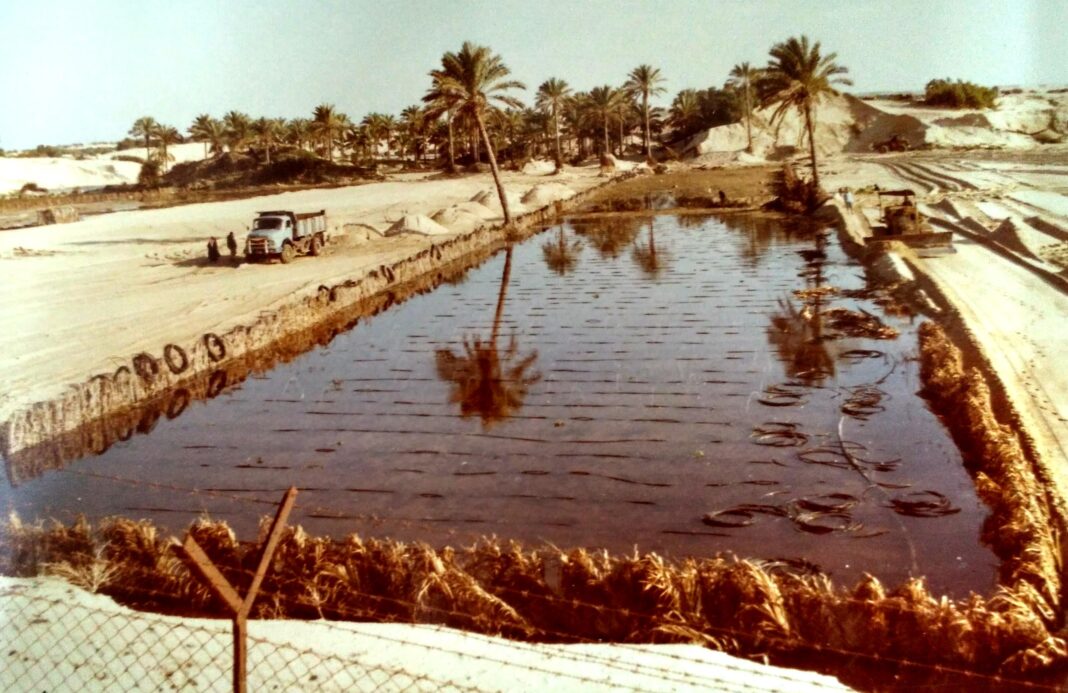
Flooded Mawasi plot (1983) along southern coast of the Gaza StripCredit: Yair Friman
Flooded Mawasi plot (1983) along southern coast of the Gaza Strip Credit: Yair Friman

The researchers suggest that the early Islamic agroecosystems were ahead of their time

As global water resources become more strained, the insights gained from traditional agricultural systems could pave the way for the development of innovative, low-water-use agricultural practices to confront the growing challenges of water scarcity and food insecurity in arid and marginal regions.

A new study exploring traditional sunken groundwater-harvesting agroecosystems in coastal and inland sand (SGHAS) bodies of Israel, Iran, Egypt, Algeria, Gaza, and the Atlantic coast of Iberia offers fresh perspectives on ancient agricultural techniques that could inform modern sustainability practices.

The research, which combines geospatial analysis, archaeological findings, and historical documentation, sheds light on the innovative use of water-harvesting and soil-enrichment technologies developed in the early Islamic period and their continued relevance to contemporary agricultural challenges.

The paper stems from an international workshop at Bar-Ilan University (BIU) in 2023 on continuity-discontinuity of ancient water-harvesting agricultural systems that resulted in a special issue in the journal Environmental Archaeology.

This study on early Islamic (late 9th – early 12th century) Plot-and-Berm (P&B) agroecosystems located along Israel’s Mediterranean coast evolved into an investigation of the long-term viability of regional SGHAS as a sustainable agricultural model.

These methods to utilize water, typically found near urban settlements, leverage local organic material and urban refuse to enrich the inert sandy substrate, creating fertile grounds for growing crops such as vegetables, watermelons, dates, and grapes. Importantly, SGHAS systems provide a model for long-term water security by utilizing shallow groundwater in conjunction with rainfall for irrigation and groundwater replenishment.

The Israel Science Foundation-funded study was jointly headed by Prof. Joel Roskin from the Department of Environment, Planning and Sustainability at BIU and Dr. Itamar Taxel, Archaeological Research Department, Israel Antiquities Authority, along with post-docs Drs. Lotem Robins and Ruben Sanchez (BIU), Prof. Revital Bookman and doctoral candidate M.Sc. Adam Ostrowski (U. of Haifa).

Despite their initial success, early Islamic P&B agricultural systems in Israel were largely abandoned after the Crusader conquest and, surprisingly, were not reestablished. However, these traditional systems found renewed application in regions such as Iran, Algeria, the Gaza Strip, and parts of Iberia since the Middle Ages, where they continue to support agriculture in marginal environments.

With many arid and marginal regions facing expanding populations and decreasing water resources, these ancient water-harvesting practices can address the global challenge of sustainable agriculture.

The long-term use of these agroecosystems contributed to continuous, shallow groundwater availability, which is essential for agricultural production and local food security in arid regions. These systems, which include advanced soil-enrichment techniques and groundwater harvesting methods, show the resilience of traditional agricultural practices and their potential for modern adaptation in water-scarce regions.

Navazo Spain: Oblique aerial photo of modern Navazo agriculture by Sanlucar de Barrameda, Spain. The green pool water is next to a shallow well in the shed by the palm and shady vegetated berms are in the background.Photo courtesy R. Sanchez
Masseira agriculture north in Apulia, northwestern Portugal. Seaweed is collected for sand enrichment. The plot and berm are utilized by irrigation from well into 1 m deep groundwater. Today a wide range of local family-farm produce is sold at stands. Seaweed photos courtesy of Álvaro Campelo. Additional photos by Prof. Joel Roskin. 

The researchers suggest that the early Islamic agroecosystems were ahead of their time, offering a glimpse into agricultural practices that were remarkably advanced compared to later agricultural systems. This understanding helps explain the approximately 400-year gap between the abandonment of early Islamic systems and the reappearance of SGHAS in the 15th century.

“We could not find written or factual evidence of the crops grown in early Islamic times, nor decipher the know-how and motivation for this original, exhaustive and ingenious effort to earthwork, enrich and cultivate sand. However, the inception of traditional Middle Age on SGHASs probably stemmed from a growing demand to cultivate the extensive new world influx of fruits and vegetables from arid zones and the Americas,” notes Prof. Roskin.

“We speculate that the Islamic agroecosystems provided several similar species to those found today in the traditional SGHASs. The reappearance in the Middle Ages and third expansion of SGHASs in the late 19th century early 20th century in Iberia suggests that this type of agriculture is adaptable to varying economic and cultural settings and therefore may possess potential for certain, current socio-agronomic scenarios.”

Masseira gallery: Masseira agriculture north in Apulia, northwestern Portugal. Seaweed is collected for sand enrichment. The plot and berm are utilized by irrigation from well into 1 m deepgroundwater. Today a wide range of local family-farm produce is sold at stands.

Seaweed photos courtesy of Álvaro Campelo. Additional photos by Prof. Joel Roskin.
Navazo Spain: Oblique aerial photo of modern Navazo agriculture by Sanlucar de Barrameda, Spain. The green pool water is next to a shallow well in the shed by the palm and shady vegetated berms are in the background. Photo courtesy R. Sanchez

While modern agriculture often relies on intensive water usage and depleting soil quality, traditional systems like SGHAS offer more sustainable, low-impact alternatives that can be adapted to contemporary needs. The study highlights the value of traditional agroecosystem models as analogues for contemporary agricultural challenges, particularly in the face of climate change and global food security concerns. While traditional agricultural methods cannot entirely replace modern, industrialized farming, they remain valuable in preserving local knowledge and expertise that have been honed over centuries. The study underscores the potential for integrating traditional agricultural practices—such as SGHAS—into modern sustainable agriculture solutions, particularly for communities facing water scarcity and environmental stresses.

The research further suggests that SGHAS-style systems, which rely on rainfall-replenished groundwater, offer a pathway for community-driven, ecologically sensitive farming practices. These systems are not only sustainable but also promote community engagement, resilience to climate change, and environmental stewardship. As traditional farming methods gradually fade in the face of industrial agriculture, these agroecosystems offer important models for creating locally adaptive, sustainable food systems.

Karin Kloosterman
Karin Kloostermanhttp://www.greenprophet.com
Karin Kloosterman is an award-winning journalist, innovation strategist, and founder of Green Prophet, one of the Middle East’s pioneering sustainability platforms. She has ranked in the Top 10 of Verizon innovation competitions, participated in NASA-linked challenges, and spoken worldwide on climate, food security, and future resilience. With an IoT technology patent, features in Canada’s National Post, and leadership inside teams building next-generation agricultural and planetary systems — including Mars-farming concepts — Karin operates at the intersection of storytelling, science, and systems change. She doesn’t report on the future – she helps design it. Reach out directly to [email protected]

Read More

TRENDING

Abortion Pills, Plan B and Mifepristone and what the new US mail ban means

Abortion pills, often confused with Plan B (the morning-after pill), and historically referred to as RU486 (mifepristone), are part of a broader category of reproductive health medications that women have been using for decades. But they are not the same thing.

Monitoring farmers’ tillage patterns from space

Tillage is one of the clearest signals of how a farm treats its soil. Intensive plowing can degrade structure, release carbon, and increase erosion. Conservation practices—no-till, cover cropping, minimal disturbance—do the opposite. They build soil, retain water, and support biodiversity. But until now, measuring these practices at scale has been slow, expensive, and often self-reported.

Tony Cho’s model for regenerative cities

Tony Cho is a regenerative developer and community builder focused on designing cities as living ecosystems that support human connection and ecological balance. A key figure in Miami’s urban transformation, he helped shape the Wynwood Arts District and founded the Magic City Innovation District. Influenced by an unconventional upbringing that included time in an ashram, Cho brings a spiritual lens to real estate, blending culture, community, and capital into what he calls regenerative placemaking.

Jujube, the sidr tree of medicine and magic

A magic holy sidr bath to deflect the evil eye? It needs 7 powdered sidr leaves stirred into a bucket of warm water. The hadith of the Prophet Muhammad allows to repeat healing prayers and verses from the Koran to increase the water’s potency. 5 grams, or 1 tablespoon of sidr powder equals 7 leaves.

Yalla Parkour – A Gaza documentary of the movement before the war

Yalla Parkour, directed by Areeb Zuaiter, captures this culture from within. The film follows Zuaiter’s long relationship with Ahmed Matar, a parkour athlete in Gaza, as she reflects on loss, memory, and belonging after the death of her mother. What begins as a personal search gradually opens into a portrait of how movement shapes young lives under constraint.

How to quiet noise from construction in your office

Streets need to be resurfaced in New York but the humming and grinding noise is unsettling. Noise is environmental pollution. 

EarthX and a blueprint for sustainable investing

Trammell S. Crow, a Dallas-based businessman and father of four, is focusing his efforts on impact investing, and media that focuses on saving the planet through EarthX.

Mining Afghanistan’s Mineral Discoveries Similar to Avatar

Now that American forces in Afghanistan are commemorating the longest period of any war that America has been involved in, including the 1965-73 Vietnam War, the recent discoveries of large and extremely valuable mineral and metal deposits may finally bring to light a reason to continue the presence of US fighting forces in this war torn and backward country.

From Pilot Plant to Global Stage: How Aduro Clean Technologies’ 2026 Expansion Signals a Turning Point for Chemical Recycling Investors Like Yazan Al Homsi

The company's Next Generation Process (NGP) Pilot Plant in London, Ontario, has officially moved into initial operating campaigns, generating the kind of structured, repeatable data that separates laboratory promise from commercial viability.

Nobul’s Regan McGee on Shareholder Value: “Complacency Is the Silent Killer” 

Why the governance framework designed to protect shareholders so...

Should You Invest in the Private Market?

startustartup Unlike public stock exchanges, which offer daily trading, strict...

How to build a 100-year-company

Kongō Gumi is a Japanese construction company, purportedly founded in 578 A.D., making it the world's oldest documented company. What can we learn about building sustainable businesses from them?

How AI Helps SaaS Companies Reduce Repetitive Customer Support Work

SaaS products are designed for large numbers of users with different levels of experience, and also in renewable energy.

Popular Categories