
Magic and Islam

Muslim stones for warding off the evil eye
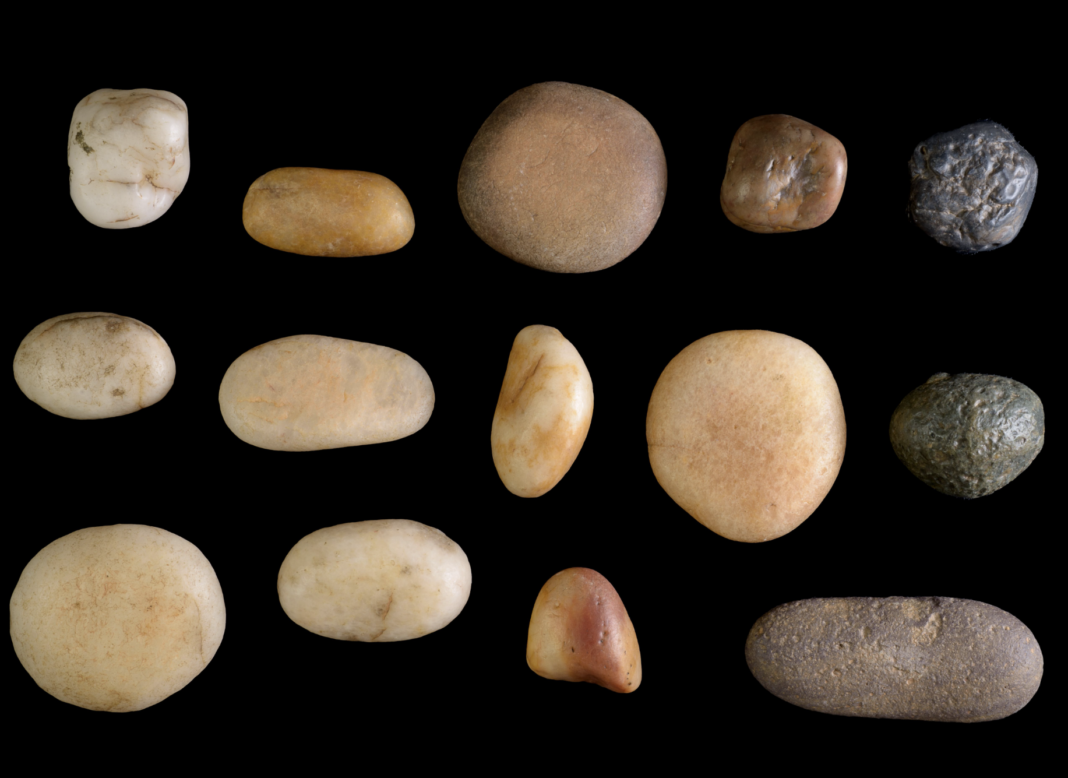
When Muslim pilgrims talked to sorcerers on their way to Mecca: Muslims used stones for warding off the evil eye. A pile of unusual magical objects was uncovered in Israel and believed to be used by sorcerers helping pilgrims on their way to Mecca in Saudi Arabia.

On the road to Mecca in Saudi Arabia four hundred years ago, one could stop at a professional sorcerer: it seems that Muslim pilgrims walking from Cairo in Egypt to Mecca in the Arabian Peninsula would make a stop at these professional sorcerers. Dinns are a real thing in Islam, so beware if you cross one when out on a pilgrimage or if one enters your home. This guide may help you get the dinns out.

You know about the Evil Eye and hamsa, hamsa, hamsa for keeping it away? It’s an old practice in the Middle East. Finding some sources to superstitions are the strange magical tools found along pilgrim routes and described by Israeli researchers in the Journal of Material Cultures in the Muslim World. The researchers found stones and sculptures, some broken, and guess these objects were used in magical rituals carried out in order to ward off the evil eye, to heal diseases and more.

According to the researchers, “This discovery reveals that people in the Early Ottoman Period—just as today—consulted popular sorcerers, alongside the formal belief in the official religion.”

Muslim stones for warding off the evil eye
Archeology site where camp with magical objects was found

Itamar Taxel of the Israel Antiquities Authority, Uzi Avner of the Dead Sea-Arava Science Center, and Nitzan Amitai-Preiss of the Hebrew University of Jerusalem were involved in the study that looked at the objects found in the Eilat region in the 1990s.

The group of objects is associated with rituals or ceremonies and comprises predominantly dozens of fragments of clay globular rattles, mostly similar to table tennis balls, containing small stones, that sound when the rattle was shaken. There were 2 miniature votive incense altars found, a small figurine of a naked woman or a goddess with raised hands, a characteristic feature of deities or priests; a few other figurines, and crystal pebbles.

The examination of the clay used for the ceramic objects has shown that they came from Egypt.

This is the first time that such a large assemblage of ritual objects of this kind has been found, and it is even more unique at a temporary site and not a permanent settlement.

A magical sculpture endowed with properties then broken?

The magical objects were found next to the Pilgrimage Road (Darb al-Hajj, in Arabic) that led from Cairo, crossed the Sinai Peninsula, and continued in the region of Eilat to the town of Aqaba, and then crossed the Arabian Peninsula on the way to Hajj in Mecca and Medina. This route was in use from the first centuries after the rise of Islam, from the 7th century to the 19th century.

“The spot of these artifacts next to the camping site, and the comparison of the artifacts to those known in the Muslim world, as well as the fact that these artifacts were found together as a group, lead to the understanding that they were used in magical rituals,” the researchers announce, adding:

“The artifacts were found broken, and they may even have been purposely broken in the ceremonies. It seems that these rituals were carried out at the site by one or several people who specialized in popular magical ceremonies. From the literary sources, we know that there was a demand for magical rituals among people from different strands of society. Such rituals were carried out daily alongside the formal religious rituals—including in the Muslim world—and it is probable that the pilgrims making their way to the holy cities of Mecca and Medina were no exception,” they add.

The Darb el-Haj road will be part of tourism and educational activities in Israel showing how cultures past lived their lives in the Holy Land.

Karin Kloosterman
Karin Kloostermanhttp://www.greenprophet.com
Karin Kloosterman is an award-winning journalist, innovation strategist, and founder of Green Prophet, one of the Middle East’s pioneering sustainability platforms. She has ranked in the Top 10 of Verizon innovation competitions, participated in NASA-linked challenges, and spoken worldwide on climate, food security, and future resilience. With an IoT technology patent, features in Canada’s National Post, and leadership inside teams building next-generation agricultural and planetary systems — including Mars-farming concepts — Karin operates at the intersection of storytelling, science, and systems change. She doesn’t report on the future – she helps design it. Reach out directly to [email protected]

Read More

TRENDING

10 Amazing Facts About the Sidr Tree

Most people in the West have never heard of the Sidr tree. That's strange when you think about it. This tough, thorny desert tree has fed people, bees, birds, and camels for thousands of years. It appears in Islamic tradition. Its honey sells for astonishing prices.

Farmer Focus Sold as Humane and Halal. PETA Says the Reality Is Far Less Ethical

According to documents obtained by PETA, and sent to Green Prophet, Farmer Focus accumulated 40 violations from the Harrisonburg-Rockingham Regional Sewer Authority between January and March 2026 for overly acidic wastewater and excessive pollutant levels.

Al-Khidr: Islam’s Original Green Prophet

Long before "sustainability" entered the modern lexicon, Islamic tradition had its own ecological saint. His name is Al-Khidr — The Green One. He appears briefly in the Quran, yet his presence has shaped Islamic thought, Sufi mysticism, and folk tradition across fourteen centuries. Today, he's emerging as an unexpected symbol for Muslims thinking seriously about the environment.

Muslim vegetarians? More young Muslims are saying yes

The halal food market is now worth trillions globally, and companies are beginning to notice growing demand for halal-certified vegetarian and vegan products.

Jujube, the sidr tree of medicine and magic

A magic holy sidr bath to deflect the evil eye? It needs 7 powdered sidr leaves stirred into a bucket of warm water. The hadith of the Prophet Muhammad allows to repeat healing prayers and verses from the Koran to increase the water’s potency. 5 grams, or 1 tablespoon of sidr powder equals 7 leaves.

Locals From Rishon Fight IKEA

Big Box stores are a pretty new concept in Israel, and thank God that not every Israeli city wants them in their backyard. A word from someone who has see the beautiful farmland around her hometown Newmarket, Ontario stripped and converted into vulgar strip malls of big box shops: they have no place in a healthy and sustainable town or city.

The Jewish National Fund Meets An Inconvenient Truth

According to the JNF, it has transformed thousands of acres of barren land into green forests in Israel. They state that each person emits about 23 tons of carbon per year, estimating that each tree planted can absorb one ton of carbon in its lifetime. That's a whole lot of trees you'd need to be planting. Could so many fit in Israel?

How to quiet noise from construction in your office

Streets need to be resurfaced in New York but the humming and grinding noise is unsettling. Noise is environmental pollution. 

EarthX and a blueprint for sustainable investing

Trammell S. Crow, a Dallas-based businessman and father of four, is focusing his efforts on impact investing, and media that focuses on saving the planet through EarthX.

Mining Afghanistan’s Mineral Discoveries Similar to Avatar

Now that American forces in Afghanistan are commemorating the longest period of any war that America has been involved in, including the 1965-73 Vietnam War, the recent discoveries of large and extremely valuable mineral and metal deposits may finally bring to light a reason to continue the presence of US fighting forces in this war torn and backward country.

From Pilot Plant to Global Stage: How Aduro Clean Technologies’ 2026 Expansion Signals a Turning Point for Chemical Recycling Investors Like Yazan Al Homsi

The company's Next Generation Process (NGP) Pilot Plant in London, Ontario, has officially moved into initial operating campaigns, generating the kind of structured, repeatable data that separates laboratory promise from commercial viability.

Nobul’s Regan McGee on Shareholder Value: “Complacency Is the Silent Killer” 

Why the governance framework designed to protect shareholders so...

Should You Invest in the Private Market?

startustartup Unlike public stock exchanges, which offer daily trading, strict...

Popular Categories