Half of all medical cannabis doses labeled incorrectly

Medical cannabis mislabeled
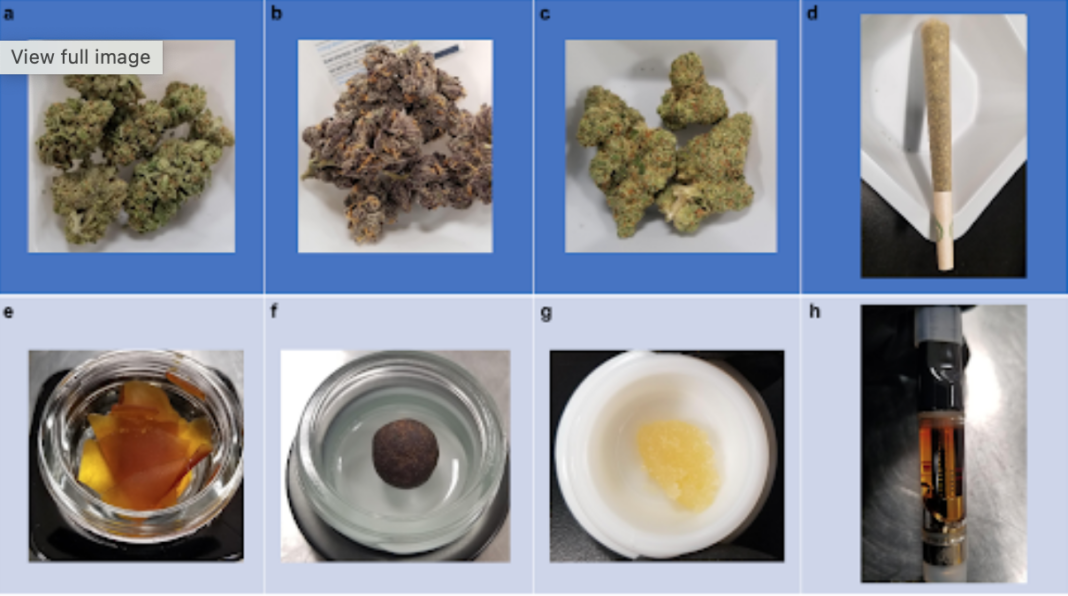
A wild mislabeling of THC in cannabis products when you buy flowers. A sampling of cannabis products, purchased at Colorado dispensaries and analyzed for the study.

Medical cannabis can be a life saver for children and adults with epilepsy. It helps alleviate cancer pain and it’s been shown to help certain people with PTSD. But not all cannabis plants have the same potency of medically active ingredients such as THC and CBD. And a new study has shown that even though there are measures in place to estimate potencies and doses in actual practice the labels are wildly inaccurate.

Researchers weigh in and report that nearly half of cannabis flower products are inaccurately labeled when it comes to potency, with most showing they contain more THC than they really do. Meanwhile, labels on cannabis concentrates tend to be accurate, with 96% shown to match what’s inside.

Related: Charlotte’s web and cannabis 

That’s the takeaway from a new analysis of products sold at dispensaries across Colorado—the first state to legalize recreational marijuana. The study, published this month in the journal Scientific Reports, is the first comprehensive label audit of legal market cannabis to date.

“Cannabis use has complex and wide-ranging effects, and we are working hard to better understand them,” said senior author Cinnamon Bidwell, associate professor of psychology and neuroscience at CU Boulder. “While that research plays out, we should, at the very least, be providing accurate information about the amount of THC in these products.”

The study was funded by the Institute of Cannabis Research, the state’s official cannabis research institute, and conducted in collaboration with MedPharm Research, LLC, a licensed cannabis testing facility, manufacturer and retailer. Under federal law, university scientists are not allowed to handle legal market cannabis for research, so collaborating with industry is critical.

quit smoking
Cannabis flowers, usually smoked, are inaccurately labeled

For the study, a secret shopper from MedPharm traveled the state to obtain 277 products from 52 dispensaries across 19 counties. The sampling included 178 flower products and 99 smokable concentrates. No edibles were included in this phase of the study.

The shopper shared label photos with Bidwell’s team. Then the samples, marked only with a number, were tested by MedPharm chemists who hadn’t seen the labels. Data analysis showed that flower products contained on average about 21% THC, or tetrahydrocannabinol—the main psychoactive ingredient in cannabis. Concentrates contained 71% THC on average, with some containing as much as 84%. In the 1980s, the typical THC content in marijuana was around 8%.

“THC content has increased significantly, and we know that greater THC exposure is likely associated with greater risks, including risk of cannabis use disorder and some mental health issues,” notes Bidwell.

Products were considered “accurately labeled” if they contained within 15% of the THC amount shown on the label—the same threshold the state uses. About 44% percent of flower products failed to meet that standard, with 54 of those products inflating their THC content and 23 containing more THC than the label indicated. Only four concentrate products were labeled inaccurately.

cannabis oil woman
Cannabis oil and extracts is a better bet for dosing

“When it comes to concentrates, I would say Colorado gets a good grade for labeling accuracy, but there are some real issues with flower,” said Bidwell.

The study also looked at several other cannabinoids, including cannabidiol (CBD), cannabigerol (CBG), and cannabigerolic acid (CBGA). Notably, CBG and CBGA, which have been associated with anti-inflammatory and anti-anxiety properties, were more abundant than CBD in products across categories. But Colorado law only requires that companies put CBD levels on the label.

“Focusing on THC on the label can actually do a disservice for consumers, because it creates an environment in which people buy based solely on THC content,” said Bidwell. “Our data suggests that multiple other cannabinoids should also be reported.”


 

Read More

TRENDING

Cannabis use linked to anxiety and depression

Teens smoke but cannabis is not good for mental health: new study from Canada

Key Rules Recreational Cannabis Users Must Follow in Pittsburgh

Adults who are 21 or older can carry up to 30 grams. This amount applies to personal use within Pittsburgh’s limits. Carrying more could lead to confiscation or legal action. Staying under the limit avoids problems during any public stop.

Stoned and driving? High THC levels might not mean you are impaired

Based on the results from the driving simulation, participants with elevated baseline concentrations of THC did no worse on a driving simulator compared with participants who were below per se cut-off points. Altogether, the results add to a growing body of evidence showing that current per se THC blood limit laws lack scientific credibility as face-value evidence of impairment.

American college trains medical students on how to treat with cannabis

Students also gain hands-on experience in caring for patients using cannabis, as well as any other medications and illicit substances, after they begin their clinical rotations, he added. 

Medical cannabis Syqe lays off 30% of its workforce

This backing gave Syqe financial muscle and strategic reach—but also raises reputational and strategic risks, given tobacco’s fraught public perception in the health space. Imagine if McDonald’s bought into a regenerative kale farm. The cash infusion could scale production, but people would always wonder if the lettuce was being served with a side of fries. 

Yerukim Forms a New Green Economy Where the Money is Really Green

The Yerukim members who pick up the recyclables get to keep the monetary reward, the public earns "green" bills that can be used in shops, and business owners get to be associated with environmentalism.

Choosing Riyadh over Dubai? What Investors Should Know

Saudi Arabia is deploying capital at unmatched scale to catalyze tourism and advanced industry while rewiring its power-and-water backbone. The investable frontier is widening—especially in renewables, grid storage, water efficiency/desal retrofits, and hospitality operating platforms. Prudent investors will insist on phased delivery, enforceable KPIs (energy, water, biodiversity), and RHQ/zone compliance—while pricing political-economy and reputational risks alongside growth upside.

Sell your cooking oil for biodiesel money

Want to make money on old french fry oil? Sell it.

Qatar Alternative Energy Summit Pairs Investors And Innovators

Alternative energy investors and innovators can meet n' greet in Doha, Qatar March 16 and 17.

Here’s How To Implement The Four Pillars Of Employee Engagement

If you throw a party for your work team and they are vegans, don't make it a barbecue. Know the sustainability values of your team to boost moral and retain good people.

Locals From Rishon Fight IKEA

Big Box stores are a pretty new concept in Israel, and thank God that not every Israeli city wants them in their backyard. A word from someone who has see the beautiful farmland around her hometown Newmarket, Ontario stripped and converted into vulgar strip malls of big box shops: they have no place in a healthy and sustainable town or city.

The Jewish National Fund Meets An Inconvenient Truth

According to the JNF, it has transformed thousands of acres of barren land into green forests in Israel. They state that each person emits about 23 tons of carbon per year, estimating that each tree planted can absorb one ton of carbon in its lifetime. That's a whole lot of trees you'd need to be planting. Could so many fit in Israel?

How to quiet noise from construction in your office

Streets need to be resurfaced in New York but the humming and grinding noise is unsettling. Noise is environmental pollution. 

Popular Categories