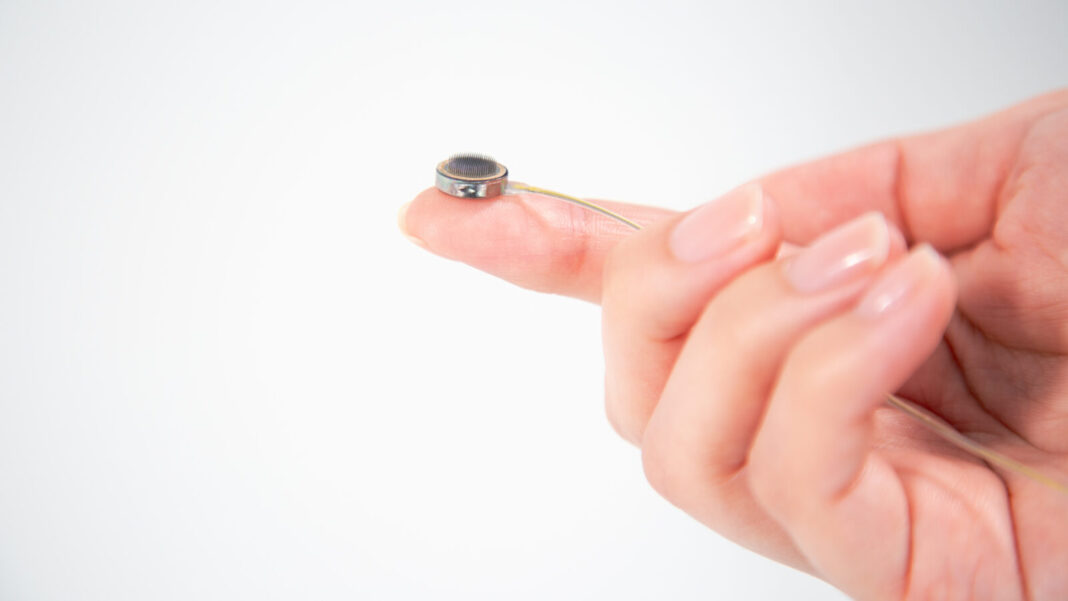
Neuralink rival gets FDA approval for brain implant device

Paradromics brain implant

Neuralink, developed by Elon Musk, promises to help people who are paralyzed operate a computer with their thoughts. While first trials are being sought in humans with mobility issues we can imagine a future, (or not!), where humans are interlinked through our brains. It takes a massive amount of funding to build such a dream and now Neuralink is getting some competition, usually a good thing.
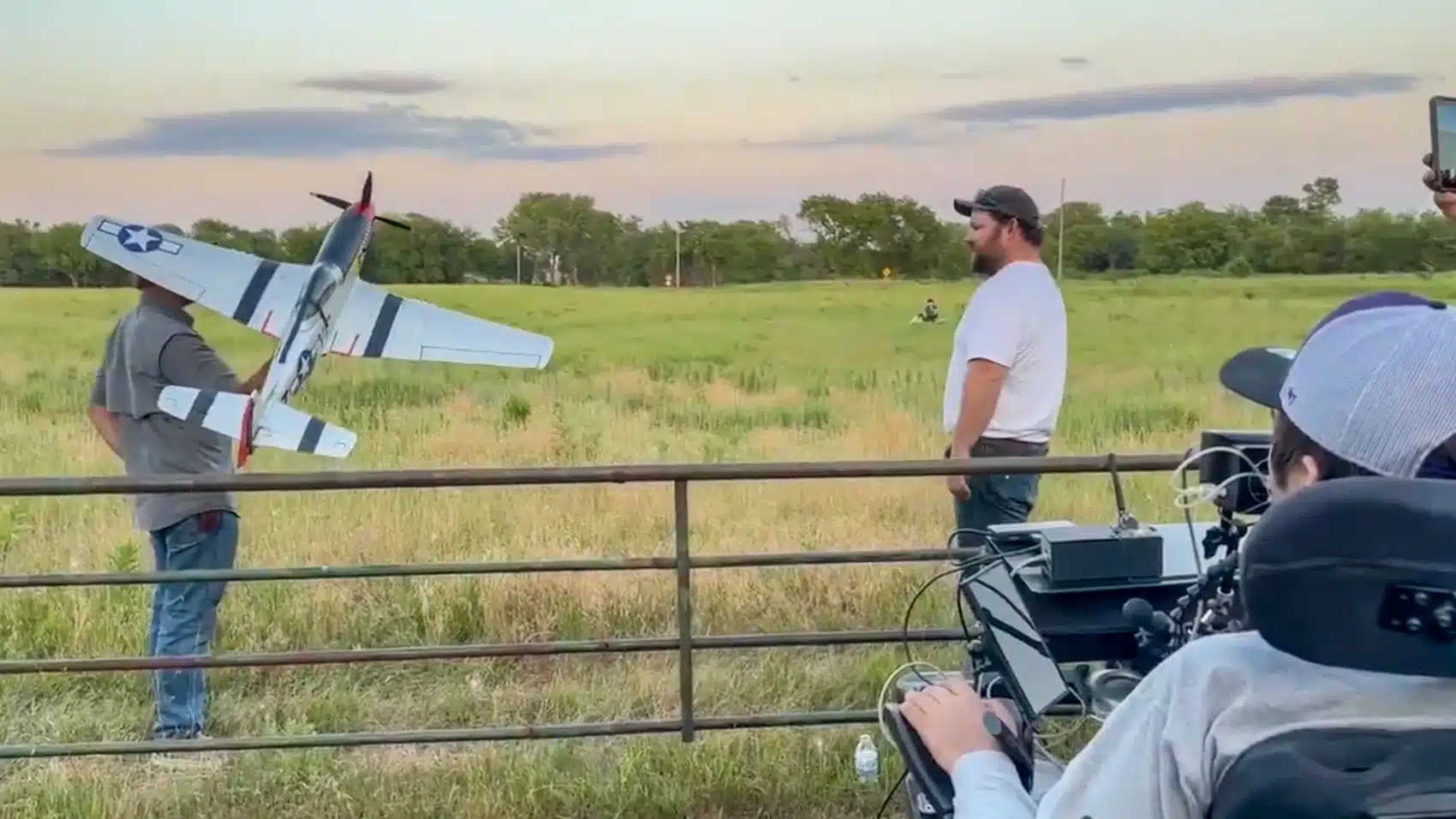
Alex Conley just did something that most of us just have dreamed of: he flew an RC Airplane with just his thoughts. And the best parts is not that he just flew it, he also wrote the code for Arduino to control the plane. All this, from his electric wheelchair.

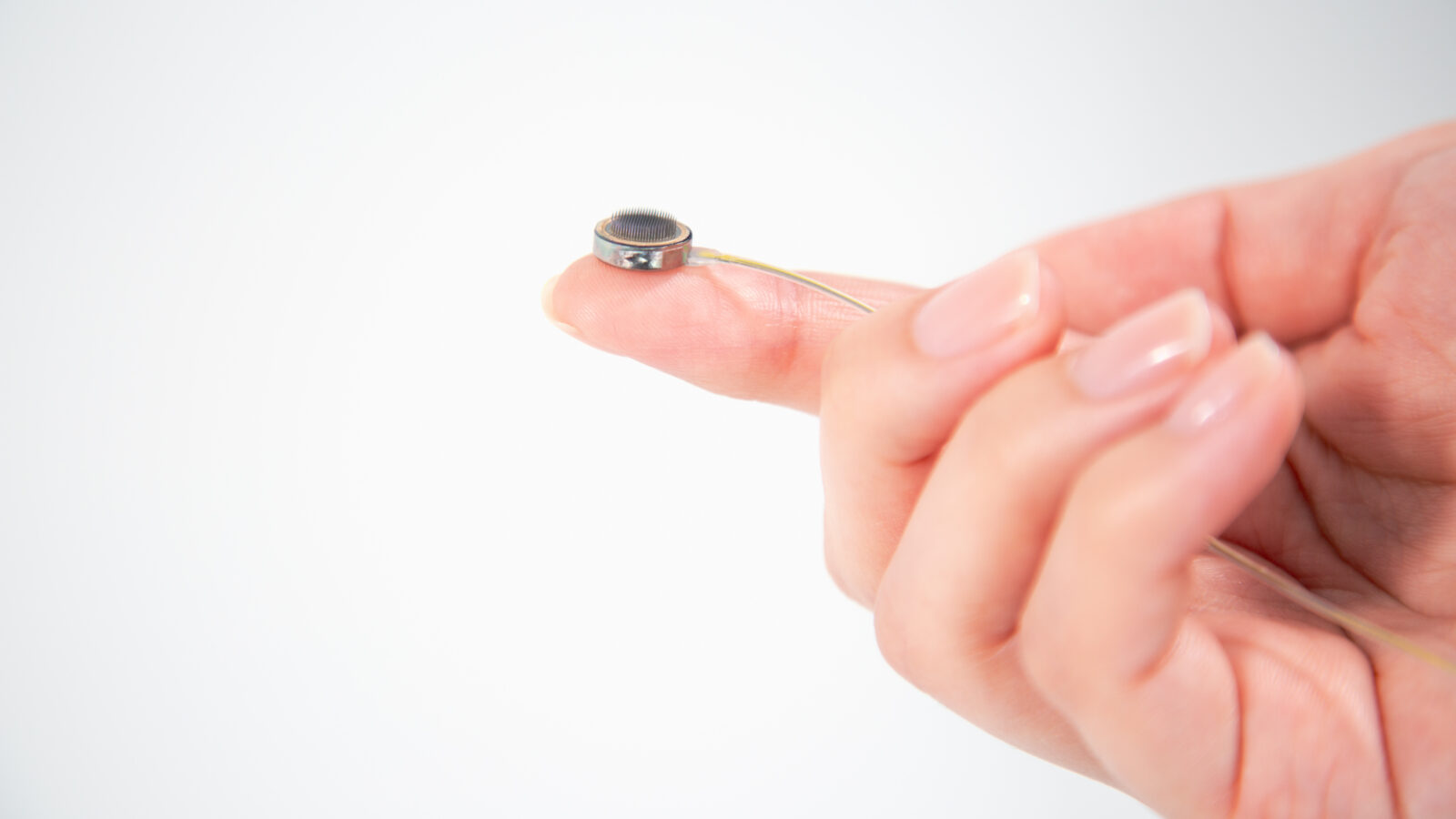
Paradromics, a US neurotechnology company says they have developed the highest data-rate brain-computer interface (BCI) platform, announced the US FDA has granted Investigational Device Exemption (IDE) approval to begin a feasibility study with their implant called Connexus BCI.

As the first company to receive IDE approval for speech restoration with a fully implantable BCI, Paradromics is excited to give participants the opportunity to control a computer and communicate via text or synthesized speech to recover connection.

Related: Womb implant is a success

The Connexus BCI is designed to record and decode brain signals at unprecedented rates of information transfer. “In Q1 next year we are launching a clinical study with the best engineered brain computer interface in the world,” said Paradromics’ CEO and founder, Matt Angle, Ph.D. “This is the device that patients deserve.“

The Connect-One Study will initially enroll two participants—with impaired speech and limited extremity movement (upper and lower) due to severe loss of voluntary motor control—who live within four hours of three clinical sites, UC Davis in Sacramento, Massachusetts General Hospital in Boston, and Harvard Medical School.‍University of Michigan in Ann Arbor, MI – led by Investigator Matthew Willsey, M.D., Ph.D., a neurosurgeon with dual faculty appointments in Neurosurgery and Biomedical Engineering.

This FDA approval builds on key milestones for Paradromics, including three years of stable preclinical recordings, the first successful acute Connexus BCI implantation at the University of Michigan by Dr. Willsey, and the release of a scientific preprint demonstrating that the Connexus BCI delivers an industry-leading 200+ bits per second rate of information transfer in pre-clinical models. Paradromics has a Connect-One Study roadmap to add more sites, include more participants, and explore new BCI applications.

The Connect-One Study is the first in a series of clinical applications planned for the Paradromics BCI platform. Those interested in participating in this or future studies are encouraged to join the Paradromics Community.

The first study will look at restoring speech by Paradromics sees the future in enabling AI-powered treatments for motor impairment now and chronic pain, addiction, depression, and other neurological conditions in the near future.

 

Karin Kloosterman
Karin Kloostermanhttp://www.greenprophet.com
Karin Kloosterman is an award-winning journalist, innovation strategist, and founder of Green Prophet, one of the Middle East’s pioneering sustainability platforms. She has ranked in the Top 10 of Verizon innovation competitions, participated in NASA-linked challenges, and spoken worldwide on climate, food security, and future resilience. With an IoT technology patent, features in Canada’s National Post, and leadership inside teams building next-generation agricultural and planetary systems — including Mars-farming concepts — Karin operates at the intersection of storytelling, science, and systems change. She doesn’t report on the future – she helps design it. Reach out directly to [email protected]

Read More

TRENDING

Data centers in Space? Sophia Space and Apex plan on busing them in

Can data centers really be built in space? Pasadena-based Sophia Space is partnering with Apex to test the idea by launching modular AI computing systems into low Earth orbit in 2027. Using radiation-hardened compute TILEs cooled by passive radiative systems and mounted on scalable satellite buses, the companies aim to prove that edge computing can operate reliably in space. While challenges remain, the project represents an important step toward distributed orbital computing networks that could support everything from climate monitoring and pollution tracking to autonomous spacecraft navigation in an increasingly crowded orbital environment.

Wave wind energy for Nvidia’s next AI energy boom?

As AI factories consume unprecedented amounts of electricity, NVIDIA is looking beyond chips and data centers to the ocean. The company recently spotlighted Israel's Eco Wave Power and its wave energy projects in Jaffa and Los Angeles, highlighting how AI, digital twins and renewable energy can work together to meet future power demands. The collaboration reflects a growing realization that the future of artificial intelligence may depend as much on clean energy infrastructure as it does on computing power.

Can a one trillion-Dollar SpaceX IPO change life on earth?

A SpaceX IPO could become one of the most consequential financial events of the century, creating thousands of millionaires and fueling investment across the New Space economy. From orbital robotics and African space programs to launch infrastructure and satellite networks, the ripple effects may extend far beyond Earth—while forcing investors to reconsider whether generative AI remains the most compelling technology bet of the decade.

Anthropic, Google and Stripe put nearly $1 Billion on carbon removal

A coalition led by Frontier, backed by Stripe, Google, Salesforce and newly joined AI company Anthropic, has committed an additional $915 million to remove carbon dioxide from the atmosphere. The pledge adds to a previous $1 billion commitment and brings Frontier's total buying power to nearly $2 billion.

Who Owns the Farm Robot? A State of Jefferson Startup Takes on Carbon Robotics

In California's self-proclaimed State of Jefferson, a small agricultural technology company is challenging the dominant laser-weeding business model. Laudando & Associates believes farmers should own and repair their AI-powered weeding tools rather than pay ongoing subscription fees. The approach has put the company on a collision course with industry leader Carbon Robotics, sparking a patent dispute that has pushed the Jefferson startup toward overseas markets while raising broader questions about ownership, right-to-repair, and the future of farm automation.

Yerukim Forms a New Green Economy Where the Money is Really Green

The Yerukim members who pick up the recyclables get to keep the monetary reward, the public earns "green" bills that can be used in shops, and business owners get to be associated with environmentalism.

Choosing Riyadh over Dubai? What Investors Should Know

Saudi Arabia is deploying capital at unmatched scale to catalyze tourism and advanced industry while rewiring its power-and-water backbone. The investable frontier is widening—especially in renewables, grid storage, water efficiency/desal retrofits, and hospitality operating platforms. Prudent investors will insist on phased delivery, enforceable KPIs (energy, water, biodiversity), and RHQ/zone compliance—while pricing political-economy and reputational risks alongside growth upside.

Sell your cooking oil for biodiesel money

Want to make money on old french fry oil? Sell it.

Qatar Alternative Energy Summit Pairs Investors And Innovators

Alternative energy investors and innovators can meet n' greet in Doha, Qatar March 16 and 17.

Here’s How To Implement The Four Pillars Of Employee Engagement

If you throw a party for your work team and they are vegans, don't make it a barbecue. Know the sustainability values of your team to boost moral and retain good people.

Locals From Rishon Fight IKEA

Big Box stores are a pretty new concept in Israel, and thank God that not every Israeli city wants them in their backyard. A word from someone who has see the beautiful farmland around her hometown Newmarket, Ontario stripped and converted into vulgar strip malls of big box shops: they have no place in a healthy and sustainable town or city.

The Jewish National Fund Meets An Inconvenient Truth

According to the JNF, it has transformed thousands of acres of barren land into green forests in Israel. They state that each person emits about 23 tons of carbon per year, estimating that each tree planted can absorb one ton of carbon in its lifetime. That's a whole lot of trees you'd need to be planting. Could so many fit in Israel?

How to quiet noise from construction in your office

Streets need to be resurfaced in New York but the humming and grinding noise is unsettling. Noise is environmental pollution. 

Popular Categories