
Revolutionizing agriculture: Treetoscope raises $7M in seed funding for smart drip irrigation

Treetoscope’s ingenious system monitors plant indicators in real time to provide worldwide farmers a SaaS platform to optimize irrigation at substantial water savings
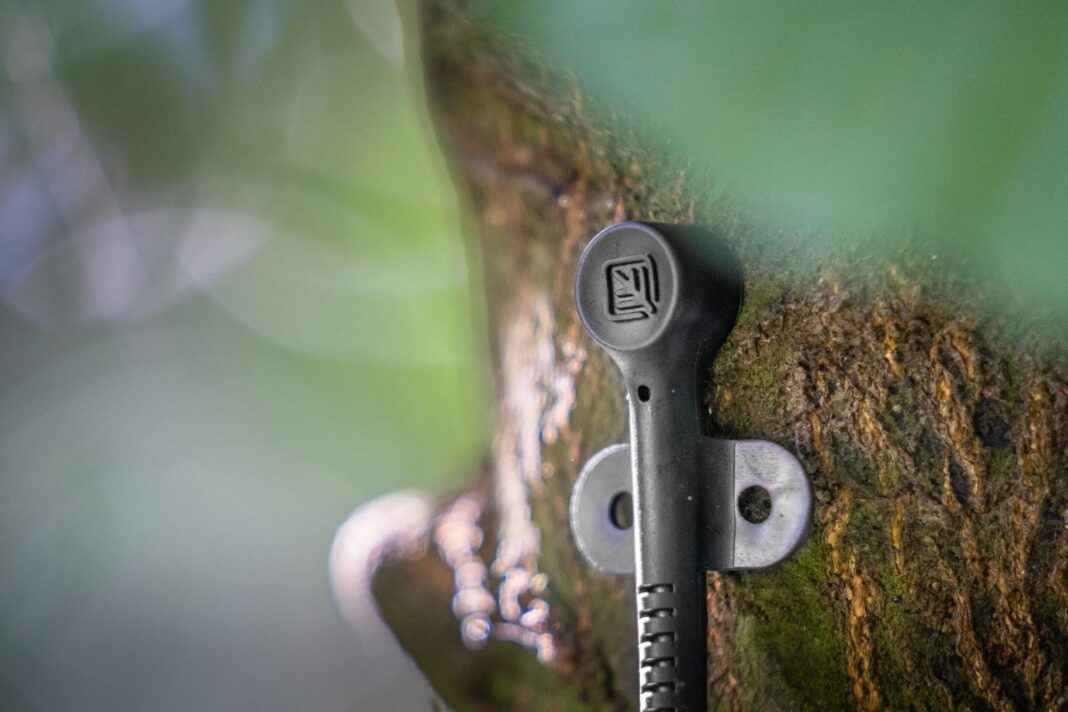
The Treetoscope sensor collects information about water and soil nutrients to turn on irrigation systems at the right time

Plant stressor sensor Treetoscope has raised $7M USD in a seed fundraising round. The IoT device gives farmers information when using drip irrigation, helping them automate precise water and fertilizer use when the plants are hungry and thirsty. The tech can automate drip irrigation by applying AI and sensors to understand plant water needs real time. Investment will be applied towards expanding company sales and R&D. 

Treetoscope’s technology gives insight and automation to the amount of water and fertilizer to give to plants and trees, reducing wasted water and efficiently managing plant nutrient levels. Environmentalists tend to support organic agriculture with a push to regenerative farming practices where no pesticides or soil-enhancing fertilizers are used at all. But that’s in a more perfect world.

Israel, where Treetoscope was born, is the home to the inventor of modern-day drip irrigation Simcha Blass. Drip irrigation applies long plastic pipes incised with tiny holes throughout a farm. There are variations on the way it is applied, but this is the most common method. The pressure in the pipes administers water only at the root or base area of the plant to avoid unnecessary evaporation and loss of water. In general this technology is very primitive, much like plumbing is today, with the majority of applications using timers to turn the water on only at night when the plants can best absorb it.

In the last 15 years or so dozens if not hundreds of companies from Israel have emerged looking to take on parts of the equation to make every drop of water, fertilizer and pesticide count. Fertigation is the term often used in the industry.

The Treetoscope app

With areas like the Dead Sea shrinking because of fertlizer harvesting, and countries like China looking for intensive agricultural solutions to feed a growing in affluence population, solutions like Treetoscope will be more and more in demand.

In areas of the United States where climate change makes farming areas of almond farms impossible due to ongoing droughts, Israel-made sensor tech might save the day.

Some solutions like the wildly successful CropX operate in the same space as Treetoscope and my company Flux was operating in the cannabis and hydroponics space in this niche (see Future Crop $30M investment), quite likely too early for only a infant market for hydroponics 10 years ago. Back then investors told me hydroponics sensors and AI was a “nice” to have solution but more like a vitamin than a bandaid, as goes their analogy.

Covid changed thinking, supply chains and investments as the need for local food sources that don’t depend on the political climates of other countries such as the Ukraine and Russia. InFarm, a team of Israelis, were heralding in the golden era of hydroponics but focusing on a consumer model. They raised almost $200M to expand into grocery stores but then had to lay off over half their staff by December last year.

Israeli farmers take on Berlin
The InFarm team

The investment in Treetoscope fortifies the more sober area of conventional farming and it was led by Champel Capital venture capital fund, a leading European-Israeli fund focusing on impact technology investments. Other strategic investors include Leon Recanati’s GlenRock fund, SeedIL, YYM-Ventures, and previous fundraising investors, as per their press announcement.

This builds on $3M USD already raised which includes grants from the Israel Innovation Authority from the Offices of the Chief Scientist and BIRD, a joint Israel-US government fund which funds medicine and hightech ventures between Israel and the United States.

Treetoscope is currently operating in in North America and Europe via collaborations with such leading enterprises as The Toro Company, Netafim, and Hektas, with 20 employees in total. Treetoscope’s manpower includes 20 employees in Israel and internationally.

Treetoscope dashboard

“Humanity is currently facing one of its greatest challenges – a lack of freshwater resources,” says Dotan Eshet, CEO of Treetoscope. “Today, 70% of the world’s freshwater consumption is used by the agricultural sector, with this consumption expected to increase by approximately 60% by 2025.”

Through the technology Treetoscope has developed, according to them farmers can save approximately 30% in irrigation expenses, increase the yield, as well as the weighted profit of the farmers in Europe and the US, by ~$32 billion per year. 

“Treetoscope has developed a unique solution to one of the most painful problems in the worldwide food chain, where fresh water is becoming a rare, expensive commodity,” says Amir Weitman, managing partner at Champel Capital. “We are proud to help the company make solutions available to farmers to save significant amounts of water and create a genuine impact in the world.”

About Champel Capital 

Champel Capital is a venture capital fund that invests in Israeli startups in the realms of foodtech, agritech, medtech, industry 4.0, fintech and traffic. To date, the fund has made 21 investments, yielding 4 exits and 1 unicorn – Lemonade. Champel Capital is headed by partners Amir Weitman and Arié Benguigui, who have been investing in the Israeli venture capital scene since 2017. The advisory committee is Eyal Waldman, Omer Moav, Raoul Bino, Eyal Orion and Hillel Fuld.


::Treetoscope

Karin Kloosterman
Karin Kloostermanhttp://www.greenprophet.com
Karin Kloosterman is an award-winning journalist, innovation strategist, and founder of Green Prophet, one of the Middle East’s pioneering sustainability platforms. She has ranked in the Top 10 of Verizon innovation competitions, participated in NASA-linked challenges, and spoken worldwide on climate, food security, and future resilience. With an IoT technology patent, features in Canada’s National Post, and leadership inside teams building next-generation agricultural and planetary systems — including Mars-farming concepts — Karin operates at the intersection of storytelling, science, and systems change. She doesn’t report on the future – she helps design it. Reach out directly to [email protected]

Read More

TRENDING

Can a one trillion-Dollar SpaceX IPO change life on earth?

A SpaceX IPO could become one of the most consequential financial events of the century, creating thousands of millionaires and fueling investment across the New Space economy. From orbital robotics and African space programs to launch infrastructure and satellite networks, the ripple effects may extend far beyond Earth—while forcing investors to reconsider whether generative AI remains the most compelling technology bet of the decade.

Anthropic, Google and Stripe put nearly $1 Billion on carbon removal

A coalition led by Frontier, backed by Stripe, Google, Salesforce and newly joined AI company Anthropic, has committed an additional $915 million to remove carbon dioxide from the atmosphere. The pledge adds to a previous $1 billion commitment and brings Frontier's total buying power to nearly $2 billion.

Who Owns the Farm Robot? A State of Jefferson Startup Takes on Carbon Robotics

In California's self-proclaimed State of Jefferson, a small agricultural technology company is challenging the dominant laser-weeding business model. Laudando & Associates believes farmers should own and repair their AI-powered weeding tools rather than pay ongoing subscription fees. The approach has put the company on a collision course with industry leader Carbon Robotics, sparking a patent dispute that has pushed the Jefferson startup toward overseas markets while raising broader questions about ownership, right-to-repair, and the future of farm automation.

Regenerative Wool or Greenwashing? Zentera Responds to Critics

Zentera responds to questions about ZQ wool, animal welfare, regenerative farming, ethical fashion and the fallout from PETA's New Zealand investigation.

Weston Higginbotham found dead in a Kyoto forest: is climate anxiety part of the story?

In some ways, Weston has become a symbol of a generation wrestling with environmental and technological anxiety. Friends and family described him as deeply concerned about environmental issues. Reports also noted that he questioned the growing role of artificial intelligence in daily life, even reportedly disagreeing with his mother about her use of AI.

Yerukim Forms a New Green Economy Where the Money is Really Green

The Yerukim members who pick up the recyclables get to keep the monetary reward, the public earns "green" bills that can be used in shops, and business owners get to be associated with environmentalism.

Choosing Riyadh over Dubai? What Investors Should Know

Saudi Arabia is deploying capital at unmatched scale to catalyze tourism and advanced industry while rewiring its power-and-water backbone. The investable frontier is widening—especially in renewables, grid storage, water efficiency/desal retrofits, and hospitality operating platforms. Prudent investors will insist on phased delivery, enforceable KPIs (energy, water, biodiversity), and RHQ/zone compliance—while pricing political-economy and reputational risks alongside growth upside.

Sell your cooking oil for biodiesel money

Want to make money on old french fry oil? Sell it.

Qatar Alternative Energy Summit Pairs Investors And Innovators

Alternative energy investors and innovators can meet n' greet in Doha, Qatar March 16 and 17.

Here’s How To Implement The Four Pillars Of Employee Engagement

If you throw a party for your work team and they are vegans, don't make it a barbecue. Know the sustainability values of your team to boost moral and retain good people.

Locals From Rishon Fight IKEA

Big Box stores are a pretty new concept in Israel, and thank God that not every Israeli city wants them in their backyard. A word from someone who has see the beautiful farmland around her hometown Newmarket, Ontario stripped and converted into vulgar strip malls of big box shops: they have no place in a healthy and sustainable town or city.

The Jewish National Fund Meets An Inconvenient Truth

According to the JNF, it has transformed thousands of acres of barren land into green forests in Israel. They state that each person emits about 23 tons of carbon per year, estimating that each tree planted can absorb one ton of carbon in its lifetime. That's a whole lot of trees you'd need to be planting. Could so many fit in Israel?

How to quiet noise from construction in your office

Streets need to be resurfaced in New York but the humming and grinding noise is unsettling. Noise is environmental pollution. 

Popular Categories