


Leading fashion brands know that the good old days of fast fashion are changing. They can no longer produce low cost gear without considering a good wage, ecologically sourced raw materials, eco shipping and handling and a vision for the products end of life. Companies like Shein may still have a lead in the market but consumers, even young ones, are catching on that upcycled or recycled clothes are where at its at.
Heralding this mission and driving big brands forward is Redress, a Hong Kong-headquartered environmental NGO accelerating the change to a circular fashion industry. They work with big brands and young designers to envision and change the fashion industry in every part of its cycle from cradle to cradle. Their focus is on Asia where most fast fashion is produced by people in deplorable conditions.
They recently announced the winners of the Redress Design Award 2023.

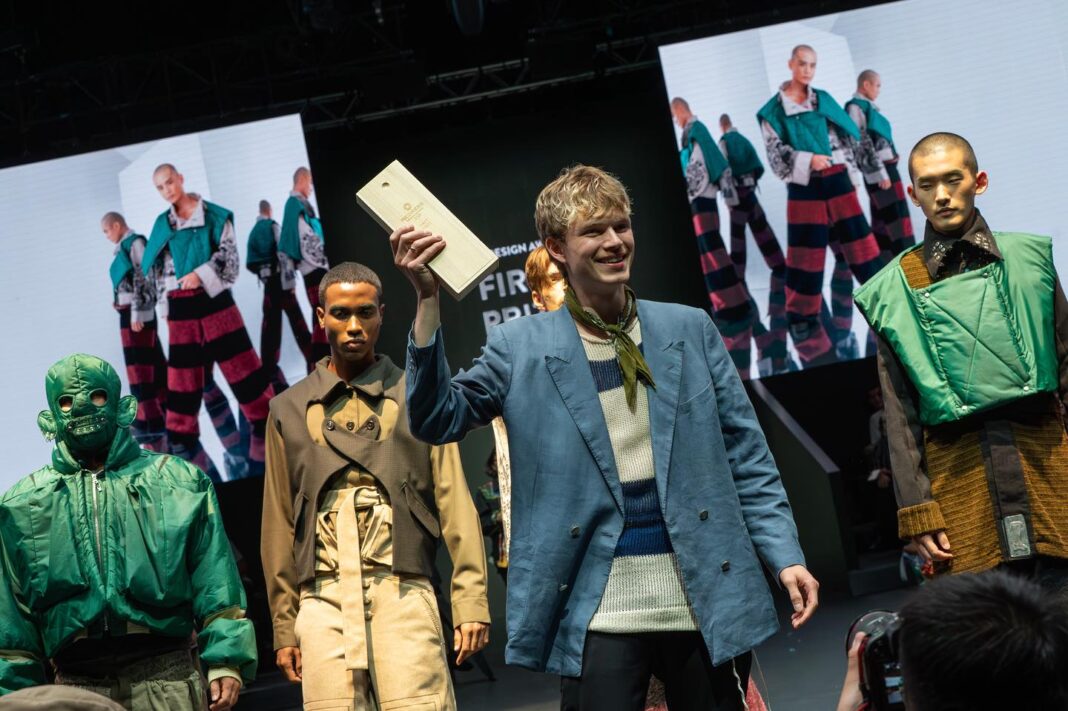
Winning first prize Nils Hauser from Germany got a chance to work on a sustainable design collaboration out of VF Corporation’s Tokyo Design Collective with the Timberland design team for the brand’s Spring 2025 apparel collection.
Hauser out-designed eight other emerging designers from Australia, Canada, France, Hong Kong, India, Sri Lanka, and the USA, following a nine-month educational competition that attracted applications from 46 countries and regions.
“Collaborating with a world-leading brand like Timberland and bringing my sustainable fashion ideas into the mainstream and large-scale fashion market whilst working with Timberland’s expert team is a designer’s dream,” said Hauser. “Designers have solutions, and we know that by working together we can make change,” he said.
Change is much needed. Fashion, we know, is one of the world’s most polluting industries. Approximately 100 billion apparel items are sold per year, representing a 50% increase since 2006, with the majority of clothing being landfilled or burned within one year of production. Every second, the equivalent of one garbage truck of textiles is landfilled or burned.

Meanwhile, 80 percent of a product’s environmental impact is determined at the design stage.
“Design decisions made at the drawing board can change the world,” said Redress Founder, Christina Dean. “Fashion needs to reinvent itself to become more circular. Floods and fires are continuing. Our Redress Design Award Finalists are fashion’s fire-fighters. Making sustainability and circularity an industry norm feels like a far-off dream, but it’s worth fighting for if we want to reduce fashion’s negative environmental impacts.”
The finalists designed waste out of fashion with the circular design techniques of zero-waste, upcycling, and reconstruction. They explored textile waste streams for their design materials, from manufacturing waste and consumer castoffs to the more imaginative reuse of turbans, tents, and bedsheets.
Their bold designs and sourcing methods represent creative and innovative solutions to increase current circularity achievements, which presently see less than one percent of clothing being recycled back into clothing.
“Our collaboration with Redress gives us the unique opportunity to directly connect with emerging fashion designers who have a passion for sustainability, equipping them with the skills and knowledge needed to usher in a new era of sustainability in fashion,” said Jeannie Renne-Malone, VP of Global Sustainability at VF Corporation. “VF remains committed to fostering a lower carbon future through implementing sustainable design principles, such as circular design, that minimise the industry’s environmental impact.”
Hauser now takes the previous winners’ baton from Redress Design Award 2022 winner, Federico Badini Confalonieri from Italy, 2021 winner Jessica Chang from Taiwan, and 2020 menswear winner Lê Ngọc Hà Thu from Vietnam, who each contributed towards sustainable capsules in collaboration with Timberland.
The 2023 Redress winner and ones to watch:
-
- First Prize winner: Nils Hauser, Germany
- Runner-Up Prize winner: Ruwanthi Gajadeera, Sri Lanka
- Hong Kong Best Prize winner: Mandy Fong, Hong Kong
- People’s Choice winner: Pavneet Kaur, India
The 2023 Redress prize?
The Redress Design Award first prize winner will join VF’s Timberland team to collaborate on a design project. They will also have the opportunity to work closely with the VF Corporation Sustainability & Responsibility team to ensure that materials and design strategies maximise sustainability, and will gain exciting insights from across the supply chain from sourcing to product development, while deepening their skills and understanding around sustainable production and marketing.
The first prize winner will also receive…
-
$6,400 USD to propel their sustainable fashion career
-
A high-performance lockstitch machine and an overlock sewing machine from JUKI
-
One year individual access to all areas of Bloomsbury Fashion Central, including the Fairchild Books Library and the Fashion Photography Archive
Want to fast-track your career at a sustainable fashion business school or qualify for a future Redress internship? Try the Redress online course.


