

Upgrading, or retrofitting, the world’s iron and steel processing plants early could reduce carbon emissions by up to 70 gigatonnes by 2050, roughly equivalent to two years’ worth of net global carbon emissions, according to a new study led by UCL researchers.
Published in the journal Nature, the researchers found that by upgrading the world’s iron and steel production facilities, carbon emissions can be reduced by 58.7 gigatonnes between 2020 and 2050, roughly equivalent to two years’ worth of net global carbon emissions. In addition, they found that by bumping forward emissions reduction retrofits five years ahead of when they would be typically scheduled, it would reduce emissions by 69.6 gigatonnes over that time frame. Iron and steel production contributes about 7% to total global carbon emissions.
To develop this schedule, the team created a comprehensive database of 19,678 individual processing units located in 4,883 individual iron and steel plants around the world, inventoried by their technical characteristics, including their locations, processing technologies, operating details, status and age.
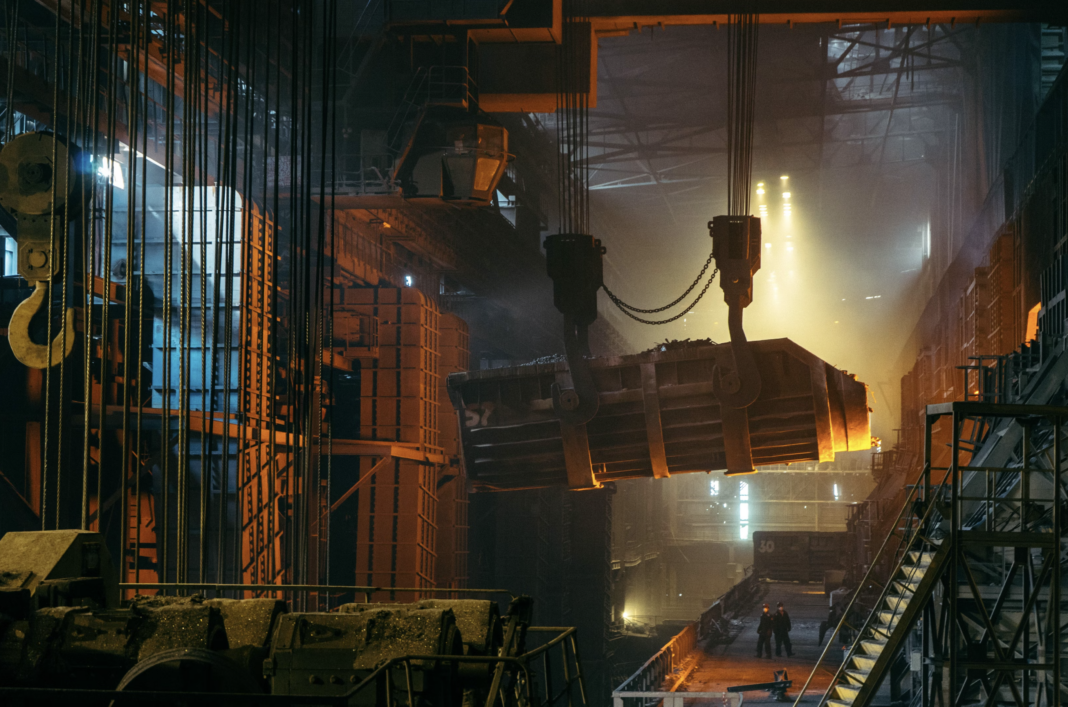
Iron and steel production is a carbon emissions heavy process. The researchers found that as of 2019, the last year that data is available, 74.5% of the world’s steel was produced in coal powered plants that release considerable carbon emissions. Technologies exist to reduce these admissions, but upgrades are expensive and time consuming and so are usually only undertaken at the end of a processing unit’s operational lifetime.
Refining is also hard on the equipment, and the individual processing units within each plant need to be retrofitted periodically to prolong their operational lifetimes. Overall, 43.2% of global iron and steel plants have been retrofitted with new technologies or have otherwise enhanced their processes to extend their operating lifetime. The frequency of their retrofits depends on the technique they employ and how old they are, but typically they occur after 15 to 27 years of use.
The researchers found that if all currently operating processing units were upgraded to incorporate low-emissions technology at their predicted time of their refit, total emissions from the iron and steel sector could be reduced by 58.7 gigatonnes between 2020 and 2050, but if all the refits and upgrades were bumped forward and completed five years early, the total carbon savings would be 16% greater at 69.6 gigatonnes.
But the team also emphasises that mitigation efforts will have to take place at the individual facility level, and that the decarbonisation of the entire iron and steel industry depends on the efforts undertaken by every single plant. Because of the complexity and variety of methods involved in steel production around the world, there’s no one-size-fits-all decarbonisation technology or solution for the entire sector, and each processing unit should be upgraded individually according to its technical specification.

Senior author Professor Dabo Guan from the UCL Bartlett School of Sustainable Construction said: “Our results lend vivid background to the possibility of achieving net-zero carbon emissions in iron and steel production in the future. By retrofitting existing plants with low-carbon technologies, and improving scrap collecting and recycling, the iron and steel sector can dramatically reduce its carbon emissions. This study sheds light on the specific emissions reductions that are possible within the iron and steel industry.”
About 63% of the world’s steel production is from some type of blast oxygen furnace, while most of the remaining capacity is produced by electric arc furnaces. Upgrading the global inventory of blast oxygen furnaces will yield the greatest net carbon savings, about 74% of the total projected carbon savings. Upgrades to electric arc furnaces would account for the second highest net carbon savings, at about 16% of the projected whole, though this may be limited by the total amount of stock scrap available worldwide as the technique is dependent on recycling existing metals.
The researchers hope that this data can be used to identify improved ways to update ageing steel plants with emission reduction technologies in order to reach net-zero carbon emissions more quickly. Compiling this publicly available global database of iron and steel plants and tracking all their ages and technologies has significantly improved the detail of data around the carbon emission of global iron and steel production.
The researchers emphasise that because of the wide range of production methods and plant designs, the particulars of individual upgrades and mitigation effort of each processing unit will have to be done on an individual basis. Their research will help policymakers create a roadmap of when and how to upgrade iron and steel plants to meet emissions reduction targets.
The top five carbon emitting iron and steel plants contribute 7% of the total CO2 emissions from the global iron and steel industry but only make up 0.1% of the total 4,883 plants.
They are:
- Anshan Iron & Steel (China)
- Posco – Pohang Iron & Steel (South Korea)
- Shanghai Baosteel (China)
- Jiangsu Shagang (China)
- Maanshan Iron & Steel Group (China).
The researchers say that retrofitting these plants to lower their carbon emissions would demonstrate the feasibility for other, similar plants. The research was led by UCL and conducted in collaboration with Tsinghua University, Peking University and King’s College London.