Can cuttlefish ink be “bear spray” against sharks?

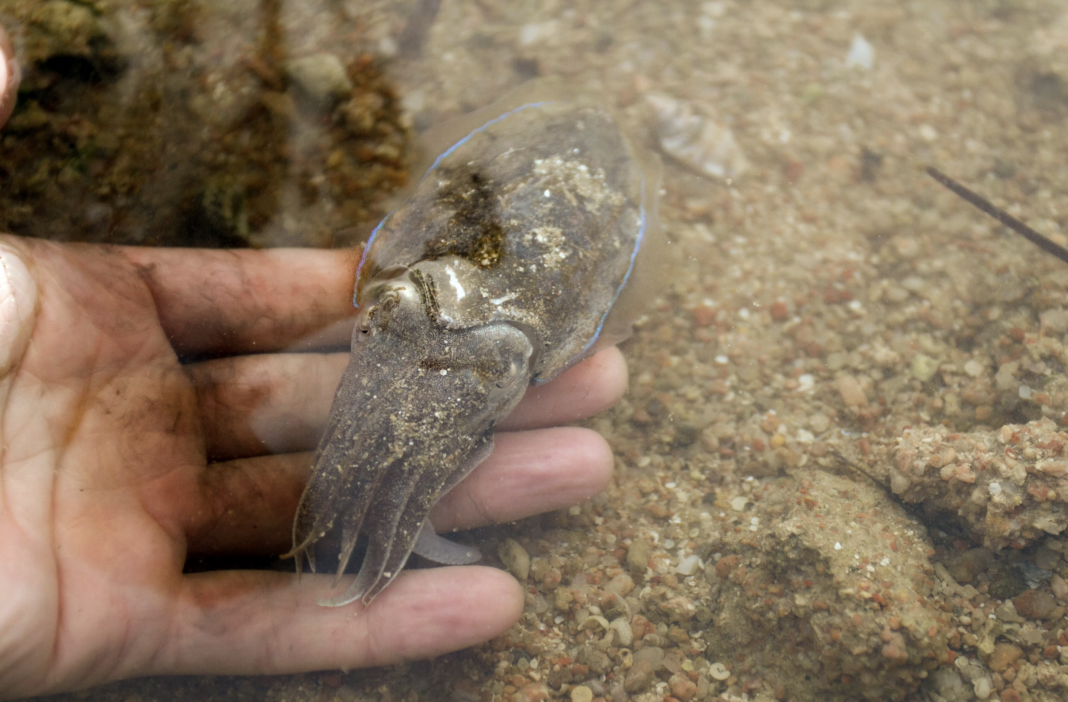
Close-up of a cuttlefish, Cuttlefish underwater, Cuttlefish displaying unique pattern, Marine life cuttlefish, Cuttlefish camouflaging in ocean

Diving in the crystal-clear waters of the Red Sea or exploring the vibrant reefs of Australia is an unforgettable experience. But sharing the ocean with sharks can be a nerve-wracking thought, even for the most seasoned divers. What if there were a natural, non-lethal way to keep sharks at a safe distance? Recent research suggests that cuttlefish ink might be the answer. It is much needed: a recent tragic dive boat accident in the Red Sea that led to 11 deaths was prevented from being rescued quickly because of sharks in the area, according to witnesses.

Cuttlefish (Sepia officinalis) are known for their impressive camouflage skills and their ability to release a cloud of ink when threatened. This ink isn’t just a visual smokescreen—it also contains chemical compounds that can overwhelm a predator’s sense of smell. Sharks, in particular, rely heavily on their acute olfactory senses to navigate and hunt. The compounds in cuttlefish ink are thought to disorient sharks, making them less likely to approach the source of the scent.

Recent research from University College Dublin indicates that cuttlefish ink, particularly its primary component melanin, may serve as an effective shark deterrent. The study found that melanin can bind to shark olfactory receptors, potentially overwhelming their sense of smell and causing them to avoid areas where the ink is present.

“Understanding how prey species like cuttlefish have evolved to exploit specific vulnerabilities in predators like sharks enriches not only our understanding of marine ecosystems but provides inspiration for conservation tools rooted in natural processes,” said Colleen Lawless, a researcher in the study.

Modelling the three-dimensional structures of shark olfactory receptors by using genetic data from several shark species including the Great White Shark, Colleen and her colleagues Dr Graham Hughes and Dr John Finarelli discovered melanin possesses a molecular structure that lets it latch onto the smell receptors of these ocean predators, disrupting their sensory perception.

And because sharks generally share the same core set of smell receptors despite differences in lifestyle and habitat, the binding effect likely extends to all shark species, making it likely effective across most shark species.

This discovery suggests that deploying cuttlefish ink, or synthetic analogs, could create safe zones for divers by deterring sharks without harming them. Such an approach could enhance diver safety in regions like the Red Sea and Australian waters, known for frequent shark encounters. Additionally, this method offers a non-invasive alternative to traditional shark deterrents, which often pose risks to other marine life.

By releasing cuttlefish ink—or a synthetic version—into the water, it may be possible to create a safe zone that deters sharks. This approach could provide a protective barrier, allowing divers to observe marine life without posing a threat to themselves or the sharks.

Practical Applications and Challenges

For this idea to work in real-world scenarios, several challenges need to be addressed:

  • Deployment Methods: The ink could be released from wearable devices, such as wristbands or diving suits equipped with small dispensers. Alternatively, underwater “ink bombs” could be deployed around high-risk areas. Or kept on hand during rescue dives. Divers from the Sea Story accident did not want to go on a rescue operation because of the number of sharks circling the floating wreck.
  • Environmental Impact: It’s crucial to ensure that the ink doesn’t harm other marine species or disrupt the delicate ecosystem.
  • Scalability and Production: Harvesting enough natural cuttlefish ink isn’t feasible, so researchers are exploring synthetic alternatives that mimic the chemical properties of the original ink.
  • One of the most exciting aspects of this technology is its potential to protect both humans and sharks. By steering sharks away from popular diving sites, we reduce the chances of negative encounters that could lead to harmful outcomes for the sharks.

While promising, further research is necessary to develop practical applications and assess the environmental impact of widespread use of cuttlefish ink as a shark repellent.

Karin Kloosterman
Karin Kloostermanhttp://www.greenprophet.com
Karin Kloosterman is an award-winning journalist, innovation strategist, and founder of Green Prophet, one of the Middle East’s pioneering sustainability platforms. She has ranked in the Top 10 of Verizon innovation competitions, participated in NASA-linked challenges, and spoken worldwide on climate, food security, and future resilience. With an IoT technology patent, features in Canada’s National Post, and leadership inside teams building next-generation agricultural and planetary systems — including Mars-farming concepts — Karin operates at the intersection of storytelling, science, and systems change. She doesn’t report on the future – she helps design it. Reach out directly to [email protected]

Read More

TRENDING

Hydrophilis Rebreather: After the Penis Jokes and Shark Bait Memes, Oliver Isler Says His Underwater Dream Is Serious

The Hydrophilis rebreather is a new scuba system that could make diving safer and more fun.

Shebara hotel Saudi Arabia – is it eco-luxury dream or desert illusion?

A new breed of luxury has landed on the Red Sea, mirrored pods floating above coral reefs, reflecting sky and sea like something not entirely of this Earth. Energy powered by solar powers, drinking water pulled from the sea using desalination. 

Hydrophilis SCUBA gear could make us one with the sea

Hydrophilis, Oliver Isler’s experimental rebreather suit, reimagines diving by reducing drag, eliminating bubbles, and bringing humans closer to the natural movement of marine life.

Jordan’s $6 Billion Aqaba–Amman Desalination Project from the Red Sea Moves Forward

In 2025, the Jordanian government signed agreements with a consortium led by Meridiam and SUEZ, alongside VINCI Construction and Orascom Construction. Under a 30-year concession agreement, the consortium will design, build, finance, operate, and maintain the system before transferring it back to the Jordanian government. The total investment is estimated at approximately $6 billion USD.

The Saudi Startup Turning Desalination’s Toxic Waste Into Its Own Disinfectant

For millennia, the Middle East's water crisis seemed an immutable fact of geography — a region defined as much by what it lacked as by what lay beneath its sands. Today, a convergence of plummeting solar costs, advancing membrane technology, and hard-won engineering expertise is rewriting that story.

How to quiet noise from construction in your office

Streets need to be resurfaced in New York but the humming and grinding noise is unsettling. Noise is environmental pollution. 

EarthX and a blueprint for sustainable investing

Trammell S. Crow, a Dallas-based businessman and father of four, is focusing his efforts on impact investing, and media that focuses on saving the planet through EarthX.

Mining Afghanistan’s Mineral Discoveries Similar to Avatar

Now that American forces in Afghanistan are commemorating the longest period of any war that America has been involved in, including the 1965-73 Vietnam War, the recent discoveries of large and extremely valuable mineral and metal deposits may finally bring to light a reason to continue the presence of US fighting forces in this war torn and backward country.

From Pilot Plant to Global Stage: How Aduro Clean Technologies’ 2026 Expansion Signals a Turning Point for Chemical Recycling Investors Like Yazan Al Homsi

The company's Next Generation Process (NGP) Pilot Plant in London, Ontario, has officially moved into initial operating campaigns, generating the kind of structured, repeatable data that separates laboratory promise from commercial viability.

Nobul’s Regan McGee on Shareholder Value: “Complacency Is the Silent Killer” 

Why the governance framework designed to protect shareholders so...

Should You Invest in the Private Market?

startustartup Unlike public stock exchanges, which offer daily trading, strict...

How to build a 100-year-company

Kongō Gumi is a Japanese construction company, purportedly founded in 578 A.D., making it the world's oldest documented company. What can we learn about building sustainable businesses from them?

How AI Helps SaaS Companies Reduce Repetitive Customer Support Work

SaaS products are designed for large numbers of users with different levels of experience, and also in renewable energy.

Popular Categories