Good gardens start with good seeds. Learn how to choose reliable seed companies, avoid poor-quality seeds, understand heirloom and hybrid varieties, and store seeds for better germination.
Seven years after creating her first perfume in a small Sicilian shop, my daughter had just three drops left. A family-owned perfumer in Palermo helped us recover the scent of her childhood.
Ukrainian design studio Pilsok, known for its popular Beetle backpack, transforms discarded car airbags into a striking designer jacket honouring Ukraine's emergency rescuers.
From the forests of Ontario to sea turtle conservation in Lebanon and water cooperation across the Middle East, Green Prophet founder Karin Kloosterman argues that CleanTech, EnviroTech and AgTech are already building the foundations of PeaceTech.
Good gardens start with good seeds. Learn how to choose reliable seed companies, avoid poor-quality seeds, understand heirloom and hybrid varieties, and store seeds for better germination.
Seven years after creating her first perfume in a small Sicilian shop, my daughter had just three drops left. A family-owned perfumer in Palermo helped us recover the scent of her childhood.
Ukrainian design studio Pilsok, known for its popular Beetle backpack, transforms discarded car airbags into a striking designer jacket honouring Ukraine's emergency rescuers.
From the forests of Ontario to sea turtle conservation in Lebanon and water cooperation across the Middle East, Green Prophet founder Karin Kloosterman argues that CleanTech, EnviroTech and AgTech are already building the foundations of PeaceTech.
Good gardens start with good seeds. Learn how to choose reliable seed companies, avoid poor-quality seeds, understand heirloom and hybrid varieties, and store seeds for better germination.
Seven years after creating her first perfume in a small Sicilian shop, my daughter had just three drops left. A family-owned perfumer in Palermo helped us recover the scent of her childhood.
Ukrainian design studio Pilsok, known for its popular Beetle backpack, transforms discarded car airbags into a striking designer jacket honouring Ukraine's emergency rescuers.
From the forests of Ontario to sea turtle conservation in Lebanon and water cooperation across the Middle East, Green Prophet founder Karin Kloosterman argues that CleanTech, EnviroTech and AgTech are already building the foundations of PeaceTech.
Good gardens start with good seeds. Learn how to choose reliable seed companies, avoid poor-quality seeds, understand heirloom and hybrid varieties, and store seeds for better germination.
Seven years after creating her first perfume in a small Sicilian shop, my daughter had just three drops left. A family-owned perfumer in Palermo helped us recover the scent of her childhood.
Ukrainian design studio Pilsok, known for its popular Beetle backpack, transforms discarded car airbags into a striking designer jacket honouring Ukraine's emergency rescuers.
From the forests of Ontario to sea turtle conservation in Lebanon and water cooperation across the Middle East, Green Prophet founder Karin Kloosterman argues that CleanTech, EnviroTech and AgTech are already building the foundations of PeaceTech.
Good gardens start with good seeds. Learn how to choose reliable seed companies, avoid poor-quality seeds, understand heirloom and hybrid varieties, and store seeds for better germination.
Seven years after creating her first perfume in a small Sicilian shop, my daughter had just three drops left. A family-owned perfumer in Palermo helped us recover the scent of her childhood.
Ukrainian design studio Pilsok, known for its popular Beetle backpack, transforms discarded car airbags into a striking designer jacket honouring Ukraine's emergency rescuers.
From the forests of Ontario to sea turtle conservation in Lebanon and water cooperation across the Middle East, Green Prophet founder Karin Kloosterman argues that CleanTech, EnviroTech and AgTech are already building the foundations of PeaceTech.
Good gardens start with good seeds. Learn how to choose reliable seed companies, avoid poor-quality seeds, understand heirloom and hybrid varieties, and store seeds for better germination.
Seven years after creating her first perfume in a small Sicilian shop, my daughter had just three drops left. A family-owned perfumer in Palermo helped us recover the scent of her childhood.
Ukrainian design studio Pilsok, known for its popular Beetle backpack, transforms discarded car airbags into a striking designer jacket honouring Ukraine's emergency rescuers.
From the forests of Ontario to sea turtle conservation in Lebanon and water cooperation across the Middle East, Green Prophet founder Karin Kloosterman argues that CleanTech, EnviroTech and AgTech are already building the foundations of PeaceTech.
Good gardens start with good seeds. Learn how to choose reliable seed companies, avoid poor-quality seeds, understand heirloom and hybrid varieties, and store seeds for better germination.
Seven years after creating her first perfume in a small Sicilian shop, my daughter had just three drops left. A family-owned perfumer in Palermo helped us recover the scent of her childhood.
Ukrainian design studio Pilsok, known for its popular Beetle backpack, transforms discarded car airbags into a striking designer jacket honouring Ukraine's emergency rescuers.
From the forests of Ontario to sea turtle conservation in Lebanon and water cooperation across the Middle East, Green Prophet founder Karin Kloosterman argues that CleanTech, EnviroTech and AgTech are already building the foundations of PeaceTech.
Good gardens start with good seeds. Learn how to choose reliable seed companies, avoid poor-quality seeds, understand heirloom and hybrid varieties, and store seeds for better germination.
Seven years after creating her first perfume in a small Sicilian shop, my daughter had just three drops left. A family-owned perfumer in Palermo helped us recover the scent of her childhood.
Ukrainian design studio Pilsok, known for its popular Beetle backpack, transforms discarded car airbags into a striking designer jacket honouring Ukraine's emergency rescuers.
From the forests of Ontario to sea turtle conservation in Lebanon and water cooperation across the Middle East, Green Prophet founder Karin Kloosterman argues that CleanTech, EnviroTech and AgTech are already building the foundations of PeaceTech.
Slain Japanese doctor and canal builder Tetsu Nakamura gets his dream honored
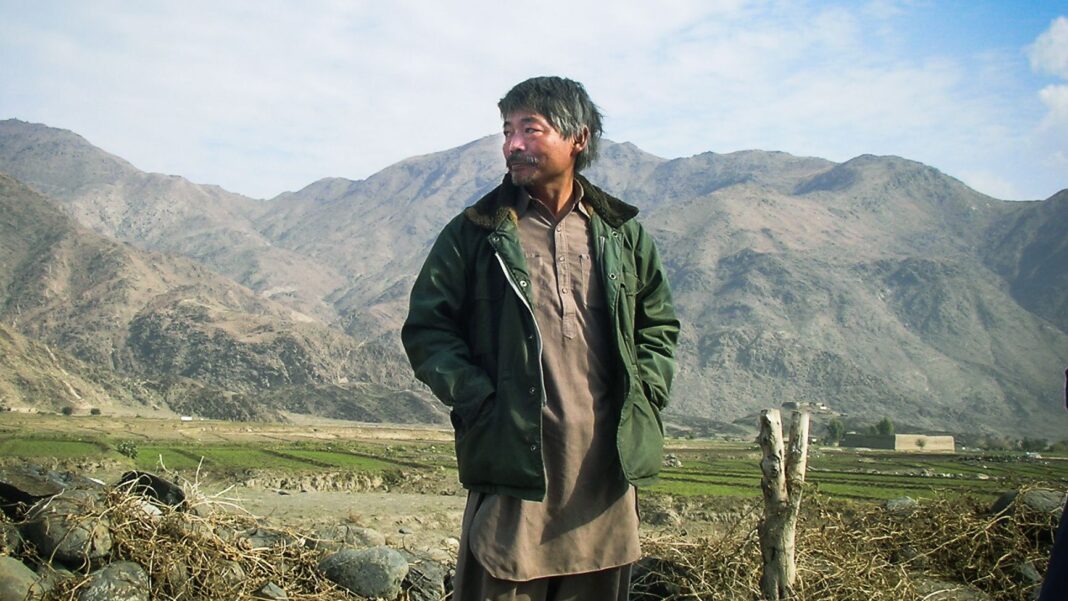
Tetsu Nakamura, also known as Kaka Murad, was a Japanese physician and honorary Afghan citizen who headed Peace Japan Medical Services, an aid group known as Peshawar-kai in Japanese.
A Japanese doctor and humanitarian Tetsu Nakamura lived in Afghanistan for more than 3 decades leading humanitarian projects. His biggest dream was to realize a water canal project to give irrigation water to farmers in the Nangarhar province. His life was cut short in 2019 by a suspected group of armed Taliban militants believed to be sent from Pakistan. This year Nakamura’s dream came to life and 5 years after his death his largest project out of hundreds, a 20-mile canal, brings life-giving water to people who need it the most.
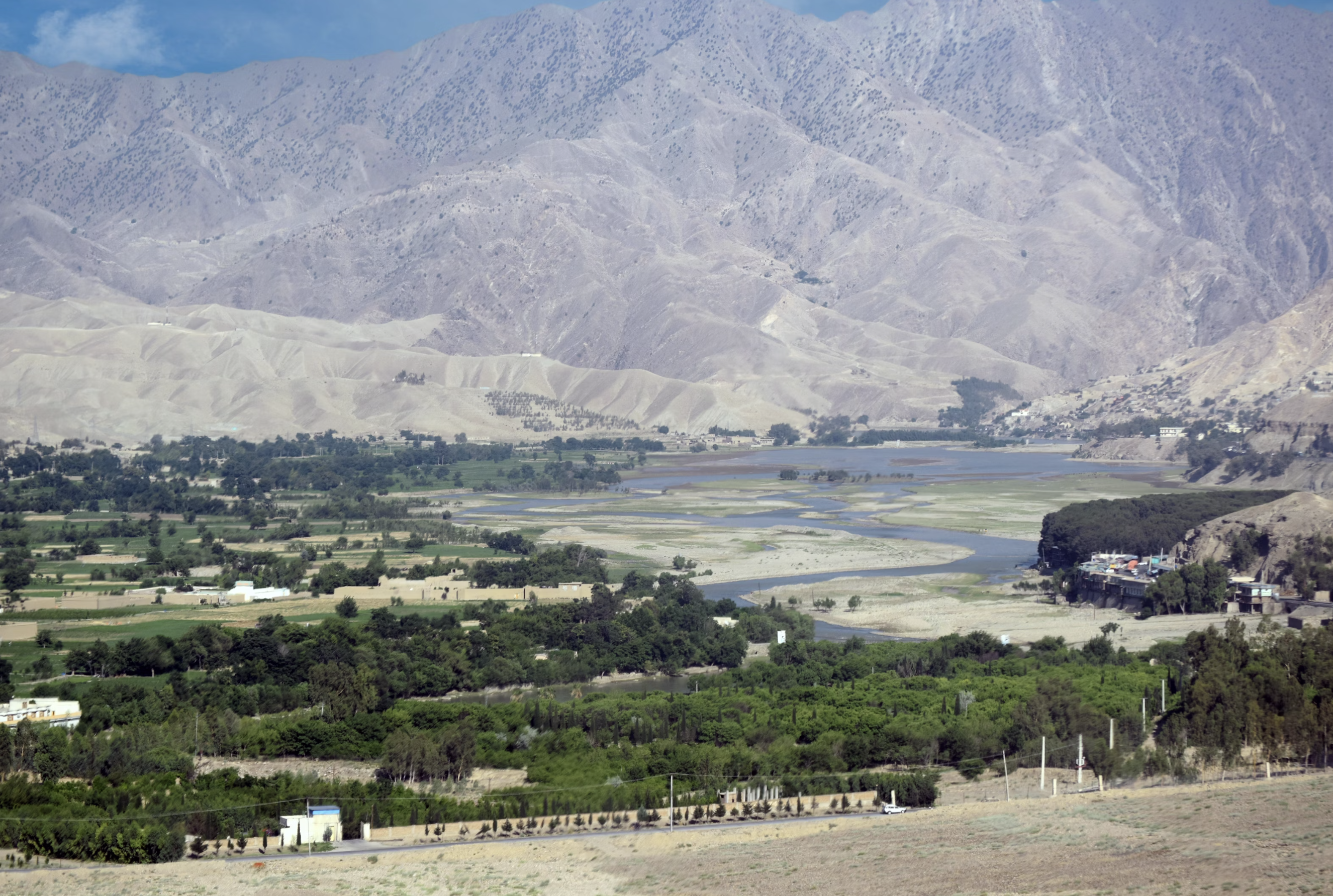
Nakamura canal in Afghanistan opened in 2024. Source of photo unknown
Born in Japan, Nakamura had been granted honorary citizenship in Afghanistan, reflecting the deep connections he forged with the country through his extensive humanitarian work. Apart from medical aid in the early years, he focused on constructing water canals, which were crucial for irrigation and agriculture in the arid region.
The same location in 2003 and 2009 along a canal Dr. Nakamura helped build. They are reminiscent of old Japan village canals. Photographs courtesy of Peshawar-kai/PMS.
After his murder (the Taliban has halted the investigation into the murder since taking over) Nakamura’s canal project resumed with support from the Japanese government continuing his legacy: Nakamura constructed multiple health centers and hundreds of water projects related to irrigation, canal construction, and clean water access.
His most significant achievement was the creation of a 20-mile canal sourced from the Kunar River, which now irrigates hundreds of acres of farmland. He has impacted millions of people.
Photographs courtesy of Peshawar-kai/PMS.
Following Nakamura’s passing, a non-governmental organization named PMS has taken up the cause to continue building canals and dams in the region.
Here is a beautiful film on his impact. Let’s not let terror win. Watch the movie, Water, Not Weapons below. And let us ponder: what is it that draws a man to leave his country and change the world in places that need help? Is there something inside of you that wishes to do the same?
Karin Kloosterman is an award-winning journalist, innovation strategist, and founder of Green Prophet, one of the Middle East’s pioneering sustainability platforms. She has ranked in the Top 10 of Verizon innovation competitions, participated in NASA-linked challenges, and spoken worldwide on climate, food security, and future resilience.
With an IoT technology patent, features in Canada’s National Post, and leadership inside teams building next-generation agricultural and planetary systems — including Mars-farming concepts — Karin operates at the intersection of storytelling, science, and systems change.
She doesn’t report on the future – she helps design it.
Reach out directly to [email protected]
The family of environmentalist and eco-engineer in training, James "Weston" Higginbotham will gather with friends, classmates, and supporters on June 17 in Birmingham, Alabama, to celebrate the life of the Auburn University student whose death in a Kyoto forest in Japan touched people around the world.
The James "Weston" Higginbotham Endowed Scholarship will support Auburn students pursuing ecological engineering, ensuring that the work Weston cared about so deeply continues long after his passing.
The family of Weston Higginbotham,an Auburn University student whose disappearance and death in the mountains near Kyoto, Japan, drew international attention, has declined to publicly release the cause of his death.
In some ways, Weston has become a symbol of a generation wrestling with environmental and technological anxiety. Friends and family described him as deeply concerned about environmental issues. Reports also noted that he questioned the growing role of artificial intelligence in daily life, even reportedly disagreeing with his mother about her use of AI.
Scientists have developed a “raincoat” for lead-free tin perovskite solar cells, helping them withstand air, moisture and heat while maintaining high efficiency.
Sustainability is an approach where businesses and individuals balance the environmental, social, and economic aspects of a project such that current and future stakeholders are not overburdened with the impacts of the project in future.
The Yerukim members who pick up the recyclables get to keep the monetary reward, the public earns "green" bills that can be used in shops, and business owners get to be associated with environmentalism.
Saudi Arabia is deploying capital at unmatched scale to catalyze tourism and advanced industry while rewiring its power-and-water backbone. The investable frontier is widening—especially in renewables, grid storage, water efficiency/desal retrofits, and hospitality operating platforms. Prudent investors will insist on phased delivery, enforceable KPIs (energy, water, biodiversity), and RHQ/zone compliance—while pricing political-economy and reputational risks alongside growth upside.
If you throw a party for your work team and they are vegans, don't make it a barbecue. Know the sustainability values of your team to boost moral and retain good people.
Big Box stores are a pretty new concept in Israel, and thank God that not every Israeli city wants them in their backyard. A word from someone who has see the beautiful farmland around her hometown Newmarket, Ontario stripped and converted into vulgar strip malls of big box shops: they have no place in a healthy and sustainable town or city.