
Nature as Capital at COP30 and how blended finance and debt-for-nature swaps work

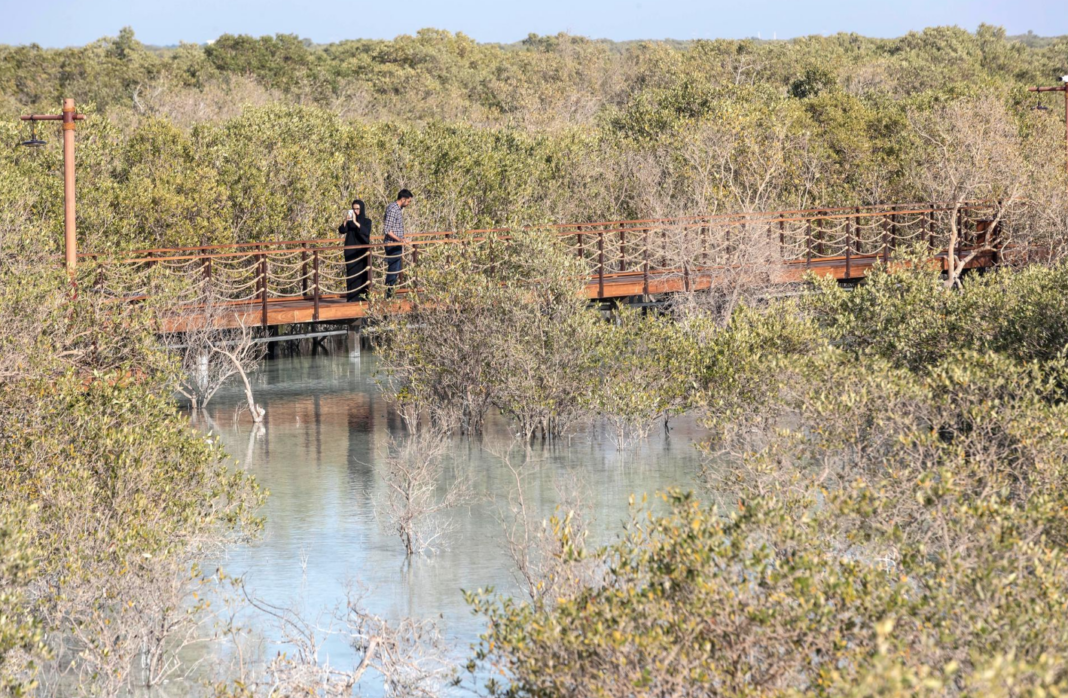
Jubail mangrove walk, Abu Dhabi
Jubail mangrove wal in Abu Dhabi

Belém’s COP30 puts forests, freshwater and oceans at center stage. How are emerging markets treating nature as infrastructure— and plugging it into finance and trade. We know that the world has reached the coral tipping point, and as you are busy saving the trees and oceans, know how activists, locals, banks and business can work together. Learn the lingo of finance mechanisms to help save the planet. 

Everyone will cover the headlines from the United Nation’s climate conference, this year called COP30 and which is in Belém, Brazil. Fewer will explain the mechanics of how nature becomes cashflow, trade leverage and resilience infrastructure—especially for the Global South. That’s the gap we’re filling. Green Prophet offers a practical question: what instruments exist right now to turn living systems into value chains that stand up to droughts, floods and supply-chain shocks? And how can MENA, Africa and Latin America lead instead of only react.

Know your terminology if you want to follow the conversations in the room

Blended Finance

econcrete new york
Econcrete restores coastal habitats with low-cost concrete that mimics a natural shoreline.

Blended finance is the engine room. Public and philanthropic “first-loss” capital de-risks deals; commercial investors come in behind. The aim is to move beyond pilot projects into pipelines that pay for restoration at scale. The World Bank’s recent review shows a surprising depth of activity in nature-based infrastructure, with millions of people already benefiting from coastal and watershed projects that reduce disaster risk while growing local economies.

Let’s take an example we can get behind: Imagine there is huge project to fix a coastline that’s getting destroyed by storms over and over again. We know that planting mangrove trees and building natural barriers to protect homes and schools works. But who pays for this, especially in developing nations like Thailand, where government money might be tight, especially on small islands.

Saudi Arabian mangrove forests
Thailand’s, and Saudi Arabian mangrove forests can help mitigate climate change by keeping rising tides and storms at bay

The problem is that it costs a lot to plant and maintain mangrove trees and natural barriers, and even less natural ones like the ones built by Eco-Concrete in costal areas of New York. There is a lot of good reasons why protecting coastlines are good: tourism, business and stability to invest in a region pay off in the long term. 

So how does blended finance work? Big investors might not build a university or a business center in an at-risk area like Indonesia because its islands are at-risk from flooding. They watch as government and charities go first to build pilot projects. These groups take the first losses and are buffered to do so. When investors see a project or pilot is working, the investors and banks can join in.

The end result is that if it’s a project on island resilience, and it’s done well with the local community, the fishermen get more fish, the houses and infrastructure don’t flood, and tourism and businesses in the area improve. Now instead of the government or local municipality working to clean up new disasters as they happen, the community and investors protect a community and its economy.

Where this is doing well:
Indonesia: planting mangroves to protect coasts and create jobs, in Kenya where they are restoring forests to secure water for cities and farms and in Colombia, where they are rebuilding riversides to stop floods and boost tourism. The World Bank found millions of people already benefiting from nature-based projects like these. They’re not just experiments — but are becoming real business pipelines.

Debt for Nature Swaps

Debt-for-nature swaps are also keywords you will hear coming out of COP30 and debt-for-nature is having a moment. By refinancing sovereign debt of a nation and locking savings into conservation endowments, countries can protect mangroves, reefs and forests while improving fiscal stability.

The Bahamas’ swap—backed by private guarantees and insurers—unlocked roughly $124 million for ocean protection and mangrove recovery. Expect more hybrids like “blue bonds,” watershed bonds, and biodiversity-linked notes as COP30 pushes nature up the finance agenda.

Canada is beginning to explore similar nature-finance mechanisms. They are offering grants for businesses that support climate change initiatives. While small island nations pioneered debt-for-nature swaps, the logic applies anywhere natural assets protect economies. Take the St. Lawrence River and the Great Lakes Basin. This is a freshwater system worth trillions in trade, shipping, drinking water, hydropower, and fisheries — yet it faces rising storm surges, coastal erosion, surges in algae blooms, and biodiversity loss.

Imagine a Canadian “watershed bond” modelled on the Bahamas’ blue bond play: federal and provincial governments refinance aging municipal debt in water-adjacent cities like Toronto beaches, Kingston, Thunder Bay, and Windsor. Interest savings are then routed into a protected watershed fund to restore wetlands, rebuild fish nurseries, and reinforce natural floodplains that protect ports and neighborhoods.

Who backs it? Pension funds like CPP Investments, insurers hedging climate risk, and Indigenous-led stewardship trusts that secure long-term governance. Satellite and LiDAR data verify improved water quality, carbon storage, and flood protection — giving investors confidence that nature isn’t just a moral win, but a balance-sheet asset.

Nature Markets

circle farming innovation, regenerative agriculture technology, human centered farming design, AI farming robotics, circular agro design future, sustainable robotic agriculture, next gen irrigation AI, farmer and robot collaboration, regenerative farm architecture, circular plot farming AI arm, tech supported agriculture human, modern agro robotics design, future of farming circular systems, agroecology meets technology, precision farming circular layout, man at center agriculture tech, AI powered permaculture circle, robotic irrigation regenerative design, tech for soil healing, circular farming reinvented, sustainable agro robotics harmony, farm technology without replacing farmers
Circle farming in Holland uses AI and nature together.

Nature markets are growing up fast — and not just carbon trading. Investors and governments are starting to put real contracts behind things like restoring habitats, protecting species, and improving fisheries. In the past, these ideas lived in Canva or PowerPoint presentations and pilot projects that didn’t go far beyond the anecdote stage. Today, they’re showing up in legal agreements, budgets, and deal pipelines.

What changed? Measurement tech and startups working in the impact space. We can now track how many fish return to a reef, how much flood damage is avoided when wetlands are restored, or how many species come back when forests regrow. When you can measure nature’s value, you can finance it. Also, investors found that impact companies can return significantly higher returns on investment.

The early winners will be projects that do more than one thing: reduce carbon, protect coasts, boost fishing incomes, create jobs, and improve water security. In short, projects and companies that score high in ESG. Instead of selling just one benefit, they’ll earn money from many revenue streams. The future natural economy isn’t supposed to be about charity — it’s revenue, resilience, and concepts like regenerative agriculture working together.

What to watch at COP30

Brazil rainforest and waterfalls
A Brazil rainforest

Belém in Brazil may be remembered as the summit where nature moved from a side-event to system change. If you are there at the event, Look for bigger blended-finance vehicles for forests and watersheds, standardized biodiversity/ecosystem credit frameworks, clearer guidance on how trade tools like CBAM and deforestation-free rules interact with development and equity goals, and concrete deals in the Amazon and beyond that link restoration to export growth.

Media attention will swirl around politics, but the durable story is finance and how data can turn ecosystems, including jungles and seashore towns, into resilient value-chains.

Explore related coverage on Green Prophet

Karin Kloosterman
Karin Kloostermanhttp://www.greenprophet.com
Karin Kloosterman is an award-winning journalist, innovation strategist, and founder of Green Prophet, one of the Middle East’s pioneering sustainability platforms. She has ranked in the Top 10 of Verizon innovation competitions, participated in NASA-linked challenges, and spoken worldwide on climate, food security, and future resilience. With an IoT technology patent, features in Canada’s National Post, and leadership inside teams building next-generation agricultural and planetary systems — including Mars-farming concepts — Karin operates at the intersection of storytelling, science, and systems change. She doesn’t report on the future – she helps design it. Reach out directly to [email protected]

Read More

TRENDING

Weston Higginbotham found dead in a Kyoto forest: is climate anxiety part of the story?

In some ways, Weston has become a symbol of a generation wrestling with environmental and technological anxiety. Friends and family described him as deeply concerned about environmental issues. Reports also noted that he questioned the growing role of artificial intelligence in daily life, even reportedly disagreeing with his mother about her use of AI.

Billie Eilish’s Mom Takes the Stage at Hollywood Climate Summit — But Does Hollywood Still Care About Climate Change?

Hollywood once promised to help save the planet. Leonardo DiCaprio warned of climate catastrophe from awards stages. Celebrities flew to climate conferences. Studios pledged greener productions. Streaming platforms rushed to commission environmental documentaries. But in 2026, with the aftermath of wildfires, heatwaves and floods becoming routine, a question lingers: Does Hollywood still care about climate change?

Can Scientists Predict Coral Bleaching Before It Happens?

Now researchers at the Woods Hole Oceanographic Institution (WHOI) in the US say they have developed a way to predict coral bleaching five to six months before it occurs, potentially giving reef managers enough time to intervene and save vulnerable corals.

10 Amazing Facts About the Sidr Tree

Most people in the West have never heard of the Sidr tree. That's strange when you think about it. This tough, thorny desert tree has fed people, bees, birds, and camels for thousands of years. It appears in Islamic tradition. Its honey sells for astonishing prices.

5 projects to help kickstart your company’s sustainability journey 

True progress happens when environmental ambition meets action. Decarbonizing efficiently is possible for any business in any sector, but actually getting started can sometimes feel daunting.   The trick? It’s to start small and build momentum. Here are five potential projects to help you get started.  

Locals From Rishon Fight IKEA

Big Box stores are a pretty new concept in Israel, and thank God that not every Israeli city wants them in their backyard. A word from someone who has see the beautiful farmland around her hometown Newmarket, Ontario stripped and converted into vulgar strip malls of big box shops: they have no place in a healthy and sustainable town or city.

The Jewish National Fund Meets An Inconvenient Truth

According to the JNF, it has transformed thousands of acres of barren land into green forests in Israel. They state that each person emits about 23 tons of carbon per year, estimating that each tree planted can absorb one ton of carbon in its lifetime. That's a whole lot of trees you'd need to be planting. Could so many fit in Israel?

How to quiet noise from construction in your office

Streets need to be resurfaced in New York but the humming and grinding noise is unsettling. Noise is environmental pollution. 

EarthX and a blueprint for sustainable investing

Trammell S. Crow, a Dallas-based businessman and father of four, is focusing his efforts on impact investing, and media that focuses on saving the planet through EarthX.

Mining Afghanistan’s Mineral Discoveries Similar to Avatar

Now that American forces in Afghanistan are commemorating the longest period of any war that America has been involved in, including the 1965-73 Vietnam War, the recent discoveries of large and extremely valuable mineral and metal deposits may finally bring to light a reason to continue the presence of US fighting forces in this war torn and backward country.

From Pilot Plant to Global Stage: How Aduro Clean Technologies’ 2026 Expansion Signals a Turning Point for Chemical Recycling Investors Like Yazan Al Homsi

The company's Next Generation Process (NGP) Pilot Plant in London, Ontario, has officially moved into initial operating campaigns, generating the kind of structured, repeatable data that separates laboratory promise from commercial viability.

Nobul’s Regan McGee on Shareholder Value: “Complacency Is the Silent Killer” 

Why the governance framework designed to protect shareholders so...

Should You Invest in the Private Market?

startustartup Unlike public stock exchanges, which offer daily trading, strict...

Popular Categories